
Kashmir’s Lotus Stems Rise Again
In Kashmir, where apple orchards often dominate conversations about climate-driven crop losses, a quieter agricultural shift is unfolding in the wetlands of this Himalayan region.Farmers are reviving nadur, or lotus stem, a crop that once sustained families across the region and nearly disappeared under pollution, floods and erratic weather. What is bringing it back is not a program or new technology, but farmers working with water instead of trying to force it away.
For generations, lotus stem was harvested in winter from the shallow marshes of lakes such as Dal and Wular. Pulled from soft silt and slow-moving water, it was woven into daily life, cooked as a vegetable, fried into the street snack nadur monji, or preserved in pickles. The crop also anchored livelihoods. Women often handled processing and sales, providing households with steady winter income.
But this system has fallen apart over the past decade. Urban encroachment, sewage, rising temperatures and floods such as the disastrous ones that the region suffered in 2014 have clogged wetlands with debris and silt. Water levels have become erratic, aquatic life has declined and lotus cultivation has slowly faded. By the late 2010s, many families had stopped harvesting lotus altogether, turning away from the water that had long sustained them.
Ghulam Nabi Dar, 68, watched this unfold along the edge of Wular Lake in Bandipora, a town on the water’s northern banks. His two-hectare patch once yielded enough lotus stem to feed his family and supply local markets. By 2020, repeated crop failures had left his lake plot unproductive. “The water changed,” Dar says. “It became thick, dark. Lotus wouldn’t grow.”
Instead of waiting for large-scale restoration projects, Dar turned to knowledge passed down from his grandfather, who farmed lotus in the same waters decades earlier. In early 2021, Dar began cleaning his section of the lake himself.
Using handmade reed nets, shovels and family labor, he spent months removing silt and waste from shallow waters. He revived an old technique of stirring the lakebed with long poles to oxygenate the soil and help roots take hold. No chemicals. No machines. Just patience and repetition. “It was slow work,” Dar says. “But the water started responding.”
Aquatic plants returned first, followed by small fish. By winter, lotus roots had re-established. Dar harvested 12 quintals (a unit used in agriculture for measuring crop yields, one quintal is the equivalent of about 100kg) that season, earning about 1.5 lakh (approximately $1,600).
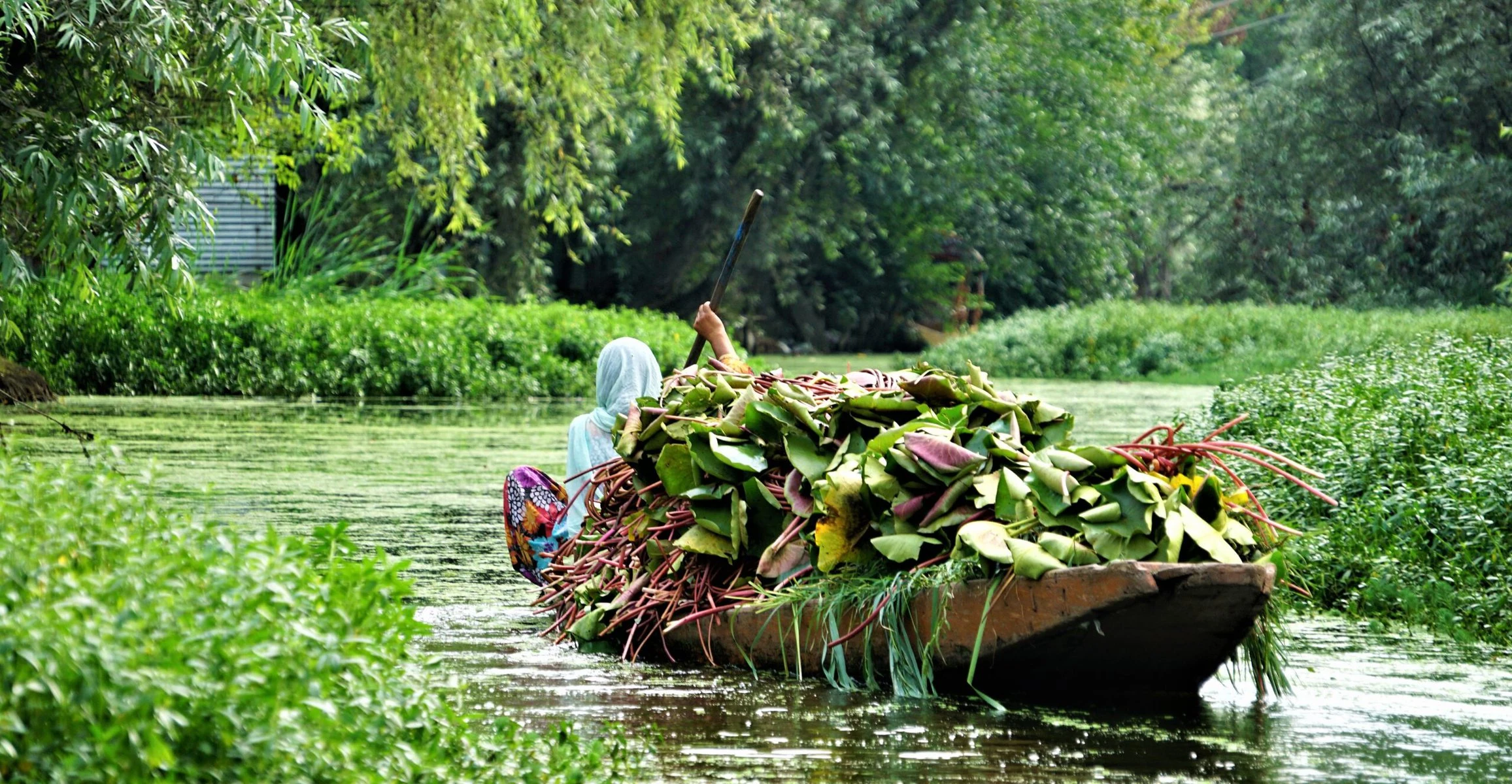
Kashmir’s Lotus Stems Rise Again
The return of the essential crop is preserving an age-old way of life as farmers learn to work with water rather than force it away.Safina Nabi (Reasons to be Cheerful)
like this
harryhaller and nadloriot like this.
Muse reshared this.
Lo, thar be cookies on this site to keep track of your login. By clicking 'okay', you are CONSENTING to this.
tomgrzybow
in reply to Andrew Pam • • •On our last trip to Sabah (Northern Borneo), despite extensive traveling done throughout about a month of time, I did not see one single rice paddy.
It’s all palm oil now.