
“If you just invest a little time and a little effort in people, you will get so much more back.”
Dewayne Washington leads communications efforts for the #MarsSampleReturn campaign. This #BlackHistoryMonth, discover his leadership philosophies: go.nasa.gov/3xi9ugh
#NASA
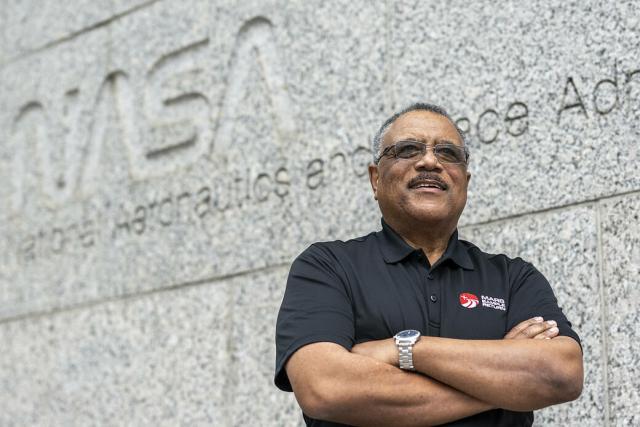
Senior Communications Manager Dewayne Washington
“If you just invest a little time and a little effort in people, you will get so much more back. " – Dewayne Washington, Mars Sample Return Senior Communications Manager, NASA HeadquartersTahira Allen (NASA)
Feel like you’re spiraling? You’re in good company!
Webb’s images of NGC 1365 (left), NGC 7496 (top) & NGC 1433 (bottom) reveal the galaxies' networks of gas and dust in incredible detail. The data is part of an ongoing Webb survey of 19 spiral galaxies: go.nasa.gov/3YzvAXj
#JamesWebb
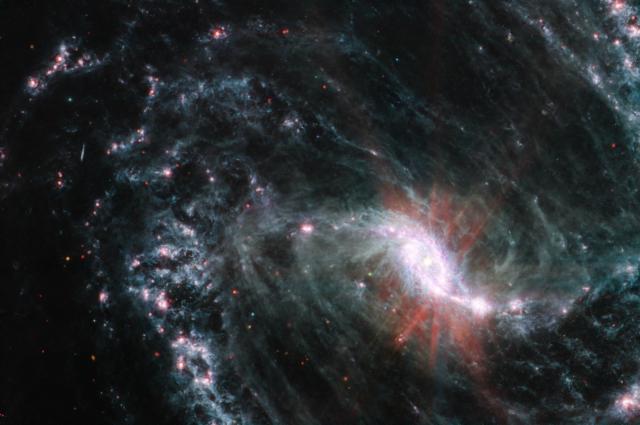
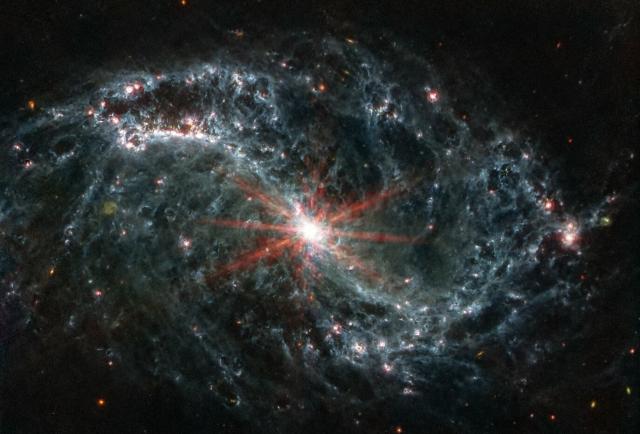
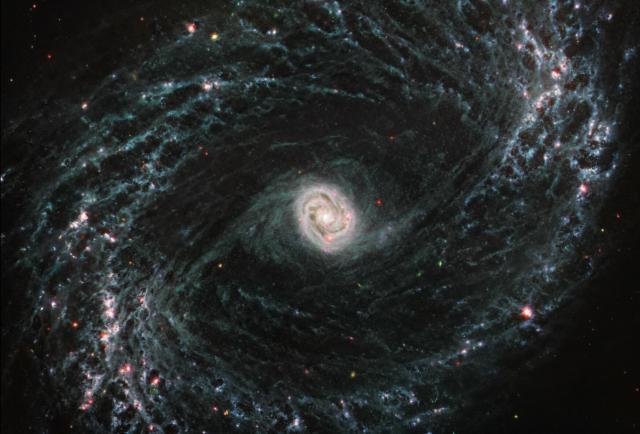
NASA’s Webb Reveals Networks of Gas and Dust in Nearby Galaxies
Researchers using NASA’s James Webb Space Telescope are getting their first look at star formation, gas, and dust in nearby galaxies with unprecedented resolution at infrared wavelengths.Jamie Adkins (NASA)
“We’re able to harvest the power of the sun and sustain our astronauts, their health and habitat, and our exploration.”
Lyndsey McMillon-Brown helps design & develop solar cells that may help future #Artemis missions establish a long-term lunar presence: go.nasa.gov/3YC1Bye
#NASAArtemis #Artemis

NASA’s Modern History Makers: Lyndsey McMillon-Brown
Lyndsey McMillion-Brown has taken her love of art, books, and the environment and turned it into a career at NASA’s Glenn Research Center in Cleveland.Kelly Sands (NASA)
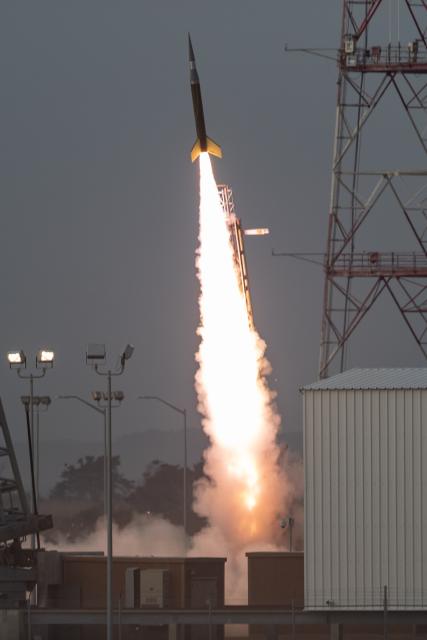
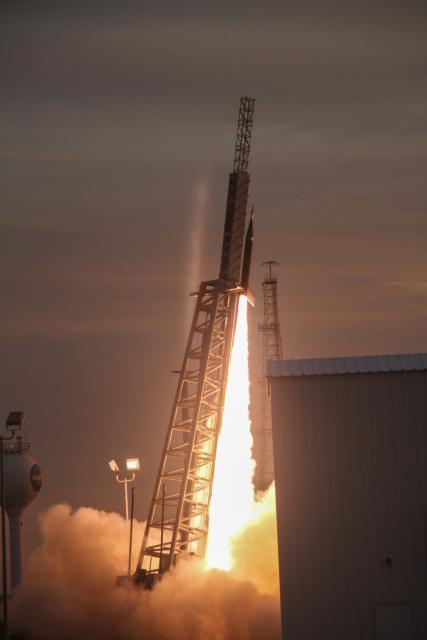
Today's rocket launches are part of an effort to study Earth's mesosphere, the layer of the atmosphere about 31 to 53 miles (50-85km) in altitude. 🚀☁️
The mesosphere is where meteors often burn up. It has its own chemistry and winds, and is where noctilucent clouds form!
#NASAEarth
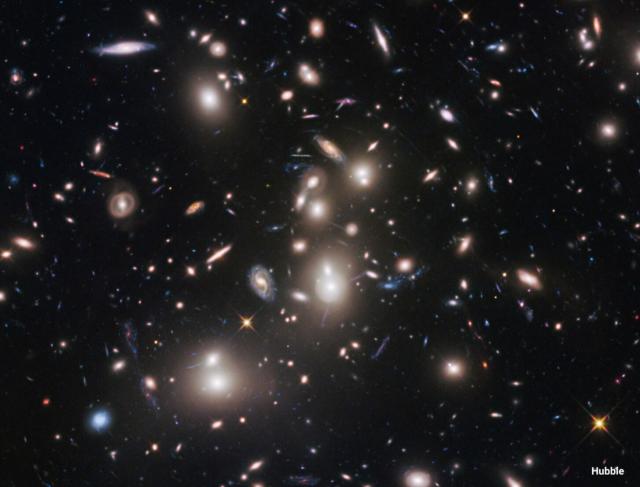
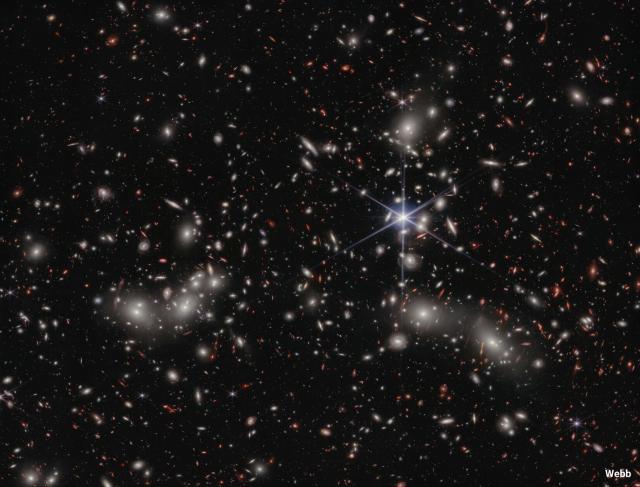
Bigger and better together!
Hubble and @NASAWebb have both studied Pandora's Cluster in great detail, revealing gravitational lensing – which occurs when a massive object's gravity warps and magnifies the light coming from more distant objects behind it. ⬇️
#Hubble
#Hubble
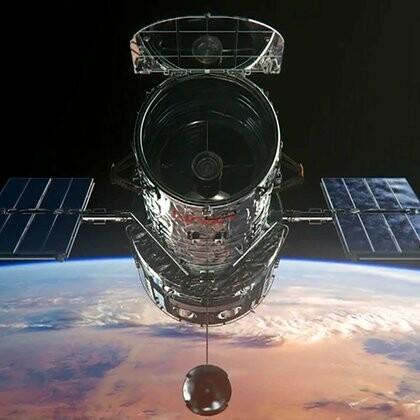
Webb's broader mosaic of four images shows three clusters of galaxies coming together to form a megacluster!
About 50,000 sources of near-infrared light were captured by Webb, allowing astronomers to learn more about galaxy evolution. go.nasa.gov/3S6mpeL
#Hubble
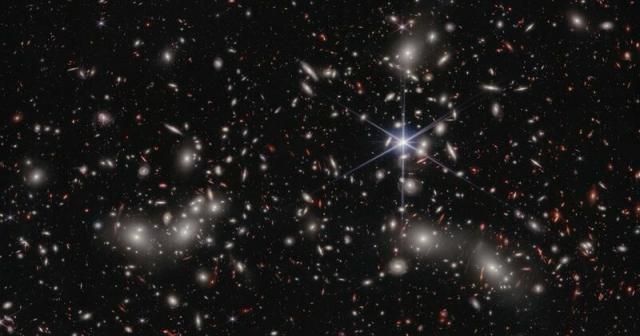
NASA’s Webb Uncovers New Details in Pandora’s Cluster
Astronomers have revealed the latest deep field image from NASA’s James Webb Space Telescope, featuring never-before-seen details in a region of space known as Pandora’s Cluster (Abell 2744).Jamie Adkins (NASA)
The Hydra Cluster of Galaxies
Image Credit & Copyright: Marco Lorenzi, Angus Lau, Tommy Tse Text: ChatGPT (apologies to Edgar Allen Poe)
apod.nasa.gov/apod/ap230216.ht… #APOD

APOD: 2023 February 16 - The Hydra Cluster of Galaxies
A different astronomy and space science related image is featured each day, along with a brief explanation.apod.nasa.gov

APOD: 2023 February 16 - The Hydra Cluster of Galaxies
A different astronomy and space science related image is featured each day, along with a brief explanation.apod.nasa.gov
#ISS
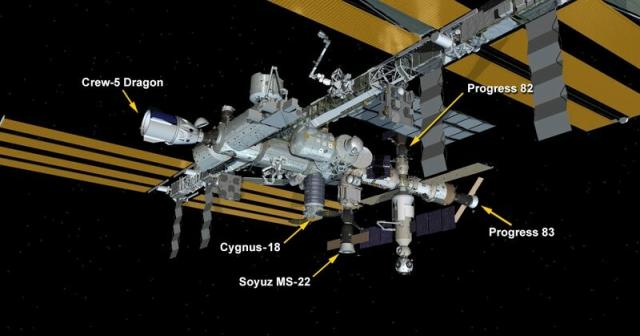
Roscosmos Reviews Soyuz, Progress Vehicle; Science and Cargo Ops Keep Crew Busy
The seven residents that make up the Expedition 68 crew were busy midweek aboard the International Space Station.blogs.nasa.gov
Our VIPER lunar rover will land at a newly named mountain honoring @nasa mathematician Melba Mouton, who helped land the first humans on the Moon.
About the size of Delaware, Mons Mouton is located in one of the 13 candidate #Artemis III landing regions. go.nasa.gov/411iBiM
#NASAArtemis #Artemis
Moon Mountain Name Honors NASA Mathematician Melba Mouton
Scientists recently named a mesa-like lunar mountain that towers above the landscape carved by craters near the Moon’s South Pole.Rachel Hoover (NASA)
#NASAExoplanets
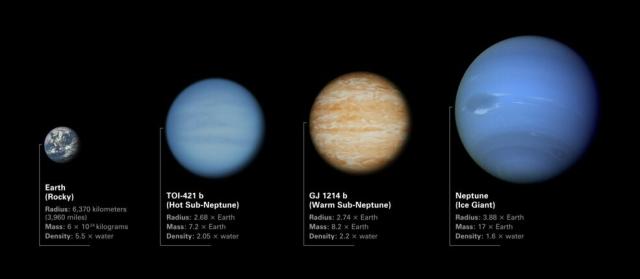
Super-Earth | Planet Types – Exoplanet Exploration: Planets Beyond our Solar System
Super-Earths – a class of planets unlike any in our solar system – are more massive than Earth yet lighter than ice giants like Neptune and Uranus, and can be made of gas, rock or a combination.Exoplanet Exploration: Planets Beyond our Solar System
@NASAWebb's latest image reveals never-before-seen details in Pandora’s Cluster. The combined mass of the galaxies creates a powerful gravitational lens, allowing much more distant galaxies in the early universe to be seen. go.nasa.gov/3YuWShE
#NASAExoplanets
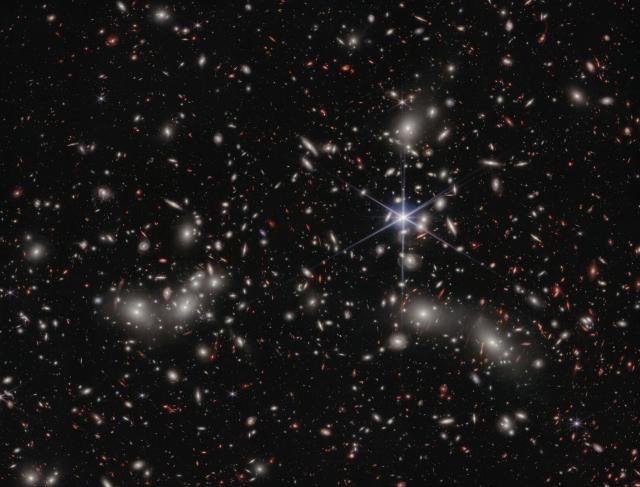
NASA’s Webb Uncovers New Details in Pandora’s Cluster
Astronomers have revealed the latest deep field image from NASA’s James Webb Space Telescope, featuring never-before-seen details in a region of space known as Pandora’s Cluster (Abell 2744).Jamie Adkins (NASA)
Have humans ever visited Mars?
Not yet, but we’ve sent rovers, landers, and orbiters to gather the information we'll need to keep future astronauts safe, and with @NASAArtemis, we’re working on new tech that could one day get humans to Mars. mars.nasa.gov/
#NASA
NASA Mars Exploration
NASA’s real-time portal for Mars exploration, featuring the latest news, images, and discoveries from the Red Planet.NASA Mars Exploration
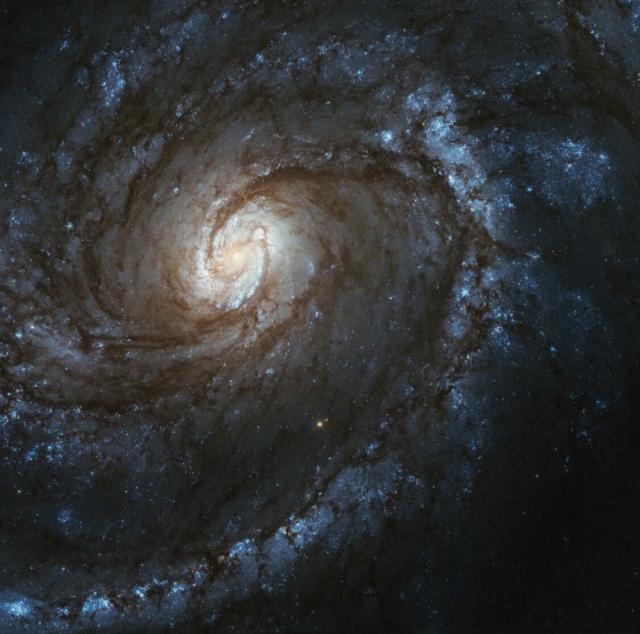
A spiral of stars 🌀
A few months after the final Hubble servicing mission, the telescope took this #HubbleClassic image of the spiral galaxy M100.
It’s classified as a grand-design spiral galaxy because of its two prominent lanes of young, blue stars: go.nasa.gov/3YBSYUg
#Hubble
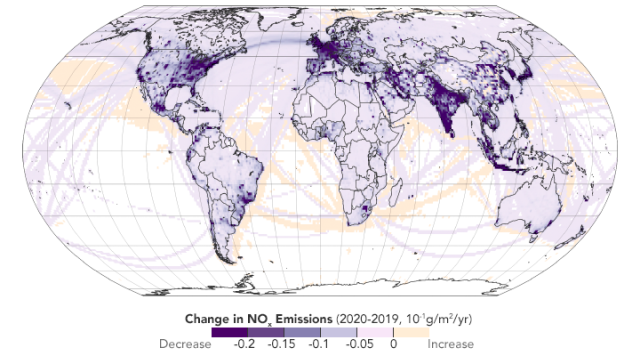
2020 saw a record-breaking rise in methane, a potent greenhouse gas. The increase was driven by a combination of warm, wet weather in the Northern Hemisphere and the COVID-19 lockdowns.
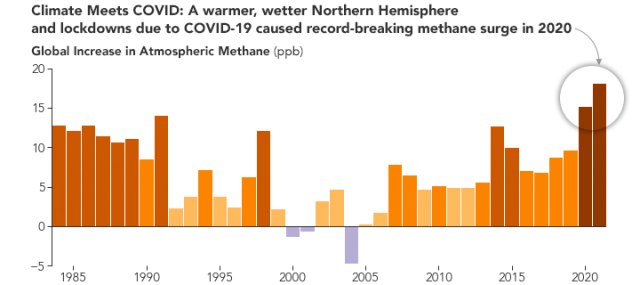
Why Methane Surged in 2020
Warm, wet weather in the Northern Hemisphere combined with COVID-19 lockdowns pushed the potent greenhouse gas to record levels.go.nasa.gov
so it mentions several times 'due to lockdowns' but zero references as to *why*
Canada (where I live) never once 'locked down', we could always go out and shop at malls throughout the entire pandemic, I understand some American states may have introduced individualized 'lockdown' concepts
so with 'lockdown' poorly defined, and zero references as to what about 'lockdowns' caused an increase in methane...
...this is weird misinformation
A decrease of nitrogen oxides (NOx) pollution during the COVID-19 lockdowns indirectly slowed the removal of methane from the atmosphere.
NOx serves as an atmospheric “detergent” by reacting with methane and removing it from the atmosphere.
#NASAEarth
#NASAEarth
#NASAhistory
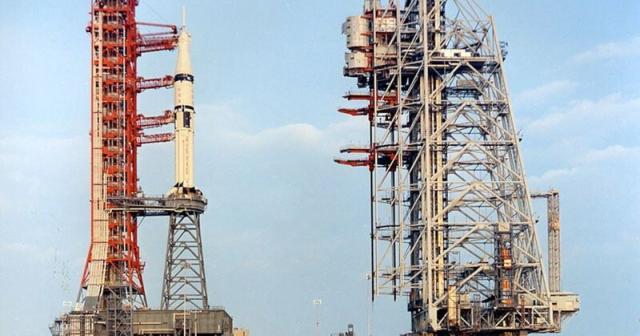
50 Years Ago: Three Months Until Skylab, America’s First Space Station
In February 1973, workers at NASA’s Kennedy Space Center (KSC) in Florida continued to prepare two Saturn rockets for the initial Skylab launches just three months away.Kelli Mars (NASA)
Melba Roy Mouton—a NASA mathematician and key figure in the Apollo era—is being honored with the naming of a mountain on the Moon’s South Pole.
Mons Mouton is the future landing site of VIPER, our rover set to explore the lunar surface for Artemis: go.nasa.gov/3xo4mHd #BHM
#NASA
Moon Mountain Name Honors NASA Mathematician Melba Mouton
Scientists recently named a mesa-like lunar mountain that towers above the landscape carved by craters near the Moon’s South Pole.Rachel Hoover (NASA)
That is quite an honor. I like the symbolism of the south pole as the solar system orbital plane of the ecliptic is in same relationship to the plane of the galaxy rather. Like that which a Ferris Wheel has to the ground.
The heart of the Milky Way is to the south of earth as mapped in the night stars.
I am lucky to have had very dark skies whereby I could see the summer stars and the heart of the Galaxy between the sting of the Scorpion and the Archer or some name , the Teapot.’
#NASAhistory
#NASAhistory
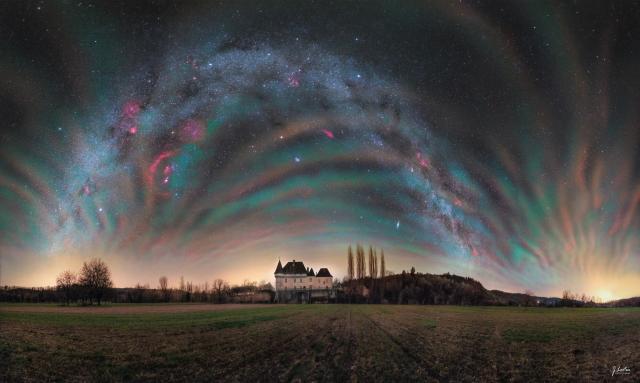
APOD: 2023 February 15 – Airglow Sky over France
A different astronomy and space science related image is featured each day, along with a brief explanation.apod.nasa.gov
This is what the sky looks like moments before Thanos and his army comes through some sort of space portal.
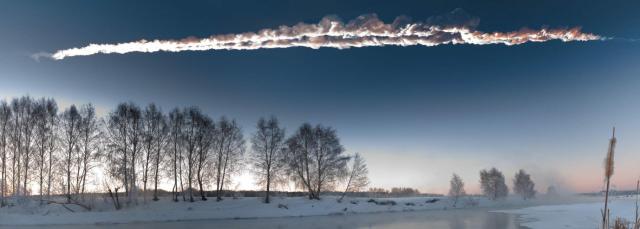
This widely-reported event was instrumental in the establishment of NASA's Planetary Defense Coordination Office in January 2016. #AsteroidWatch
Read more about the Chelyabinsk event's role in upping our planetary defense game: go.nasa.gov/3IhJKqt
#NASAhistory
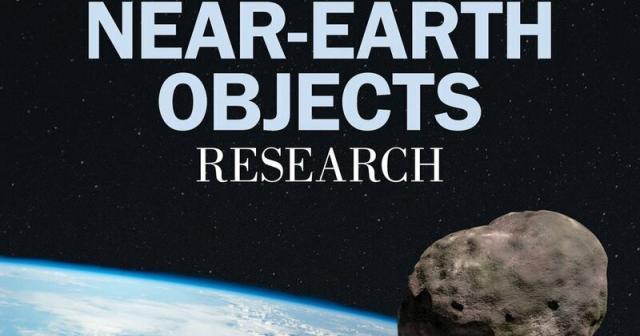
A History of Near-Earth Objects Research
Often seen as the solar system's rubble, asteroids and comets were largely ignored in the 20th century until recently. Increasingly, they have been seen by scientists as objects worthy of study, by the general public and the U.S.Michele Ostovar (NASA)
#10YearsAgo today, a 10,000 ton meteor exploded over Chelyabinsk, Russia releasing energy roughly equivalent to 500-kilotons of TNT. Thousands of buildings were damaged and nearly 1,500 people were injured (though there were no fatalities).
Photo credit: M. Ahmetvaleev
#NASAhistory
Cyclone Gabrielle lashed New Zealand in mid-February, adding to an unusually wet season and causing destructive flooding, storm surge, and landslides. 🌧️ 🌀
The @nasa @noaa Suomi NPP satellite took this image of the cyclone moving southeast on Feb. 14. go.nasa.gov/3k6LZDH
#NASAEarth
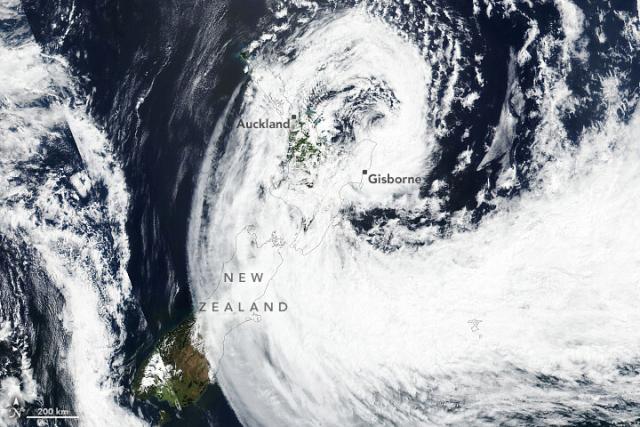
Cyclone Gabrielle Lashes New Zealand
The storm’s heavy rain in mid-February 2023 has added to an unusually wet start to the year.go.nasa.gov
Curious Universe is back! 🎧
The next season of NASA's podcast takes listeners on wild adventures through our solar system, galaxy, and beyond.
Tune in every Tuesday starting February 21: nasa.gov/curiousuniverse
#Hubble
NASA's Curious Universe
NASA.gov brings you the latest images, videos and news from America's space agency. Get the latest updates on NASA missions, watch NASA TV live, and learn about our quest to reveal the unknown and benefit all humankind.NASA
Airglow Sky over France
Image Credit & Copyright: Julien Looten
apod.nasa.gov/apod/ap230215.ht… #APOD


APOD: 2023 February 15 – Airglow Sky over France
A different astronomy and space science related image is featured each day, along with a brief explanation.apod.nasa.gov

We’re feeling the love today while looking at this image of our Pale Blue Dot. 😍 Voyager 1 took this photo of Earth from about 3.7 billion miles (6 billion kilometers) away on #ValentinesDay in 1990.
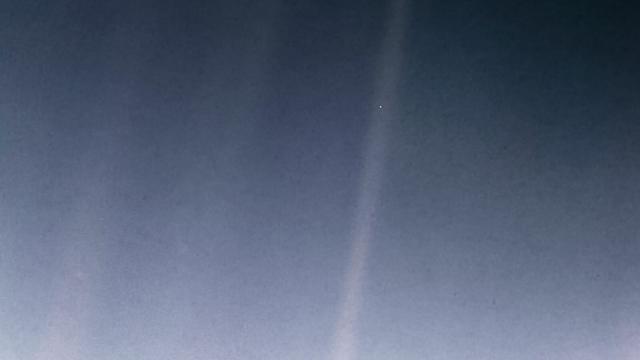
Voyager 1's Pale Blue Dot | NASA Solar System Exploration
The Pale Blue Dot is a photograph of Earth taken Feb. 14, 1990, by NASA’s Voyager 1 when it was 3.7 billion miles (6 billion kilometers) from the Sun.NASA Solar System Exploration
We’re feeling the love today while looking at this image of our Pale Blue Dot. 😍 Voyager 1 took this photo of Earth from about 3.7 billion miles (6 billion kilometers) away on #ValentinesDay in 1990.
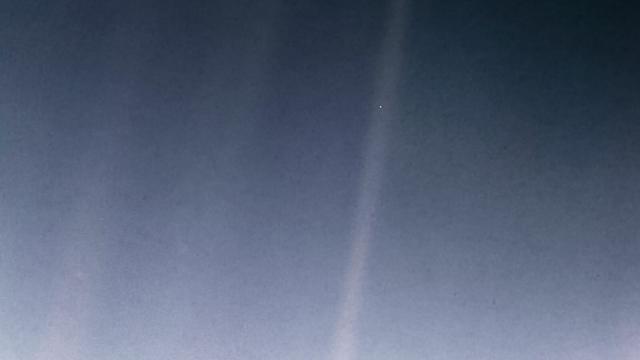
Voyager 1's Pale Blue Dot | NASA Solar System Exploration
The Pale Blue Dot is a photograph of Earth taken Feb. 14, 1990, by NASA’s Voyager 1 when it was 3.7 billion miles (6 billion kilometers) from the Sun.NASA Solar System Exploration


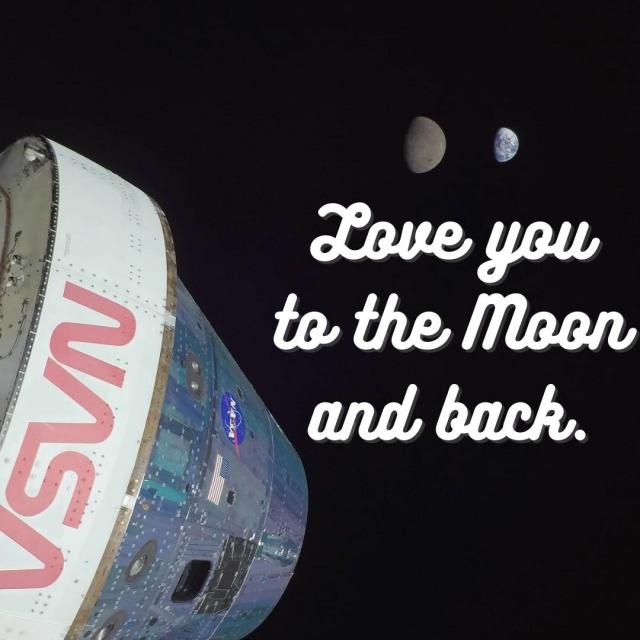
It’s been a great 51 years with you, @NASA_Landsat! Thanks for helping us study our home planet. 🌏
Happy #ValentinesDay!
#NASAEarth

Hey, @NASAOcean!
Can you believe it’s already been about two months since SWOT launched? We can’t wait for it to help us get to know you better. 💙
#NASAEarth

#NASA
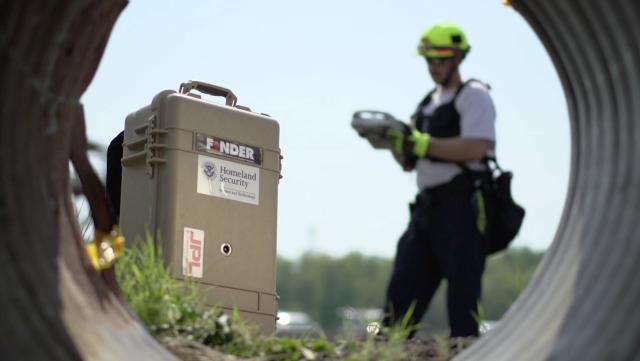
NASA’s Satellites Help with Turkey, Syria Earthquake Response
Following the magnitude 7.8 and 7.5 earthquakes that struck southern Turkey and western Syria Feb. 6, NASA is working to share its aerial views and data from space in ways that can aid relief and recovery workers in the region, as well as improve its…Cheryl Warner (NASA)
You look great, btw💖
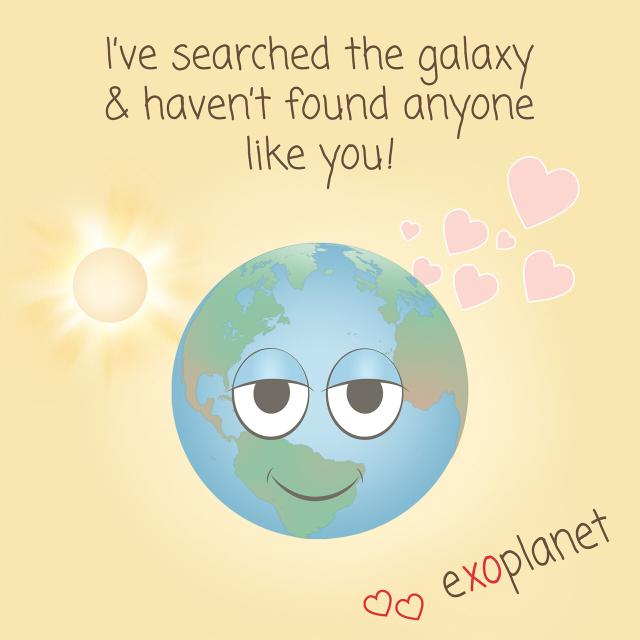
#NASAExoplanets
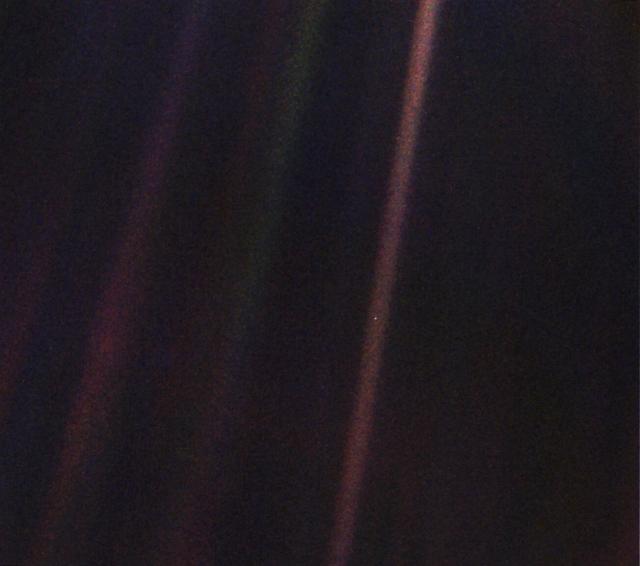
Source: Wikipedia:
"... From this distant vantage point, the Earth might not seem of any particular interest. But for us, it's different. Consider again that dot. That's here. That's home. That's us. On it everyone you love, everyone you know, everyone you ever heard of, every human being who ever was, lived out their lives ... on a mote of dust suspended in a sunbeam."
— Carl Saga
#ISS
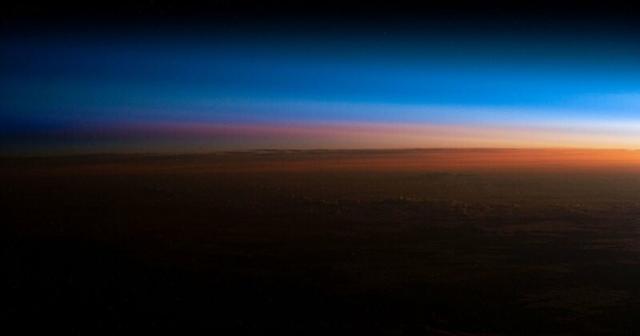
Crew Works Bio-Printer, Ultra-High Res Camera and Cargo Ops
The Expedition 68 crew members serviced a variety of advanced space hardware today and conducted cargo operations inside a trio of docked space freighters.blogs.nasa.gov
#NASAExoplanets
MugsysRapSheet Blog ☑️
in reply to NASA • • •Improving solar cell efficiency would be a massive benefit to come from the Mars Program.
Right now, solar cells only react to one wavelength of light with the rest of the spectrum going to waste. Reacting to a 2nd wavelength would DOUBLE efficiency (producing nearly twice as much electricity.) Imagine a solar cell that reacts to the 7 primaries (ROYGBIV)? Solar cars that never need plugging in! 😵