
#ISS
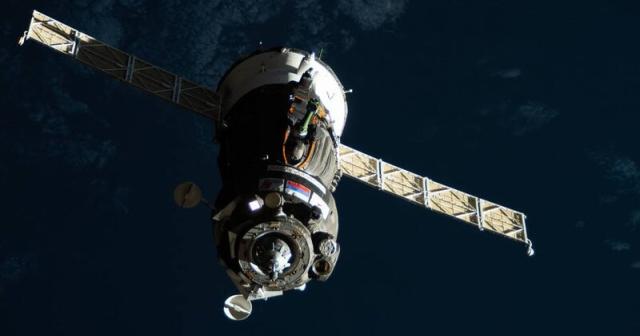
NASA Coverage Set for Uncrewed Soyuz Undocking, Departure
The uncrewed Roscosmos Soyuz MS-22 spacecraft will undock from the International Space Station on Tuesday, March 28.Roxana Bardan (NASA)
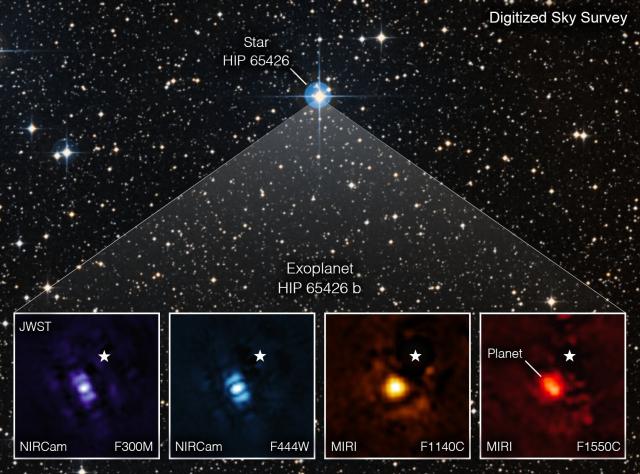
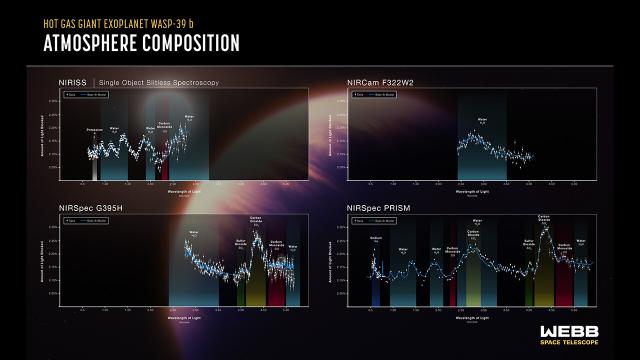
@NASAWebb uses masks to dim the bright light of stars to reveal much smaller planets. Seeing these faraway worlds in infrared can tell us even more! Super indeed. go.nasa.gov/42Cdjew
#NASAExoplanets
Most landscapes in North America are fire-adapted, and frequent fires enable trees and wildlife to flourish.
In this image, red dots indicate active fires in the U.S. Southeast as detected by the @nasa @noaa Suomi NPP satellite on March 14, 2023. 🔥 go.nasa.gov/3z5k1w6
#NASAEarth
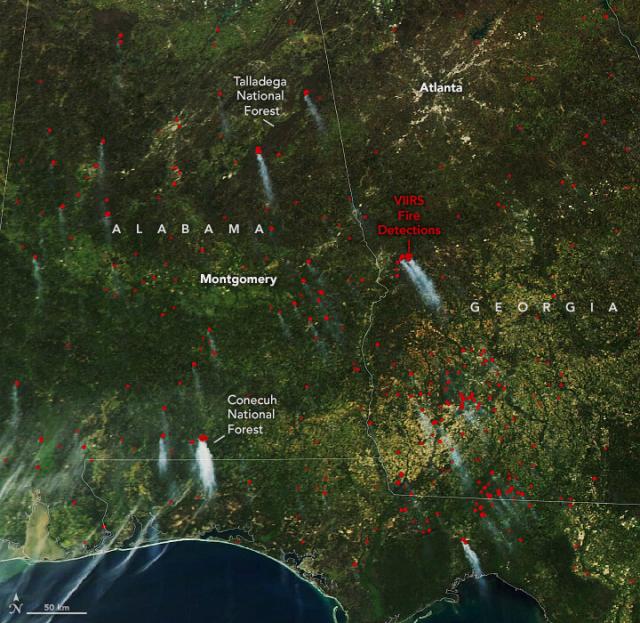
Thriving With Fires
Frequent fires in the pine forests in the southeastern United States enable trees and other wildlife to flourish.go.nasa.gov
Prescribed (or controlled) burns are often used to manage forests and forest undergrowth.
Cropland or prescribed fires are responsible for 77% of active fire detections in the U.S. using @nasa MODIS data. go.nasa.gov/3z5k1w6 🔥
#NASAEarth
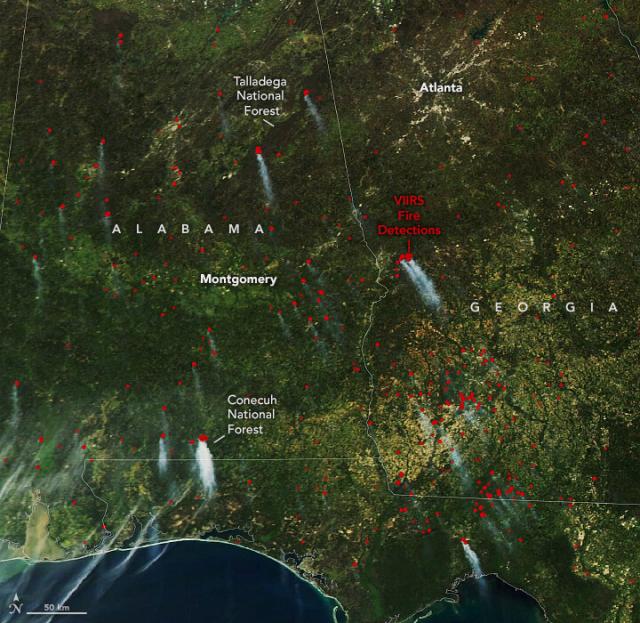
Thriving With Fires
Frequent fires in the pine forests in the southeastern United States enable trees and other wildlife to flourish.go.nasa.gov
#NASA
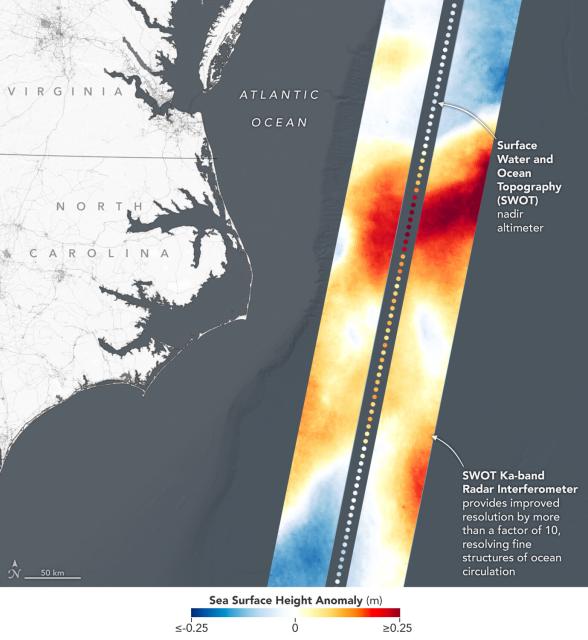
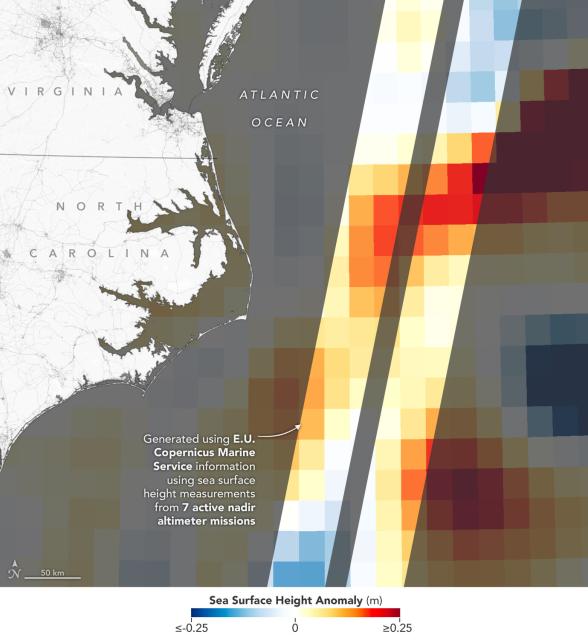
Joint NASA, CNES Water-Tracking Satellite Reveals First Stunning Views
The Surface Water and Ocean Topography mission offers the first taste of the detailed perspectives of Earth’s surface water that its cutting-edge instruments will be able to capture.Tony Greicius (NASA)
A whole new view 🤩 🌊
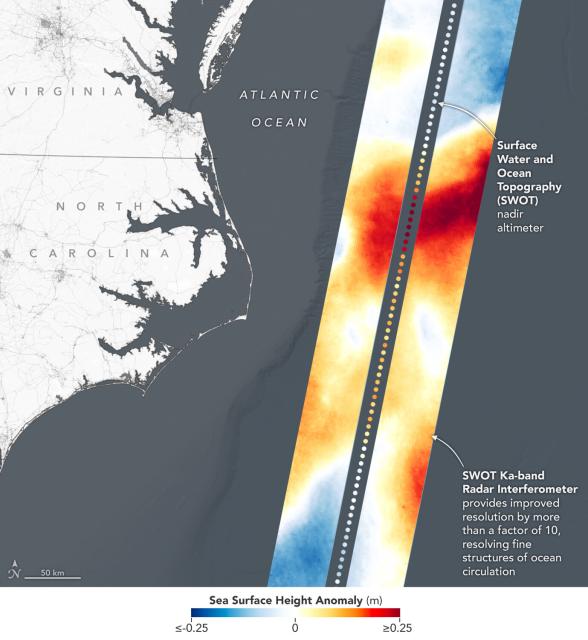
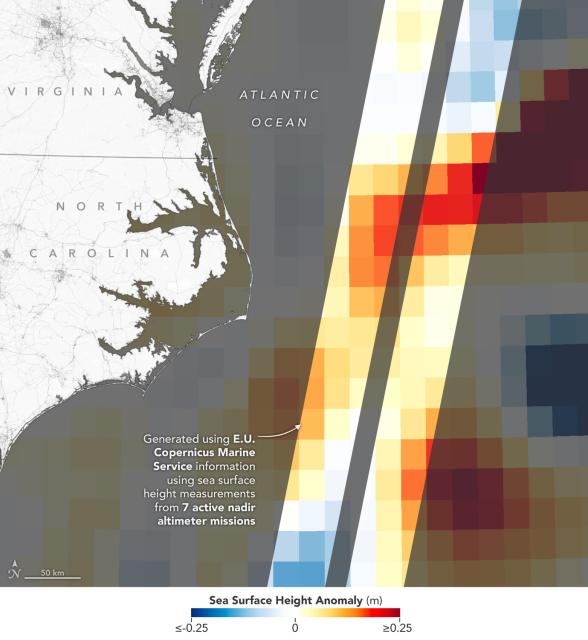
First taste from the SWOT mission shows Earth’s water in higher definition than ever before. The spatial resolution of SWOT ocean measurements is 10 times greater than sea surface height data gathered over the same area by seven other satellites combined.
#NASAEarth
#NASAEarth
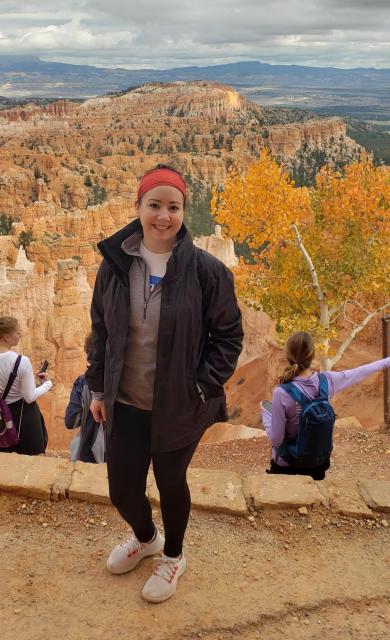
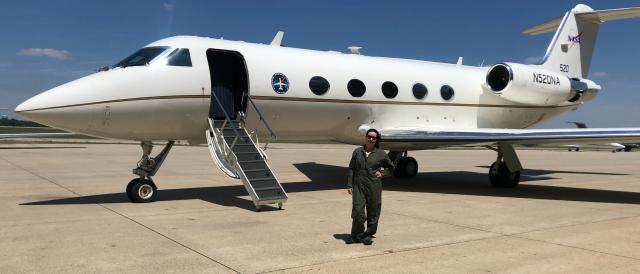
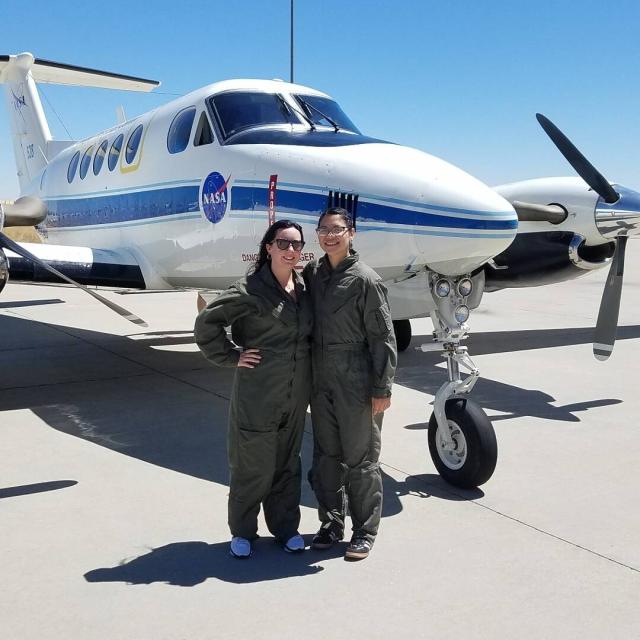
Meet Laura Judd, an air quality researcher at @NASA_Langley. 👋
She uses data from satellites and research aircraft to study air pollutants like nitrogen dioxide, which is a precursor to ozone near Earth’s surface. #WomenInScience #WomensHistoryMonth
#NASAEarth
#NASAEarth
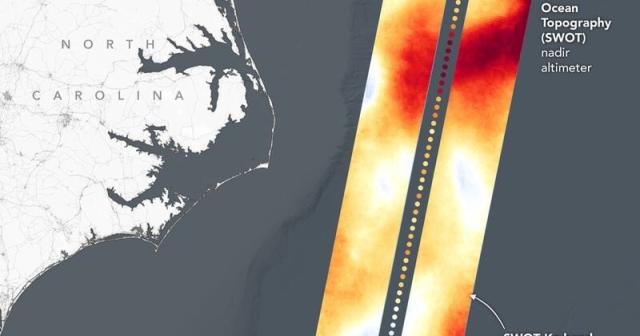
Joint NASA, CNES Water-Tracking Satellite Reveals First Stunning Views
The Surface Water and Ocean Topography mission offers the first taste of the detailed perspectives of Earth’s surface water that its cutting-edge instruments will be able to capture.Tony Greicius (NASA)
#ISS
Welcome to the galaxy JW100.
Located about 800 million light-years away, it resides in the constellation Pegasus.
Seen at the lower right of this #HubbleFriday image, JW100 is known as a jellyfish galaxy because of its "tendrils" of star-forming gas: go.nasa.gov/40fgqHB
#Hubble
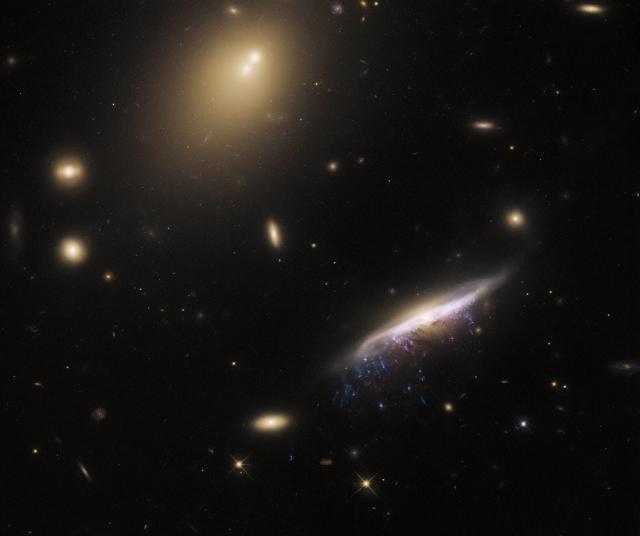
Hubble Snaps a Galactic Jellyfish
Streams of star-forming gas dripping from the disk of galaxy JW100 are formed by a process called ram pressure stripping.Andrea Gianopoulos (NASA)
Clocking a time of 11.2 years, the Opportunity @NASAMars Rover completed a marathon on the red planet #OTD in 2015, travelling 26.2 miles (42.2 km).
Planned to last 3 months, Opportunity's mission lasted to 2018: go.nasa.gov/3lqD0Oz
What enduring NASA mission is your fave?
#NASAhistory
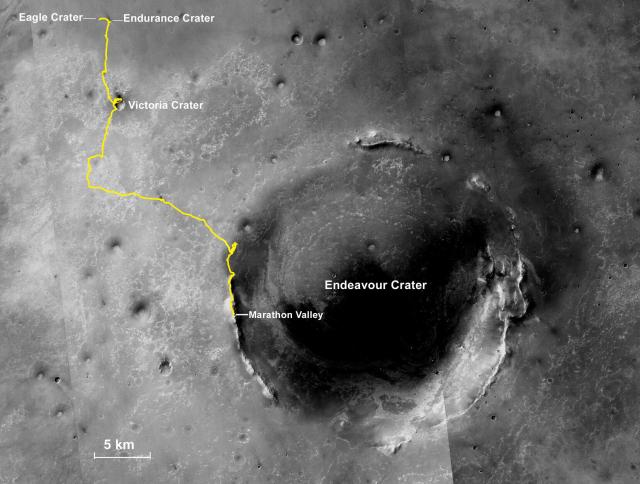
Opportunity Mars Rover Finishes Marathon in Just Over 11 Years
There was no tape draped across a finish line, but NASA is celebrating a win. The agency’s Mars Exploration Rover Opportunity completed its first Red Planet marathon Tuesday -- 26.2 miles (42.NASA
The airborne instruments she uses are similar to what will be on NASA’s upcoming TEMPO mission.
Scheduled to launch in April 2023, TEMPO is a geostationary satellite that will measure ozone, air pollutants, and more every hour.
Learn about TEMPO: go.nasa.gov/3Z4yItW
#NASAEarth
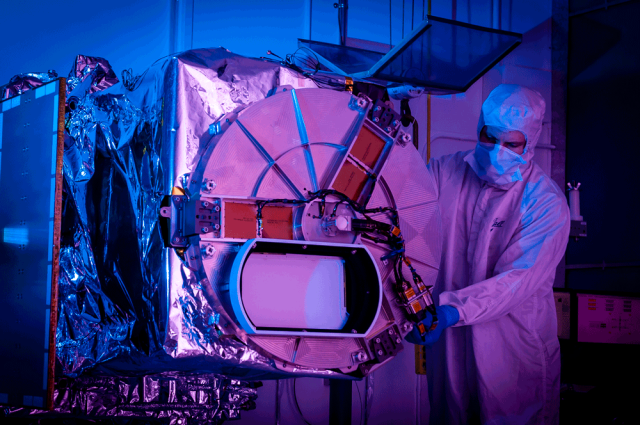
Laura Judd came to NASA through the SARP summer internship program, where she assisted with @nasa air pollution research as a college student studying meteorology.
Learn about SARP: go.nasa.gov/3JCTKKj
#NASAEarth


APOD: 2023 March 24 - Outbound Comet ZTF
A different astronomy and space science related image is featured each day, along with a brief explanation.apod.nasa.gov
Outbound Comet ZTF
Image Credit & Copyright: Rolando Ligustri
apod.nasa.gov/apod/ap230324.ht… #APOD

APOD: 2023 March 24 - Outbound Comet ZTF
A different astronomy and space science related image is featured each day, along with a brief explanation.apod.nasa.gov
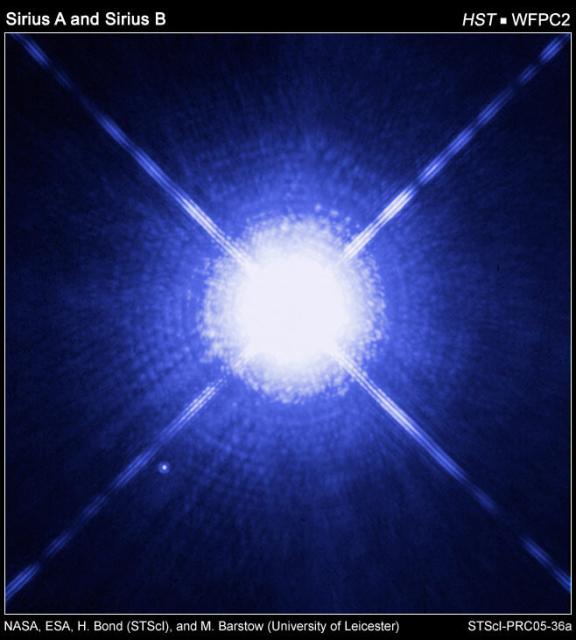
Sirius A, the brightest star in our night sky, revolves with its faint, tiny stellar companion Sirius B. Both are in the Canis Major (Big Dog) constellation. Sirius B may look tiny, but it's also massive, the remains of an exploded star. #NationalPuppyDay
#NASAExoplanets
#ISS
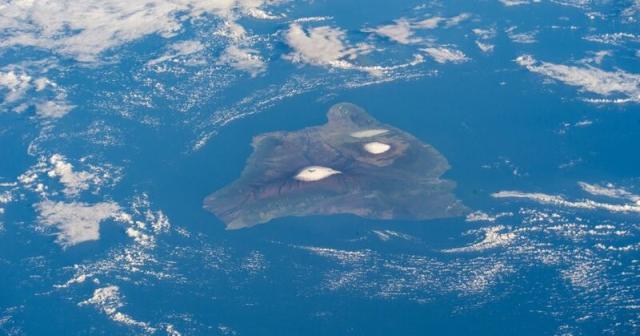
Crew Talk Space With Students, Investigate Fire Control, and Continue Heart Health and Cargo Return Activities
On Thursday, NASA Flight Engineer Woody Hoburg conducted an ISS Ham Radio (ARISS) session with Lana’i High and Elementary School, in Lana’i City, Hawaii.go.nasa.gov
#NASA
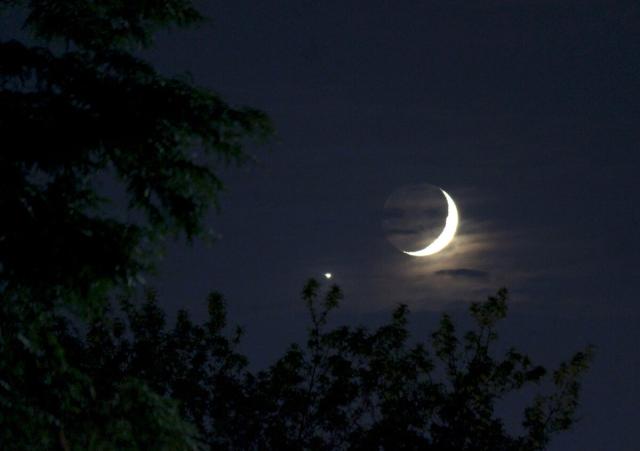
Look westward to find the Moon as a beautiful slim crescent this evening after sunset, hanging just below blazing-bright Venus. Tomorrow evening, look west again to spot the Moon once more, this time shining from above Venus.
Spot the duo? Share your pictures.
#NASA
#NASA
#NASAExoplanets
We’ve got an outer planet weather report!
Hubble regularly checks in on the outer planets in our solar system to monitor changes in seasons and atmospheres. New images of Jupiter and Uranus show storms, cloudy bands, and more: go.nasa.gov/3ly4yBD
#Hubble
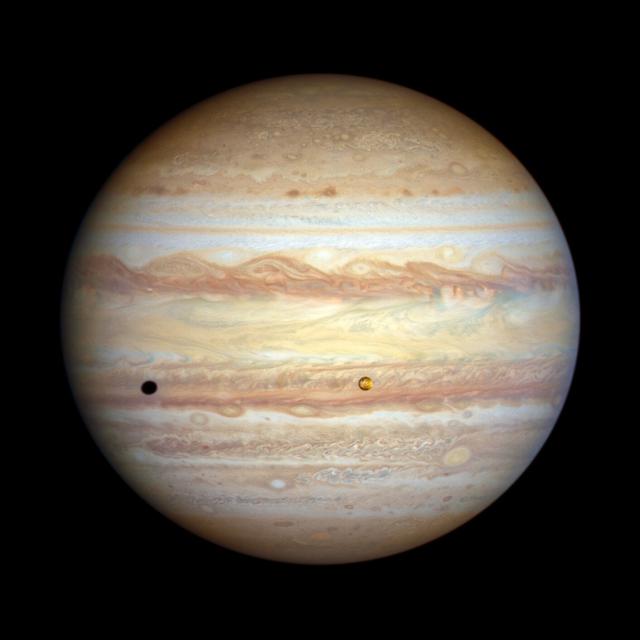
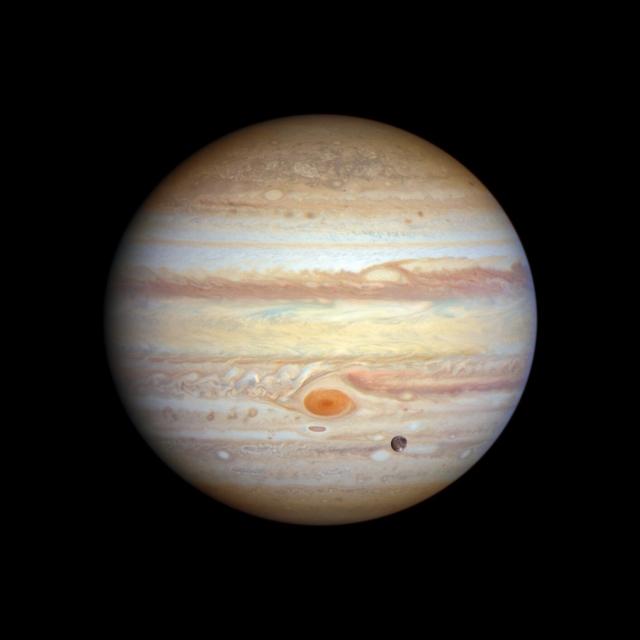
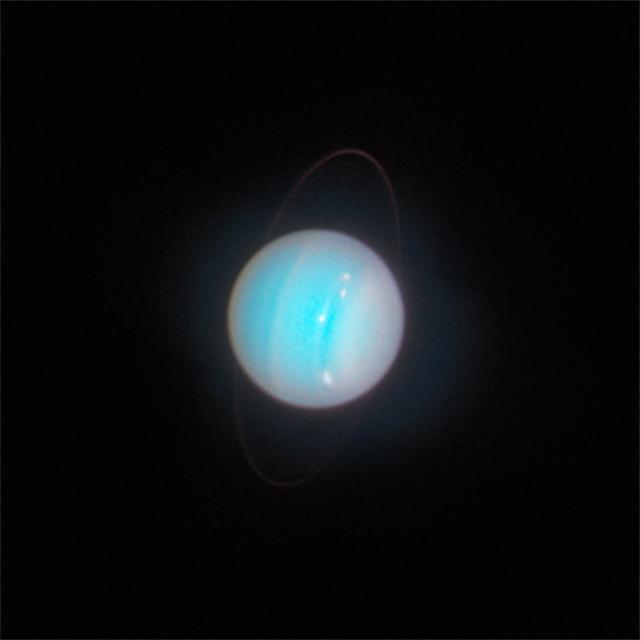
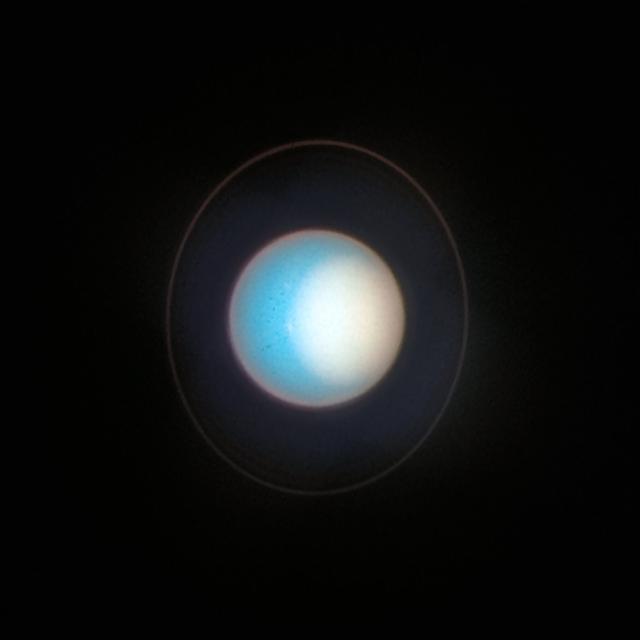
Hubble Monitors Changing Weather and Seasons at Jupiter and Uranus
Hubble – as interplanetary meteorologist – is keeping track of the outer planets' weather, as it does every year.Andrea Gianopoulos (NASA)
100 points if you know the Gemini III spacecraft's nickname! 💯
The first crewed flight of the Gemini spacecraft and America's first space flight with TWO astronauts (Gus Grissom & John Young) was #OTD in 1961. More on the mission: go.nasa.gov/3n8COE9
📷 Gemini III training
#NASAhistory

Gemini Pioneered the Technology Driving Today's Exploration
Project Gemini proved to be more than a stepping stone to Apollo and the moon, it was a bridge to the future.NASA
Take a virtual trip to @NASAGoddard today! Catch a live panel of scientists who are training astronauts, helping select #Artemis landing sites and more, in preparation for conducting science at the Moon’s South Pole.
📅 March 23 from 1-2PM ET
📺 Watch: video.ibm.com/channel/nasa-gsf…
#NASAMoon
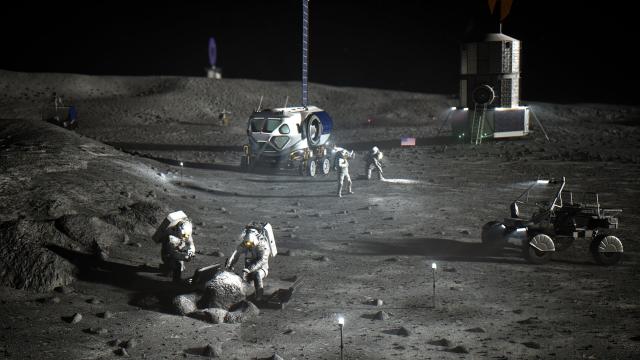
NASA Goddard Space Flight Center
NASA Goddard Space Flight Center is home to the nation's largest organization of combined scientists, engineers, and technologists that build spacecraft, instruments, and new technology to study the Earth, the sun, our solar system, and the universe.IBM Watson Media
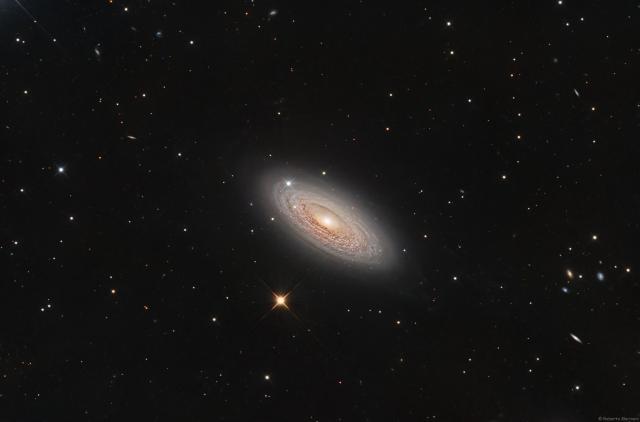
APOD: 2023 March 23 - Spiral Galaxy NGC 2841
A different astronomy and space science related image is featured each day, along with a brief explanation.apod.nasa.gov

Spiral Galaxy NGC 2841
Image Credit & Copyright: Roberto Marinoni
apod.nasa.gov/apod/ap230323.ht… #APOD

APOD: 2023 March 23 - Spiral Galaxy NGC 2841
A different astronomy and space science related image is featured each day, along with a brief explanation.apod.nasa.gov
#NASA
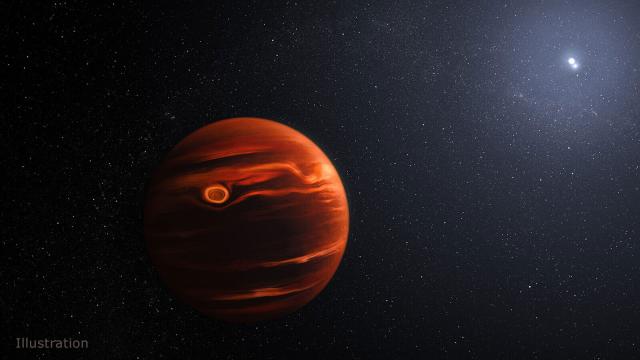
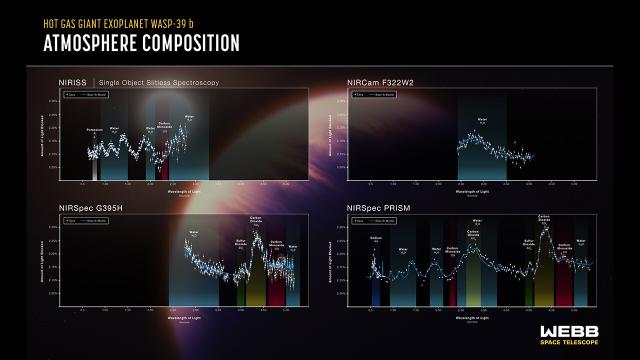
NASA’s Webb Spots Swirling, Gritty Clouds on Remote Planet
Researchers observing with NASA’s James Webb Space Telescope have pinpointed silicate cloud features in a distant planet’s atmosphere.Isabelle Yan (NASA)
Reporters: Interview the four astronauts who will travel around the Moon and deeper into space than any humans before them.
Media credentialing to cover the joint @nasa-@CSA_ASC reveal of the #Artemis II crew in Houston on April 3 is open now: go.nasa.gov/404oRpc
#NASA
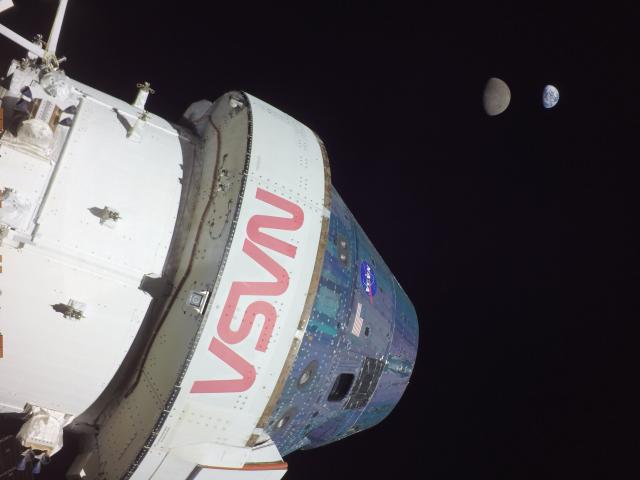
NASA, Canadian Space Agency to Assign Artemis II Moon Astronauts
NASA and CSA (Canadian Space Agency) will announce during an event at 11 a.m. EDT (10 a.m. CDT) on Monday, April 3, from NASA Johnson Space Center’s Ellington Field in Houston, the four astronauts who will venture around the Moon.Abbey Donaldson (NASA)
#ISS
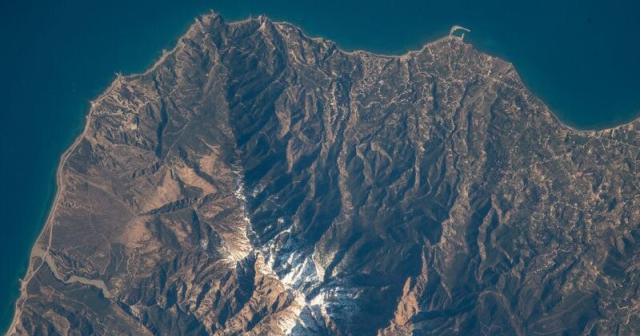
Crew Focuses on Experiments and Equipment to Maintain Health While in Space
The Expedition 68 crew members conducted experiments and maintained equipment aboard the International Space Station while activities for cargo transfers continued.go.nasa.gov
New data from @nasa's TESS space telescope is changing our understanding about how -- and where -- giant planets form. ucl.ac.uk/news/2023/mar/small-…
#NASAExoplanets
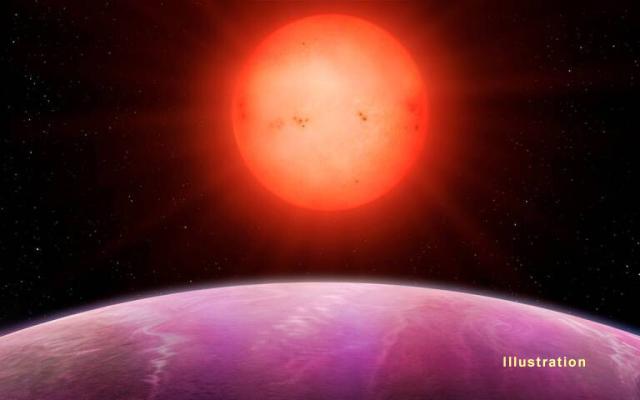
Small stars may host bigger planets than previously thought
Stars with less than half the mass of our Sun are able to host giant Jupiter-style planets, in conflict with the most widely accepted theory of how such planets form, according to a new study led by UCL and University of Warwick researchers.UCL News
#NASAhqphoto

20230322 Celebrating Women Who Tell Our Stories Event
Explore this photo album by NASA HQ PHOTO on Flickr!NASA HQ PHOTO (Flickr)
#NASAExoplanets
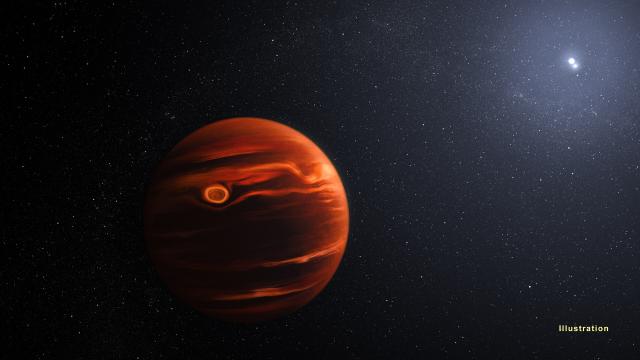
NASA’s Webb Spots Swirling, Gritty Clouds on Remote Planet
Researchers observing with NASA’s James Webb Space Telescope have pinpointed silicate cloud features in a distant planet’s atmosphere.Isabelle Yan (NASA)
#NASAExoplanets
#NASAEarth
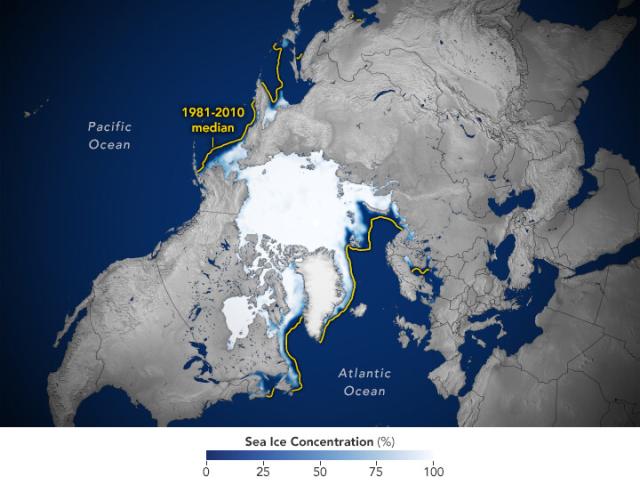
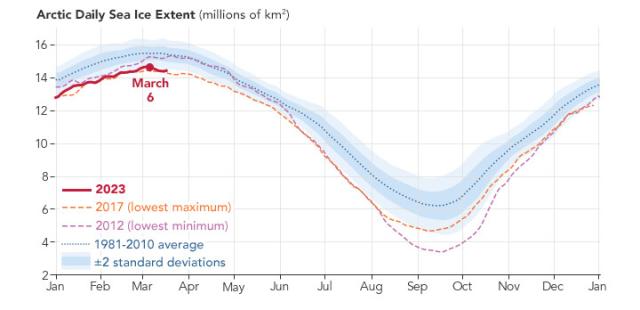
Arctic update: On March 6, 2023, Arctic sea ice appeared to reach its annual maximum extent (or coverage) at 14.62 million square kilometers (5.64 million square miles) – the fifth lowest in the satellite record maintained by the @NSIDC.
Learn more: go.nasa.gov/3neiPnx
#NASAEarth
Arctic Sea Ice Below Average in Winter 2023
The end-of-winter sea ice extent in March 2023 was the fifth lowest in the satellite record.go.nasa.gov
Since the start of the satellite record in 1979, the ten lowest maximums have all occurred within the past two decades.
NASA’s fieldwork and satellites monitor the changing ice pack, helping to predict how the ice will change in the future.
#NASAEarth
#JamesWebb
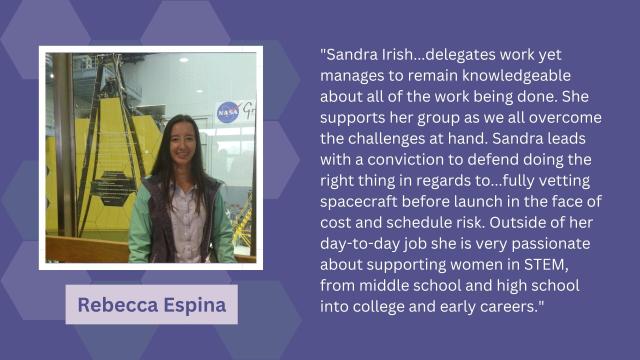
Vibration Testing of NASA's James Webb Space Telescope
Inside NASA's Goddard Space Flight Center in Greenbelt, Maryland, the James Webb Space Telescope team completed the environmental portion of vibration testin...YouTube
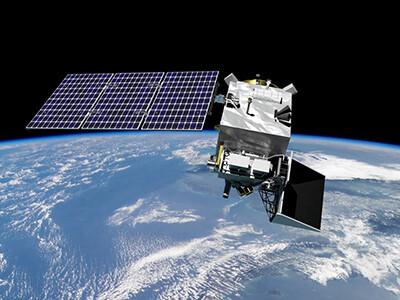
Carbon plays a role in all of Earth's systems, including the ocean.
@nasa's upcoming PACE mission will give us a whole new way to see the seas. PACE is designed to measure carbon from the sky and land to the ocean.
#WorldWaterDay 🌊
Dive in: go.nasa.gov/3lvVLjD
#NASAEarth
#NASAEarth
Harry Callahan
in reply to NASA • • •