
roasting people on the internet is not activism
Content warning: kinda subtoot
stop making vaugly agreeable statements that aren't actually actionable in any way and expecting this to help somehow.
"gonna go jog the dog"
Almost all marine life depends on phytoplankton, tiny plant-like organisms that use chlorophyll to photosynthesize. Scientists track phytoplankton by measuring the concentration of chlorophyll in the water, which @nasa satellites can detect from space.
Breathing Life into the Ocean
Almost all life in the ocean depends on tiny photosynthetic organisms known as phytoplankton.go.nasa.gov
Lots of chlorophyll in the water can indicate a phytoplankton bloom, swirls of blue and green in the ocean that satellites can see from space.
The color of the swirls tells scientists about the plankton in the bloom and nutrient cycling in the ocean.
#NASAEarth
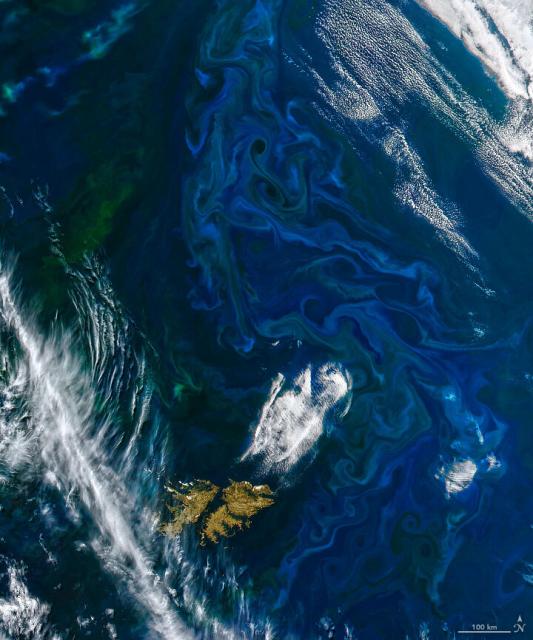
However, NASA’s existing satellites have some limitations to what they can see. The @nasaocean PACE satellite, slated to launch in January 2024, is hyperspectral, meaning it will see the ocean in even more hues.
More on PACE: go.nasa.gov/3VRcfzc
#NASAEarth
NASA PACE - Home
PACE's technologies will provide unprecedented insight into Earth's ocean and atmosphere, which impact life by regulating climate and making Earth habitablego.nasa.gov
#NASAhistory
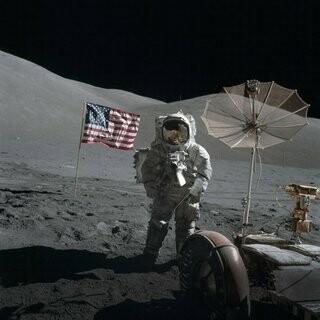
Selecting a landing site on the Moon is more than just pointing at a map. Topography, imaging, and past mission data are just a few things used to determine a landing site.
🎧 Listen to @NASA_Johnson’s Houston We Have a Podcast episode 121 to learn more. nasa.gov/johnson/HWHAP/apollo-…
#NASAhistory
Ep 121: Apollo 17
Dr. Harrison Schmitt, the Apollo 17 lunar module pilot and the only geologist to walk on the Moon, discusses the 50th anniversary of the Apollo program, his Apollo 17 mission, what is scientifically interesting about the Moon, and what we have to loo…Norah Moran (NASA)
Content warning: questionable
the opposite of fingerless gloves is logically fingered gloves
#NASASolarSystem
"what position do you play in golf"


like this

like this

twink stands for trans wink
type of person who finds homestuck from xkcd.com
implausible sock materials

Well that was unexpected #shorts
It worked out in the end#Slaythespire #Gaming #shortsTwitch: https://brodierobertson.xyz/twitchDlive: https://brodierobertson.xyz/dlivePatreon: https://brodi...YouTube
Ever wonder why we always see the same face of the Moon from Earth? 🤔
The Moon rotates exactly once each time it orbits our planet. This arrangement is an example of a special kind of orbital dance called "tidal locking".
Here's how it works: go.nasa.gov/3BdKOb9
#NASAMoon
Tidal Locking | Moon in Motion – Moon: NASA Science
Moon.nasa.gov is NASA's deep dive resource for lunar exploration from astronauts to robots.Moon: NASA Science

PopOS Has BIG PLANS For New Rust COSMIC DE
I have no plans to daily drive PopOS but System76 has got some crazy features planned for new rust COSMIC desktop, features that I thought I wouldn't see on ...YouTube
Congrats to our Operations Project Scientist Dr. Jane Rigby for being named to the #BBC100Women list!
Dr. Rigby studies galaxy evolution. She’s published more than 100 peer-reviewed scientific papers and won multiple awards for her research. More: webb.nasa.gov/content/meetTheT…
#JamesWebb

Jane Rigby Biography Webb Telescope/NASA
The James Webb Space Telescope (sometimes called Webb or JWST) is a large infrared telescope with a 6.5-meter primary mirror. Webb will be the premier observatory of the next decade, serving thousands of astronomers worldwide.webb.nasa.gov
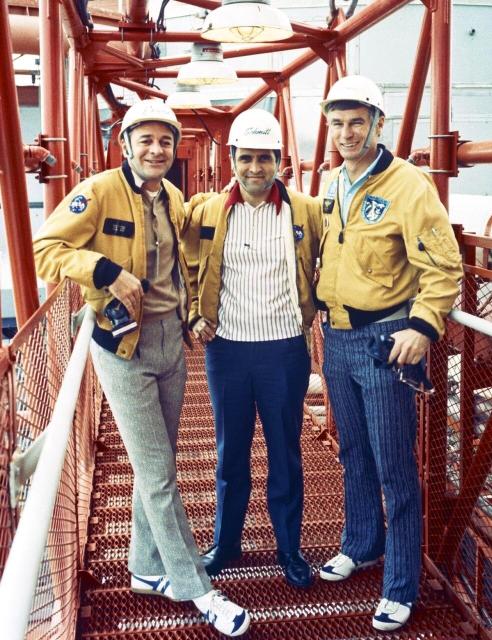
In 1972, #Apollo17 Mission Commander Eugene Cernan had 2 space flights under his belt, Gemini 9 in June 1966 and Apollo 10 in May 1969. Cernan was also a backup crew member of the Gemini 12, Apollo 7, and Apollo 14 missions.
Check out more photos: go.nasa.gov/3VXgppx
#NASAhistory
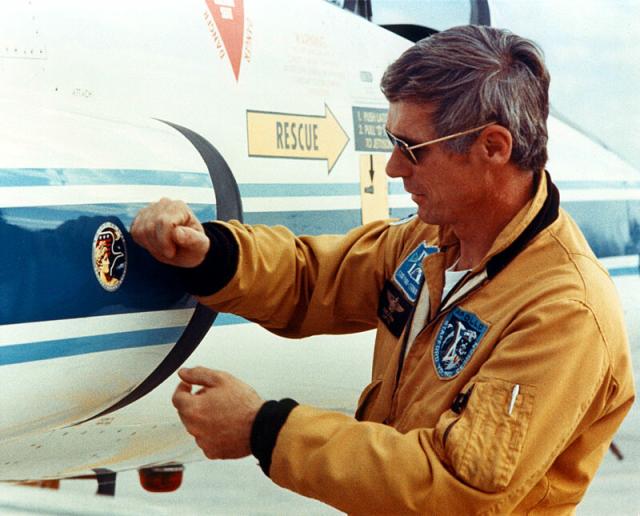
Gene Cernan
NASA brings you images, videos and features from the unique perspective of America's space agency. Get updates on missions, watch NASA TV, read blogs, view the latest discoveries, and more.NASA
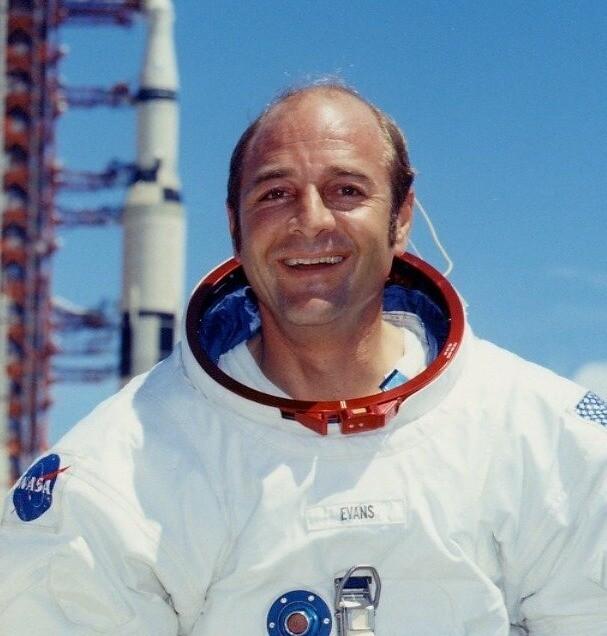
#Apollo17 Command Module Pilot Ronald E. Evans was selected as a member of the 4th group of NASA astronauts in 1966. He was an electrical and aeronautical engineer, and @USNavy aviator before his assignment to the Apollo 17 crew.
Ron Evans's biography: go.nasa.gov/3H1dCHC
#NASAhistory
#NASAhistory
Create your surveys with Nextcloud Forms 📝
Sharing in Nextcloud 🔗
Migrating to Nextcloud 💙
Switching to Dark Theme 🌚
Check these and more of the #Nextcloud feature videos below!

#NASAUniverse
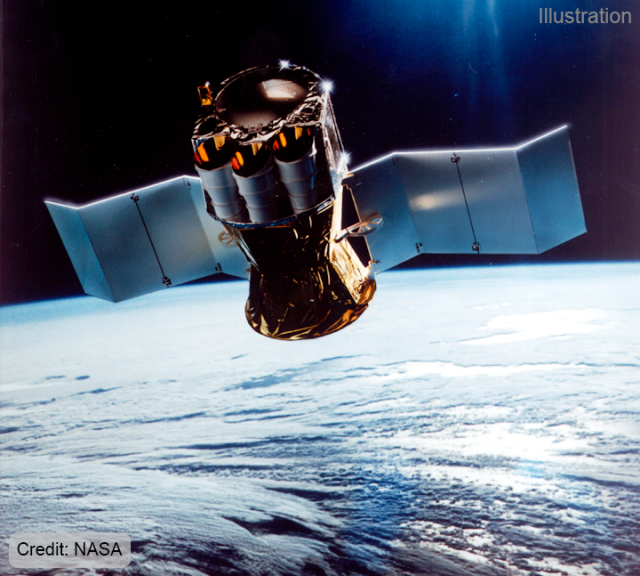
Submillimeter Wave Astronomy Satellite | Center for Astrophysics
NASA’s Submillimeter Wave Astronomy Satellite (SWAS) was a space observatory built to look for water and other molecules associated with life as we know it.www.cfa.harvard.edu
#ISS
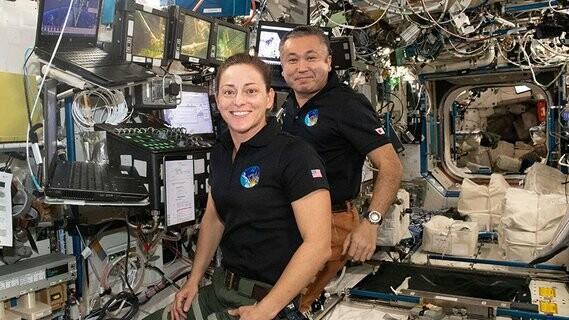
Research-Filled Day and Spacesuit Work Keeps Crew Busy
Life science and space physics filled the research schedule on Tuesday for the four Expedition 68 astronauts aboard the International Space Station.blogs.nasa.gov
A tiny, nearby galaxy peeks from behind a bright foreground star. The Peekaboo Galaxy is much like galaxies found in the distant, early universe, without many of the heavier elements forged in stars over cosmic history. go.nasa.gov/3UCCt7N
#NASAExoplanets
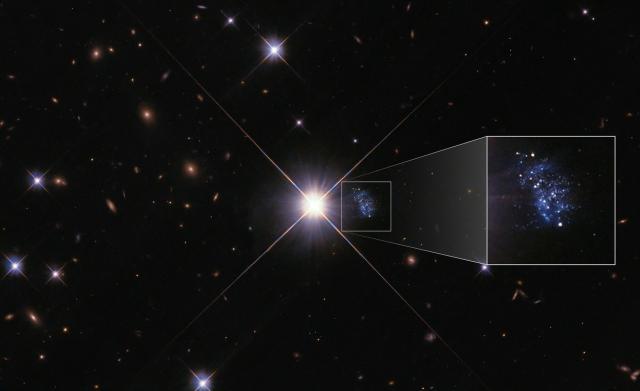
Peekaboo! Tiny, Hidden Galaxy Provides a Peek Into the Past
Peeking out from behind the glare of a bright foreground star, astronomers have uncovered the most extraordinary example yet of a nearby galaxy with characteristics that are more like galaxies in the distant, early universe.Andrea Gianopoulos (NASA)
The latest of our #StarrySights is tucked away in the top right corner of this new Hubble image!
KMHK 1231 is an open star cluster surrounded by plumes of crimson gas and dust where new stars may someday form.
Learn more: go.nasa.gov/3Uzftq3
#Hubble
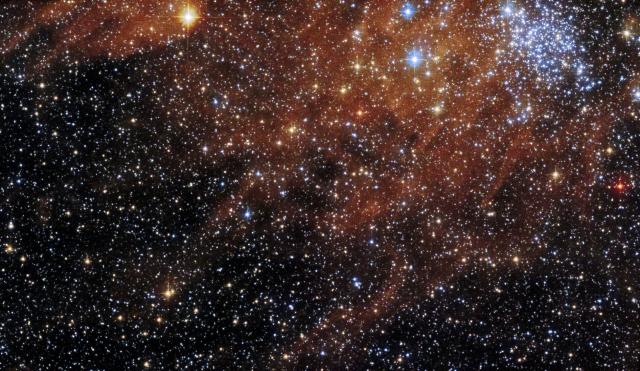
Hubble Spots Bright Splash of Stars Amid Ripples of Gas and Dust
Open cluster KMHK 1231 is a group of stars loosely bound by gravity. Seen in the upper left of this Hubble Space Telescope image, this cluster in the Large Magellanic Cloud is surrounded by a crimson nebula of gas and dust extending both to the right…Andrea Gianopoulos (NASA)
#NASAUniverse
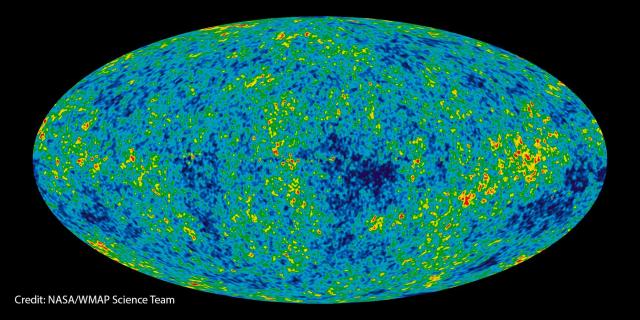
What Can We Learn from the Universe’s Baby Picture?
If you look at your baby photos, you might see hints of the person you are today — a certain look in the eyes, maybe the hint of your future nose or ears. In the same way, scientists examine the...nasa (Tumblr)
Rise and shine! 🛰️⏰
#OTD in 2014, the New Horizons spacecraft awoke from its "nap" in anticipation of reaching Pluto after almost 3 billion miles and 9 years. 7 months later, it captured these photos of Pluto (left) and Charon (right).
Read more: go.nasa.gov/3P1fVMH
#NASAhistory
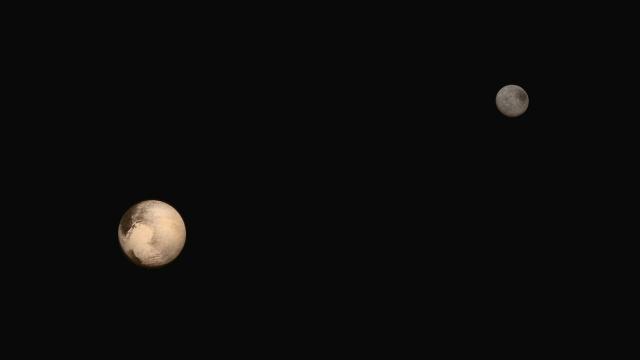
On Pluto’s Doorstep, New Horizons Spacecraft Awakens for Encounter
NASA’s New Horizons spacecraft came out of hibernation today for its long-awaited 2015 encounter with the Pluto system.NASA
The world’s largest active volcano, Mauna Loa, is still erupting.
The @nasa/@USGS Landsat 9 satellite captured this image on Dec. 2. Infrared data from #Landsat’s OLI-2, which detects heat, is overlaid in red, indicating the presence of lava.
🌋: go.nasa.gov/3iEuU2Y
#NASAEarth
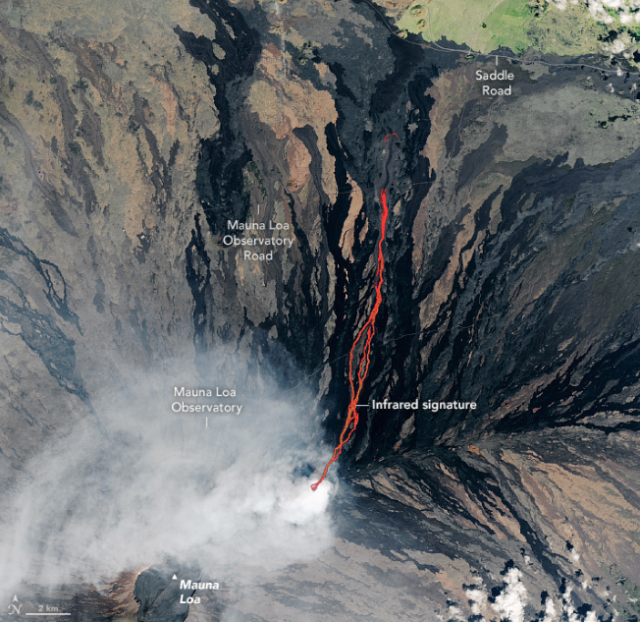
Lava Flows North on Mauna Loa
The Landsat 9 satellite acquired this image of the eruption as lava flowed past the Mauna Loa Observatory toward Saddle Road.go.nasa.gov
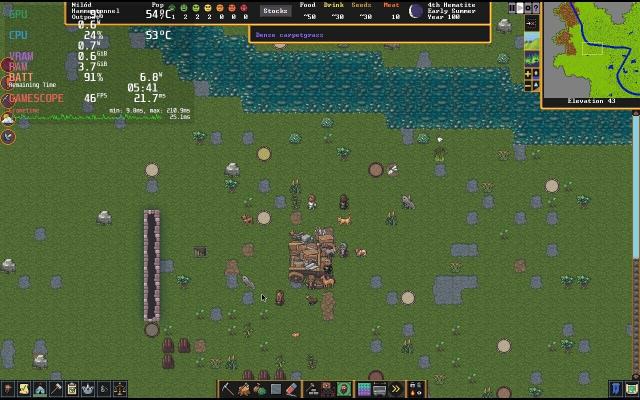
Dwarf Fortress arrives on Steam, works on Linux desktop and Steam Deck
Dwarf Fortress has now finally arrived on Steam, with all the shiny new bits including the new graphical tiles and audio included in Early Access.Liam Dawe (GamingOnLinux)
I was actually curious if it would work on Linux out of the box. I am no fan of ASCII graphics (I simply can’t remember what anything is:( ) and I’ve wanted to ruin my life further by trying Dwarf Fortress.
(But I don’t want to ruin my life by installing windows)
The best of both worlds 🎸
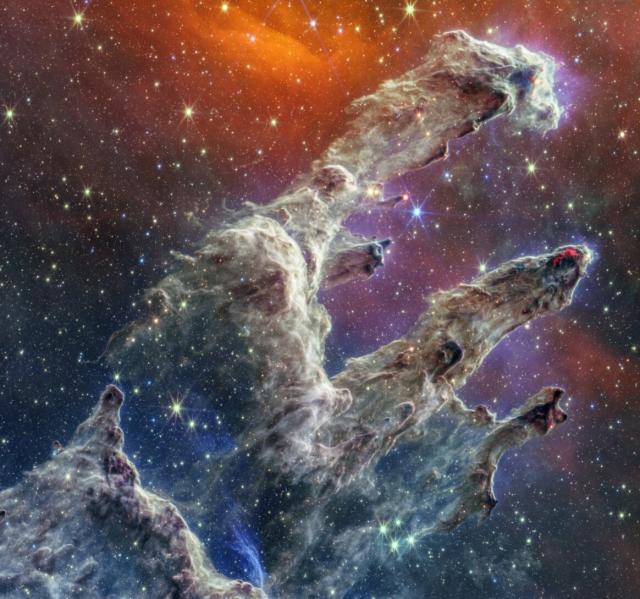
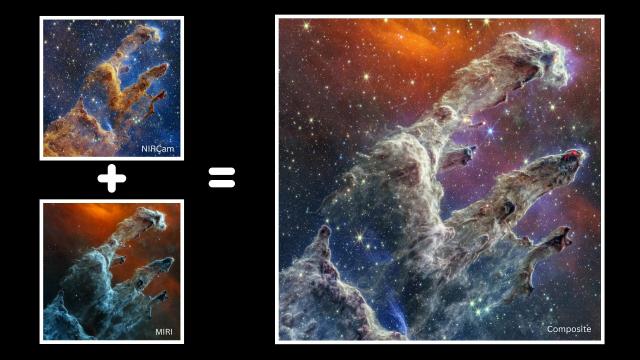
Recognize the Pillars of Creation? Webb’s near-infrared and mid-infrared images of this super star-forming region were fused to highlight new details: bit.ly/3P5uzT3
#JamesWebb

#JamesWebb
Peekaboo! 🫣
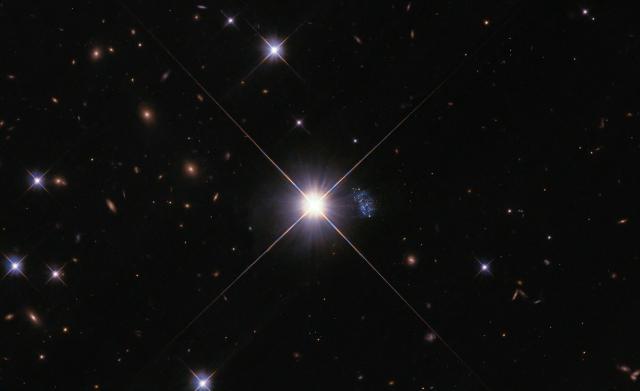
Hubble helped find a galaxy peeking out from behind the glare of a bright, foreground star. Nicknamed the Peekaboo Galaxy, it's an extraordinary example of a relatively nearby galaxy that shares traits with our universe's earliest galaxies: go.nasa.gov/3F9XIIa
#Hubble
Peekaboo! Tiny, Hidden Galaxy Provides a Peek Into the Past
Peeking out from behind the glare of a bright foreground star, astronomers have uncovered the most extraordinary example yet of a nearby galaxy with characteristics that are more like galaxies in the distant, early universe.Andrea Gianopoulos (NASA)
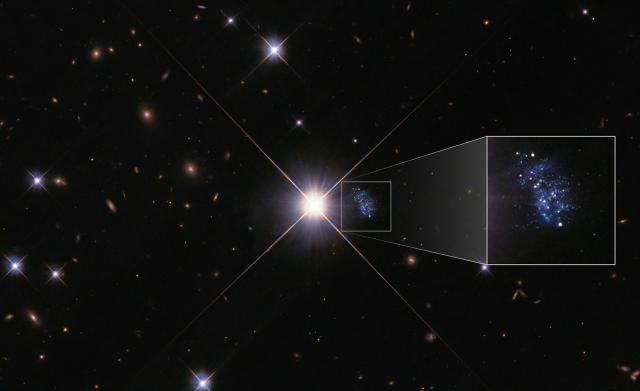
This inset image highlights the Peekaboo Galaxy, formally known as HIPASS J1131–31.
This galaxy may be the nearest example of the galaxy formation processes that commonly took place not long after the big bang, 13.8 billion years ago.
#Hubble
RichardOntario
in reply to NASA • • •