Biofuel Boom in Brazil: Green Growth or Greenwash?
Brazil’s booming biofuel industry is hailed as a solution to climate change, yet its rapid expansion comes at a cost. The push for bioethanol and biodiesel production is driving deforestation, threatening food security, and displacing communities. As Brazil positions itself as a leader in bioenergy, concerns grow over the environmental and social impacts of this industry, spotlighting the need for genuine solutions. 🌿 #Biofuel #EnvironmentalJustice #ClimateActionNow #Boycott4Wildlife
Written by Monica Piccinini for The Canary, republished with author permission. Read original.
Brazil’spush to expand biofuels is central to its strategy to “drive the decarbonisation agenda” and build a robust “bioeconomy,” setting the stage for this to become a major focus at the upcoming UN Climate Change Conference (COP 30) in Brazil in November 2025.
Brazil’s biofuel ‘revolution’
During a ceremony at the Brasilia Air Base in October, president Luiz Inácio Lula da Silva declared:
Brazil will lead the world’s energy revolution
This statement came as he signed the Fuel of the Future Law, a set of initiatives aimed at advancing the country’s bioenergy sector. Lula added:
Brazil will get a head start because you, the entrepreneurs, who have the capacity to produce, to research. Enacting this law demonstrates that none of us have the right to continue disbelieving that this country can be a large economy,” added Lula.
Lula announced a rise in ethanol blending with gasoline from 22% to 27%, with a target of 35% by 2030. Biodiesel blending, currently at 14%, will increase by one percentage point annually, aiming to reach 20% by March 2030.
Biofuel mandates have generated a relentless demand for crops, including sugarcane, corn, soybean, and palm oil.
Ethanol and biodiesel production in Brazil reached nearly 43bn litres in 2023, according to the 2024 Brazilian Statistical Yearbook on Oil, Natural Gas, and Biofuels, published by Brazil’s National Agency for Petroleum, Natural Gas, and Biofuels (ANP).
Biofuels for energy independence
In Brazil, biofuels make up 25% of transportation fuels – a remarkably high share compared to other nations – and this proportion is still increasing. Bioethanol leads the biofuel sector, representing an average of 49% in terms of energy of the total gasoline and ethanol consumption.
Jorge Ernesto Rodriguez Morales, lecturer and researcher in environmental policy and climate change governance at the Department of Economic History and International Relations at Stockholm University, spoke to the Canary. He mentioned:
Historically, Brazilian energy policy has achieved significant success, largely due to the development of the oil industry alongside biofuels and other energy sources. This diversification has enabled Brazil to rely less on energy imports from the global market, fostering a degree of energy independence and security critical for economic stability.
He added that:
By reducing dependence on external energy sources, Brazil’s economy is less vulnerable to external shocks, such as fluctuations in oil and gas prices. Sugarcane ethanol, in particular, has been pivotal in these developments, positioning bioenergy – a renewable energy form derived from recently living organic materials known as biomass – at the forefront of national strategies to combat climate change.
Green sheen
Although bioenergy has been promoted as a climate strategy, there is ongoing debate within the scientific community regarding the actual sustainability of biofuel production.
Some scientists argue that the production of biofuels is an energy-negative process that may lead to various socio-environmental consequences. These include rising food prices that threaten food security and the conversion of forestlands for biofuel cultivation. Some state that presenting bioenergy as a climate strategy has served as a justification for the industry’s expansion in Brazil and globally.
Morales explained that:
Despite its success, the biofuels industry in Brazil developed within broader developmental and territorial security goals, often placing significant pressure on ecosystems and communities in an institutional environment that generally overlooked socio-environmental concerns. This unsustainable co-evolution of development pathways and bioenergy – marked by deforestation, land colonization, and agricultural expansion – has limited the adaptation space in agriculture. As a result, current climate policy is largely oriented toward path-dependent and potentially maladaptive strategies, such as relying on sugarcane ethanol for transportation.
A report by the Royal Society raises concerns about expanding biofuel production, highlighted issues such as the impact on food prices, the potential rise in greenhouse gas emissions due to direct and indirect land use changes (LUC) associated with biofuel feedstock production, and the risks of land, forest, water resource, and ecosystem degradation.
The Royal Society report recommends comprehensive auditing of biofuel supply chains as essential, along with enhancing transparency, data availability, and sharing. These elements are crucial for ensuring that the life cycle assessment (LCA) of biofuels is reliable and beneficial for policymaking.
Demand driving deforestation
The use of feedstocks like sugarcane, palm oil, corn, and soybean – predominant in Brazil – has sparked significant controversy, primarily due to competition with food production and concerns about converting agricultural land into fuel production. Rising demand for agricultural products poses a risk of increased deforestation and the use of land with high biodiversity value to satisfy this demand, along with related freshwater consumption.
The EU Deforestation-Free Regulation (EUDR) identifies soybean as one of the world’s leading drivers of deforestation. Trade interests appear to be the main barrier to removing soy biofuels from the Renewable Energy Directive, as Europe imports nearly 90% of its soy for biodiesel production from Brazil, Argentina, and the United States.
Dr David Pimentel, a professor of ecology and agricultural sciences at Cornell University, asserted that there is insufficient land, water, and energy available for biofuel production. He also highlighted environmental issues associated with converting crops into biofuels, such as water pollution from fertilisers and pesticides, air pollution, soil erosion, and contributions to global warming.
Pimentel conducted calculations that accounted for all the inputs needed to produce ethanol, including machinery, seeds, labour, water, electricity, fertilisers, insecticides, herbicides, fuel, drying, and transportation. He found that producing one litre of fuel-grade ethanol (5,130 kcal) requires an energy input of 6,600 kcal, indicating that biofuel production is an energy-negative process.
‘Serious socio-economic impacts’
A report published in the Biofuel journal states that measuring greenhouse gas emissions linked to ethanol fuel should account for emissions at every stage, including production, processing, distribution, and vehicle use. This comprehensive assessment is known as the core well-to-wheels LCA emissions, along with any additional emissions resulting from LUC.
Morales discussed some of the impacts of implementing a climate policy that relies on biomass fuels. He told the Canary:
Current climate policy positions biomass-based fuels as a replacement for fossil fuels in the transport sector, with sugarcane ethanol as a flagship solution for greenhouse gas reduction in international climate negotiations. However, scaling up bioenergy production can have serious socio-environmental impacts.
He added that:
Like food production, ethanol requires land, water, and nutrients, meaning that a large-scale expansion could intensify the negative side effects of agricultural growth. These include significant socio-environmental challenges related to sustainable development goals, such as deforestation (SDG 15), CO2 emissions from land-use change (SDG 13), nitrogen losses (SDGs 13, 14, 15), unsustainable water withdrawals (SDG 14), and food security risks (SDG 2), among others.
Brazil biofuel policies
During Brazil’s colonial period (1500-1822), sugarcane plantations established the basis for political power through land monopoly and slavery. Policies were implemented to promote the economic interests of the agribusiness sector.
In response to the energy and sugar crisis of the 70s, Brazil launched a national ethanol program called “Pró-Álcool” in 1975. This initiative included tax breaks, subsidies, and lower financing costs to benefit the sugarcane industry, including producers, planters, distillers, and the automotive sector.
The “Pró-Álcool” policy led to significant repercussions, such as the exploitation of workers (bóias-frias) and environmental degradation, which the Brazilian government neglected out of concern that environmental regulations might hinder economic growth and development.
From 1992 to 2004, while Brazil’s total greenhouse gas emissions rose by 80%, the government defended its support for ethanol on environmental grounds, positioning bioenergy as a “sustainable energy source.” This approach framed bioenergy as part of a climate strategy, leading to its promotion at international levels to combat climate change.
Overlooking indirect land use changes
However, the socio-environmental impacts of bioenergy production were largely overlooked, including direct and indirect LUC, water and biodiversity loss, deforestation, fertiliser pollution, and soil erosion.
In 2017, the “Renovabio” initiative was launched as a new government program aimed at promoting the growth of the bioenergy sector, with an emphasis on various types of biofuels, such as biodiesel, biomethane, bioethanol, and biokerosene.
A report published in the Biofuels journal indicates that Brazil’s RenovaBio programme does not account for direct or indirect LUC in its emissions calculator, potentially leading to an overestimation of decarbonisation levels and encouraging biofuel production with greater environmental impacts. To ensure the program is environmentally effective and delivers appropriate signals to decision-makers, it is crucial to incorporate LUC parameters into the calculator.
Morales mentioned that:
Brazil’s ethanol diplomacy aims to portray the nation as climate-conscious, using biofuel as leverage in climate negotiations. Many countries have followed Brazil’s ‘successful’ example by integrating bioenergy into their climate policies, even though its social and environmental costs are widely acknowledged.
Biofuel Expansion
Raízen, formed from the merger of Cosan and Shell, along with BP Bunge, Atvos, São Martinho, Tereos, Lincoln Junqueira, Cofco, Coruipe, Adecoagro, Katzen, Millenium, Brasil BioFuels (BBF), and Agropalma, represent some of the leading bioenergy companies in Brazil.
In October, Katzen International, a prominent bioethanol company, announced the successful completion and launch of the INPASA Agroindustrial S/A bioethanol plant expansion project in Sinop, Mato Grosso. This expansion boosted the plant’s production capacity to 2.1bn litres per year, establishing it as the largest grain-based dry mill bioethanol facility in the world.
Corn ethanol production in Brazil is projected to reach 7.7 billion litres in 2024/25, representing a 20% increase compared to previous years.
The biofuel industry is making significant investments in the state of Pará. Governor Helder Barbalho has announced plans for a biofuel refinery to be established in the municipality of Redenção, located in the southeastern part of the state. A collaboration between the Mafra Group and Companhia Mineira de Açúcar e Álcool (CMAA), which together comprise Grão Pará Bioenergia, will contribute over $350 million to this project.
These are the agendas that will be challenging for us: the forest agenda, the energy production agenda. These are different agendas in which each one of them can present their solutions.
Alongside the refinery, a fattening service for cattle will be provided to partner ranchers, allowing them to use the refinery’s facilities for confining their animals. The primary feedstock for cattle confinement will be Dried Distillers Grain (DDG), a by-product of corn ethanol production.
Fueling conflicts
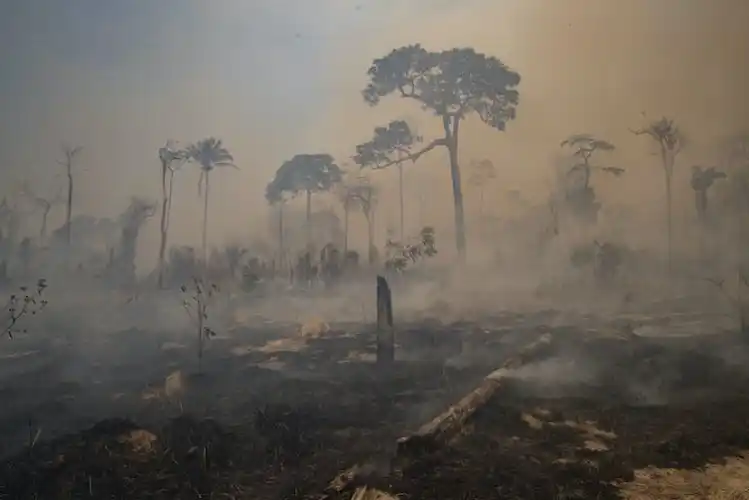
A report by NGO Imazon revealed that Pará accounted for 57% of the degraded forest areas in the Amazon. Forest degradation surged from 196 km² in September 2023 to 11,558 km² in the same month this year – nearly a 60-fold increase.
The state of Pará, which will host COP30, is marked by conflicts, including those related to the palm oil industry. Palm plantations in Pará cover an area that was once rainforest, approximately 226,834 hectares, nearly equivalent to the size of Luxembourg.
An investigation by the NGO Global Witness revealed that two major Brazilian palm oil companies, Agropalma and Brasil Biofuels (BBF), were implicated in conflicts with local communities in the state of Pará. BBF faced allegations of environmental crimes and violent efforts to suppress indigenous and traditional communities. Meanwhile, Agropalma was associated with community evictions and land grabbing.
A study by scientists Lucas Ferrante and Philip Fearnside revealed that biofuel companies, such as Millenium Bioenergia, are establishing a production chain for biofuels and food products derived from monocultures on Amazonian Indigenous lands and within other traditional communities.
Millenium announced plans to “partner” with Indigenous and traditional communities, proposing unpaid labour to produce corn, fish, chickens, pigs, and confined cattle. This approach not only infringes on human rights but also poses a risk of triggering new pandemics due to zoonotic leaps linked to environmental degradation.
Biofuels an exercise in greenwashing Brazil’s climate policy
Brazil must expand biofuel production to meet growing demand, which will increase logistical pressures nationwide. Critical to this expansion are infrastructure projects, such as the construction of highways like the Amazon’s BR-319, connecting Manaus to Porto Velho, and the Ferrogrão railway project, linking Sinop in Mato Grosso to the port of Miritituba, situated across the Tapajós River from Itaituba in Pará. These developments are likely to cause irreversible environmental degradation and adversely affect numerous indigenous and traditional communities in these areas.
Morales highlighted the Brazilian government’s position and priorities concerning the expansion of biofuel production:
In foreign environmental policy, the Brazilian government has historically been reluctant to prioritise environmental protection over economic growth, often attributing major environmental issues to developed countries. Although various administrations have made efforts to address environmental challenges such as biodiversity loss and climate change, these issues remain secondary concerns, frequently viewed as obstacles to short-term political and economic goals.
He added:
Positioning bioenergy as a climate strategy has effectively justified broader policies supporting the biofuel industry and contributed to the greenwashing of Brazil’s climate policy on the international stage. Several countries have mirrored Brazil’s approach, adopting bioenergy into their climate agendas in response.
Featured image via the Canary
Written by Monica Piccinini for The Canary, republished with author permission. Read original.
ENDS
Read more about deforestation and ecocide in the palm oil industry
Santa Catarina’s Guinea Pig are enchanting critically endangered rodents under threat from climate change. Advocate for climate action now! #Boycott4Wildlife Read more
Keel-billed Toucans have dazzling rainbow-coloured bills and are iconic to South America. Threats include hunting, palm oil and meat deforestation. Take action! Read more
Asian Small-clawed Otters are the world’s smallest otter species and are Vulnerable from palm oil tea and coffee deforestation. Protect them, boycott palm oil! Read more
Save the Tapanuli orangutan! The rarest ape in the world faces extinction after floods, cyclones and now rezoning of their habitat in Sumatra #BoycottPalmOil! Read more
Two stunning marsupials thought extinct for 6000 years rediscovered in West Papua. Calls for rainforest protection even more urgent! Read more
Load more posts Something went wrong. Please refresh the page and/or try again.
Take Action in Five Ways
1. Join the #Boycott4Wildlife on social media and subscribe to stay in the loop: Share posts from this website to your own network on Twitter, Mastadon, Instagram, Facebook and Youtube using the hashtags #Boycottpalmoil #Boycott4Wildlife.
2. Contribute stories: Academics, conservationists, scientists, indigenous rights advocates and animal rights advocates working to expose the corruption of the palm oil industry or to save animals can contribute stories to the website.
3. Supermarket sleuthing: Next time you’re in the supermarket, take photos of products containing palm oil. Share these to social media along with the hashtags to call out the greenwashing and ecocide of the brands who use palm oil. You can also take photos of palm oil free products and congratulate brands when they go palm oil free.
4. Take to the streets: Get in touch with Palm Oil Detectives to find out more.
5. Donate: Make a one-off or monthly donation to Palm Oil Detectives as a way of saying thank you and to help pay for ongoing running costs of the website and social media campaigns. Donate here
_Área afetada pelo dano ambiental equivale a mais de 13 vezes_ _a cidade de São Paulo e 57% fica no Pará_ \[caption id="attachment\_47444" align="aligncenter" w...












Netraven
in reply to Palm Oil Detectives • • •