Search
Items tagged with: WorldWildlifeDay
This #WorldWildlifeDay take action for #animals great and small because #reptiles #insects #mammals and #birds deserve better than #palmoil ecocide and #extinction! When you shop always #Boycottpalmoil #Boycott4Wildlife @palmoildetectives wp.me/pcFhgU-iMO
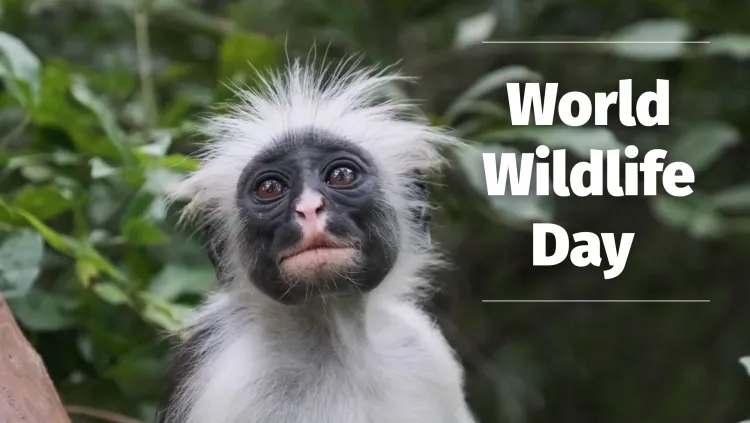
Do you love animals? Make every day #WorldWildlifeDay
This #WorldWildlifeDay, please remember the wild animals you love who are running out of time and land to live on. Research recently found that converting partly logged areas into palm oil plantations sounds the death knell for that ecosystem. Across the globe, from Indonesia to Brazil and Nigeria, vibrant rainforests and animals like reptiles and insects are under threat from palm oil, timber, and meat. This ecocide leaves majestic animals struggling to survive against chainsaws, bulldozers, pesticides and destruction for palm oil and meat agriculture. A multi-billion dollar industry has grown up around legitimising palm oil and meat ecocide, primarily through the RSPO but also other greenwashing schemes as well. Read on to discover more and how you can shine a light on the lives of elusive animals.This #WorldWildlifeDay take action for #animals great and small 🦋🐦🐘🐒🐍 because #reptiles #insects #mammals and #birds deserve better than #palmoil ecocide and #extinction! When you shop always #Boycottpalmoil #Boycott4Wildlife @palmoildetect wp.me/pcFhgU-iMO
Share to BlueSky
Share to Twitter#Palmoil and #meat #agriculture 🥩💀 are some of the biggest threats to wild #animals and farmed animals. This #WorldWildlifeDay and every single day, make sure fight for them and go #vegan 🥕🍆🍅 #BoycottPalmOil 🌴🩸☠️🧐⛔️ and #Boycott4Wildlife wp.me/pcFhgU-iMO
Share to BlueSky
Share to TwitterProtecting Sumatra’s last remaining tigers
The Sumatran tiger is teetering on the brink of extinction. Recent findings underscore the urgency of protecting the last remaining populations of these majestic apex predators. Deforestation for palm oil and illegal poaching are wiping out their homes. In the Ulu Masen Ecosystem, a recent study detected only 11 tigers, highlighting severe population stress from snares and habitat loss. Without immediate action, they face the same tragic fate as the extinct Javan and Balinese tigers. Strict global rainforest laws, enforcement of anti-poaching units, and a consumer boycott of palm oil hold the key to protecting Sumatra’s last living tigers.Animals of Tesso Nilo in Sumatra are vanishing
Tesso Nilo National Park in Sumatra has lost an alarming 78% of primary forest between 2009 and 2023. The primary driver of this devastation is the expansion of illegal palm oil plantations. This rampant deforestation threatens the homes of critically endangered species like tigers, orangutans, and elephants. When palm oil companies build roads, they increase accessibility for poachers, further endangering the animals who live there. Advocating for indigenous-led conservation efforts and adopting a plant-based lifestyle are vital steps to protect these ecosystems.youtube.com/watch?v=z7FUBg_Aqj…
56% of ‘data deficient’ species on the Red List are endangered
The destruction of wild ecosystems continues to push thousands of obscure species towards extinction finds a study by Norwegian University of Science and Technology. Researchers used advanced machine learning algorithms to assess the survival probability of thousands of under-researched animals, predicts that a staggering fifty-six percent of all “data deficient” species are currently threatened with extinction. 85% of unassessed amphibians face immediate existential threats, primarily driven by anthropogenic habitat degradation such as the unchecked expansion of palm oil plantations, meat agriculture, mining and timber logging. Right now is the time to fight for all life and reject products linked to ecocide. Always remember them and share out their posts! Start here on the forgotten animals page.These are the forgotten animals of the secretly destroyed forests
Sumatran elephants trapped by endless palm oil
In Indonesia’s North Aceh district, Sumatran elephants find themselves increasingly encircled by shrinking patches of forest, hemmed in all all sides by massive palm oil expansion. Just 924 to 1,360 individual Sumatran elephants remain alive. They are trapped in dead lands, surrounded by the very industry that is eradicating their food sources. Ongoing attempts by researchers to measure their populations have been hampered by the Indonesian government, which attempts to hide the truth from the media. Boycott palm oil when you shop to protect these irreplaceable beings.Toxic palm oil pesticides are killing baby macaques
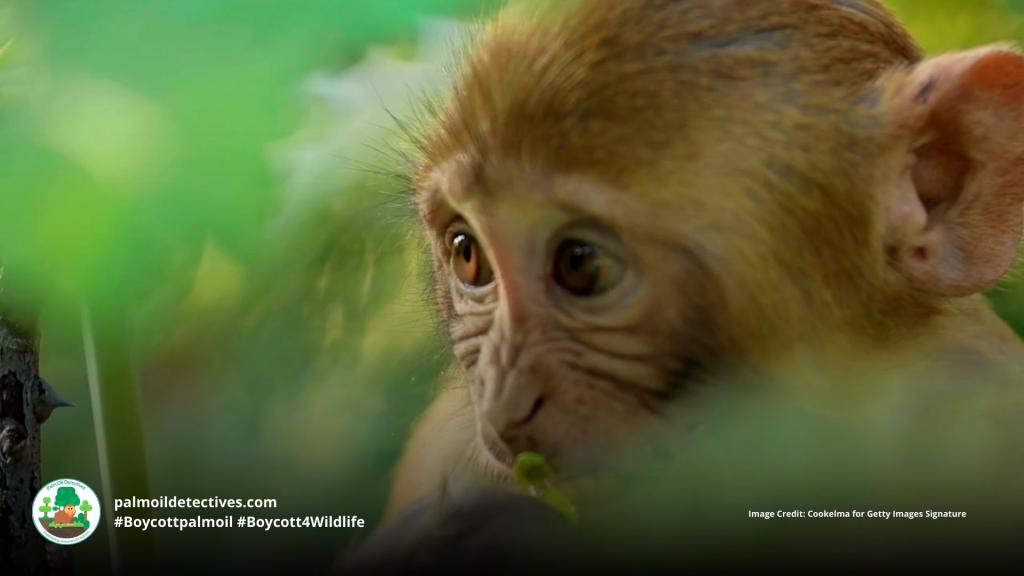
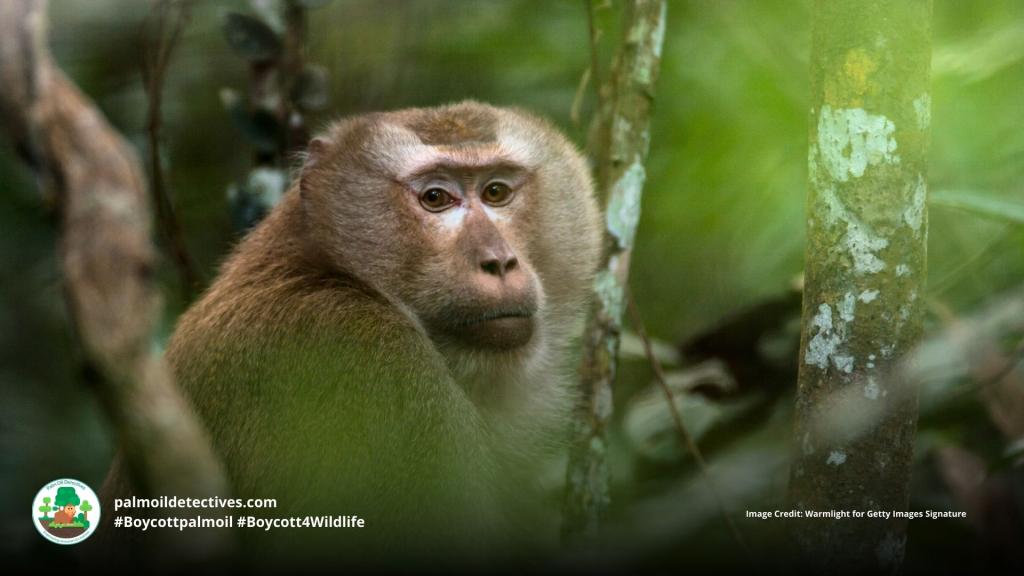
In Peninsular Malaysia, infant southern pig-tailed macaques are dying at alarmingly high rates due to palm oil plantations. A recent study found that agricultural chemicals and pesticides cross the placental barrier of unborn macaques, impacting their development. Prolonged exposure to these toxic plantations during infancy makes baby macaques three times more likely to die. These intelligent primates face increased risks from predators, human encounters, and poisons. Take action and boycott palm oil to protect these precious infants.
The fight for the lives of Wondiwoi tree kangaroos
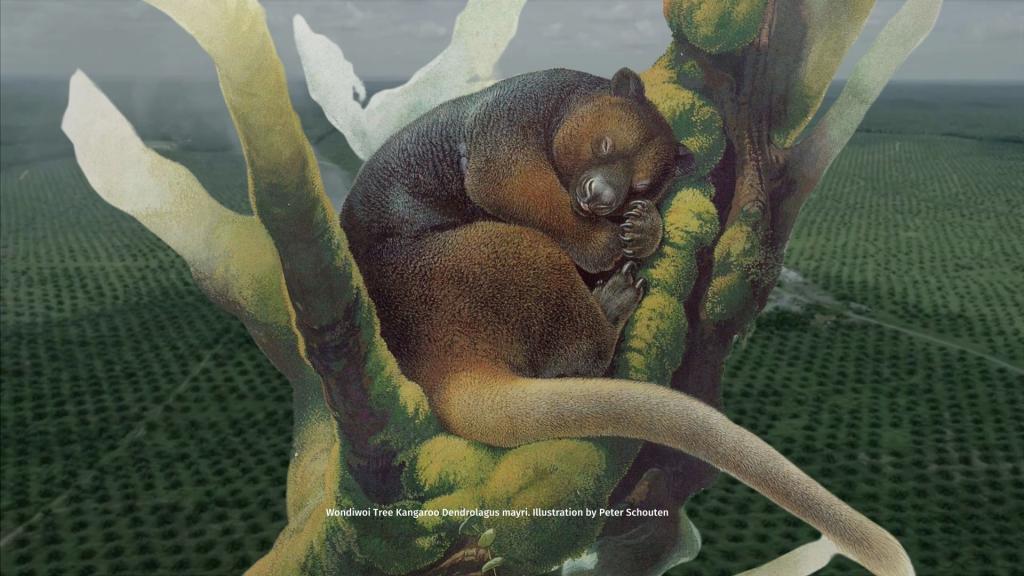
The Wondiwoi tree kangaroo is the world’s most endangered kangaroo. Rediscovered in 2018 in West Papua’s lush forests, these rare animals have beautiful soulful eyes and burnt umber fur. Tragically, fewer than 50 of them remain alive. They face severe threats from hunting and palm oil deforestation. Protecting them requires urgent conservation efforts that prioritise indigenous sovereignty. You can help save these remarkable creatures by refusing to buy products with palm oil that destroy their homes.
Nigeria’s forest elephants face extinction
African forest elephants in Nigeria have seen their numbers decline massively in recent years. The main cause is human activity, specifically logging, cocoa agriculture, and palm oil plantations. These industries threaten their survival by destroying their natural habitat. As a result, fragmented elephant populations are highly vulnerable to poachers and retaliatory killings by farmers. We must halt the expansion of palm oil to secure a safe future for these majestic animals.The deadly green lie of “sustainable” palm oil
For decades, the palm oil industry has misled consumers with the false promise of “sustainable” palm oil. Industry watchdogs have repeatedly exposed the RSPO’s certification as a multi-stakeholder sham. Behind this green façade lies a brutal reality of deforestation, human rights abuses, and the destruction of endangered species’ habitats. There is no such thing as sustainable palm oil. We must not fall for their corporate greenwashing.youtube.com/watch?v=eG8V-Cmj4E…
Take action to protect rainforest animals
By holding to account the powerful corporations that control the world, we have the power to fight back against this ecocide. Here is how you can stand up for rainforest animals, farmed animals, indigenous people, and rainforests:Make powerful lifestyle changes
The most impactful thing you can do is go plant-based in your diet. Boycott meat, boycott palm oil, and boycott dairy. These industries are the leading causes of global deforestation and animal cruelty.Supermarket sleuthing
Next time you are in the supermarket, take photos of products containing palm oil. Share these on social media to call out the greenwashing and ecocide of the brands who use it. Congratulate brands when they go completely palm oil-free.Join the #Boycott4Wildlife movement
Follow and join the Boycott4Wildlife movement on this website and social media. Share stories on BlueSky, Mastodon, Twitter and YouTube using the hashtags #Boycottpalmoil and #Boycott4Wildlife to be part of it!Support indigenous sovereignty and agroecology
A viable path forward is to champion indigenous-led agroecology. Indigenous peoples possess the deep ecological knowledge required to protect forests and the intricate web of life that includes insects, birds, mammals and reptiles. Stand strongly with indigenous land defenders to protect what remains of the wild.Learn about other animals endangered by palm oil and other agriculture
Global
South America
S.E. Asia
India
Africa
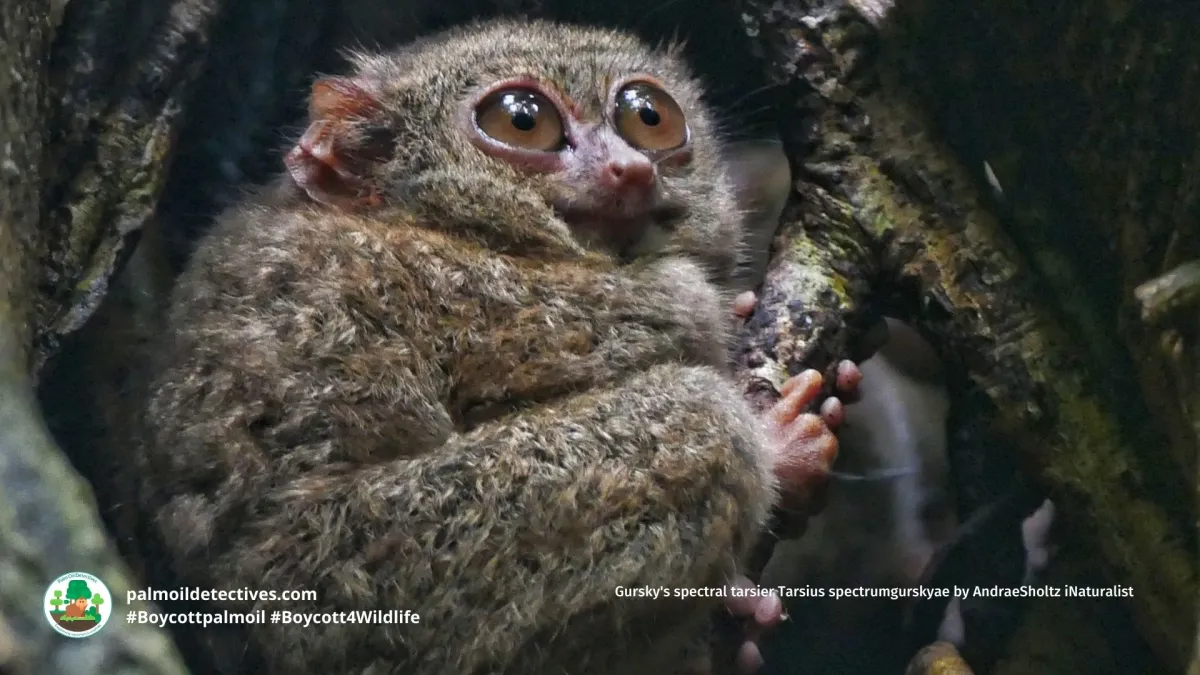
West Papua & PNGGursky’s Spectral Tarsier Tarsius spectrumgurskyae
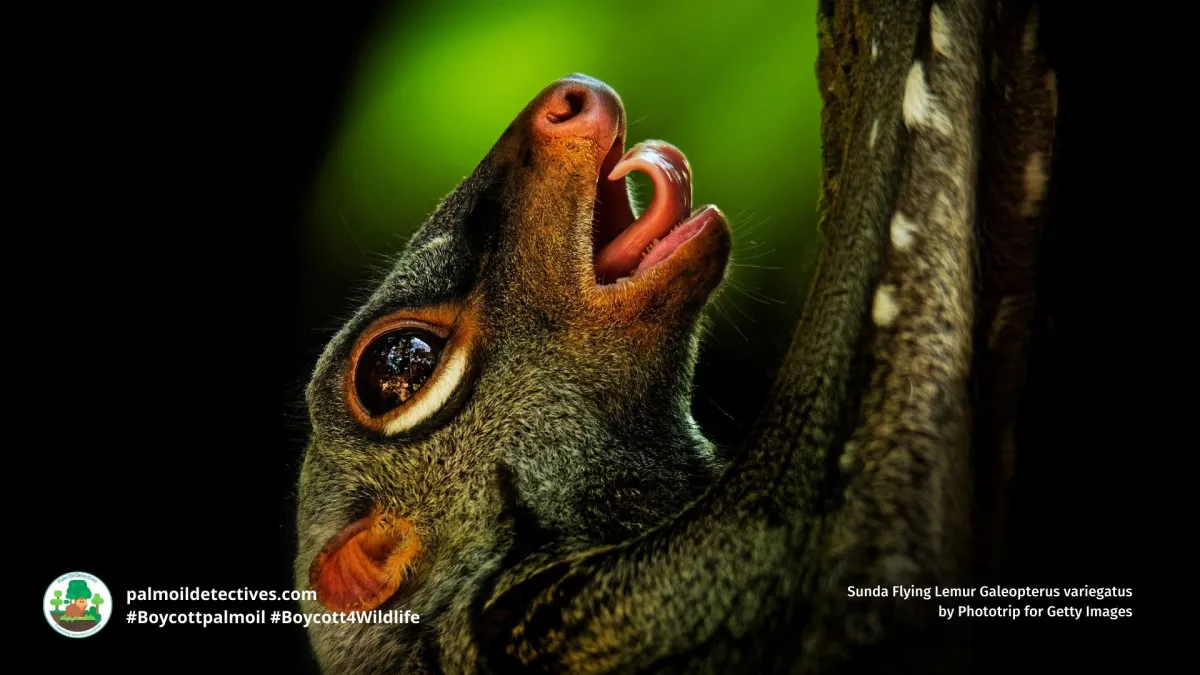
Sunda Flying Lemur Galeopterus variegatus
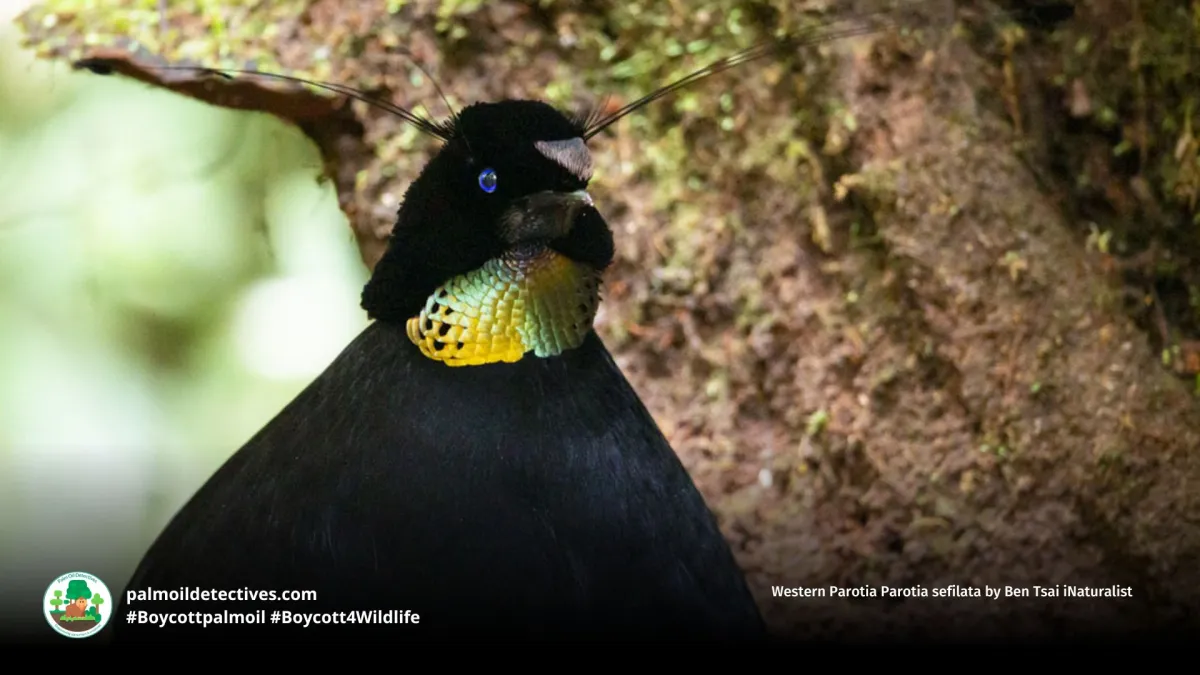
Western Parotia Parotia sefilata
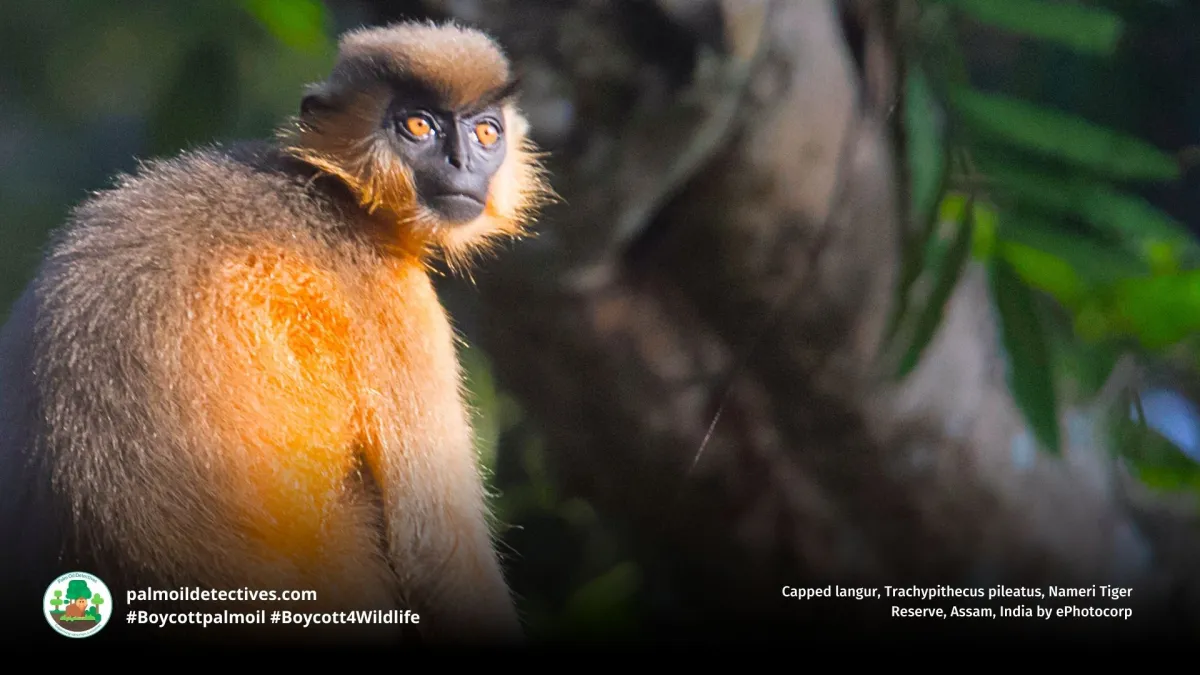
Capped Langur Trachypithecus pileatus
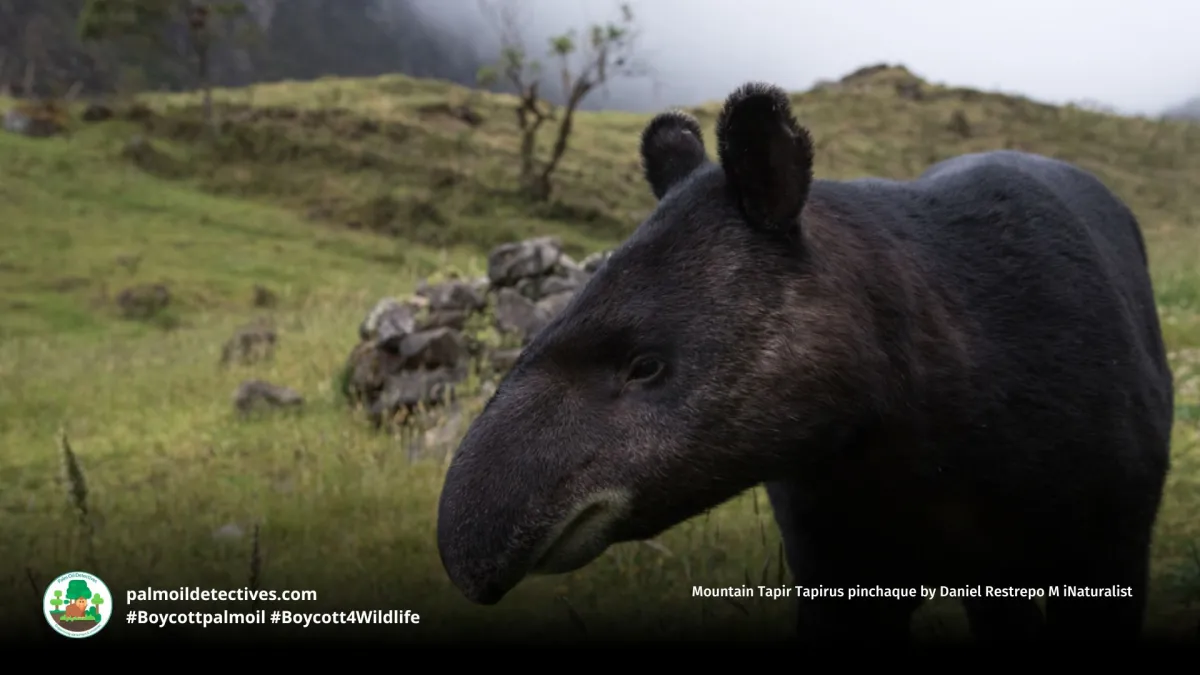
Mountain Tapir Tapirus pinchaque
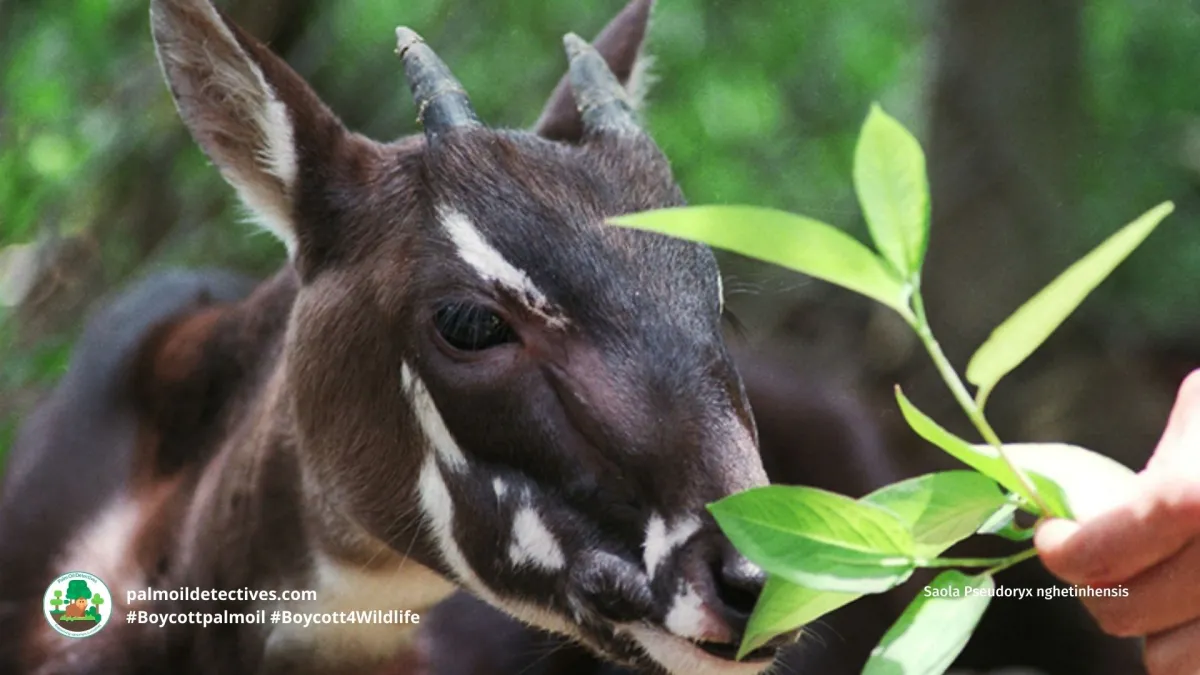
Saola Pseudoryx nghetinhensis
Learn about “sustainable” palm oil greenwashing
Read more about RSPO greenwashing
Lying
Fake labels
Indigenous Land-grabbing
Human rights abuses
Deforestation
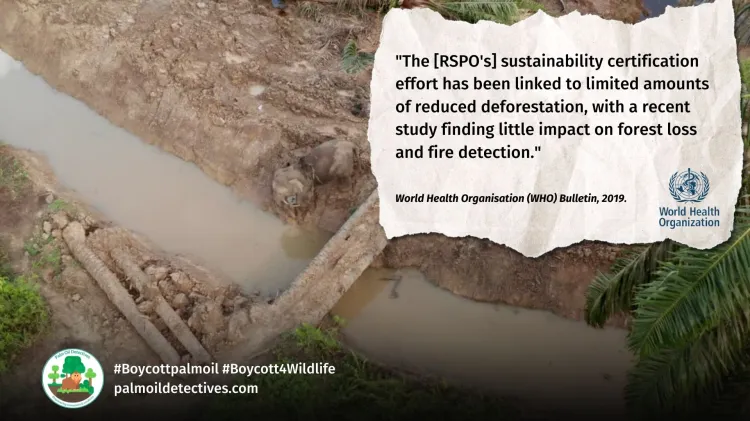
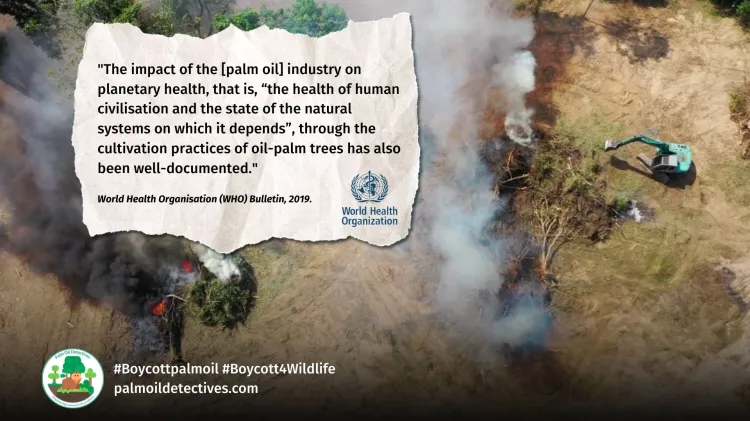
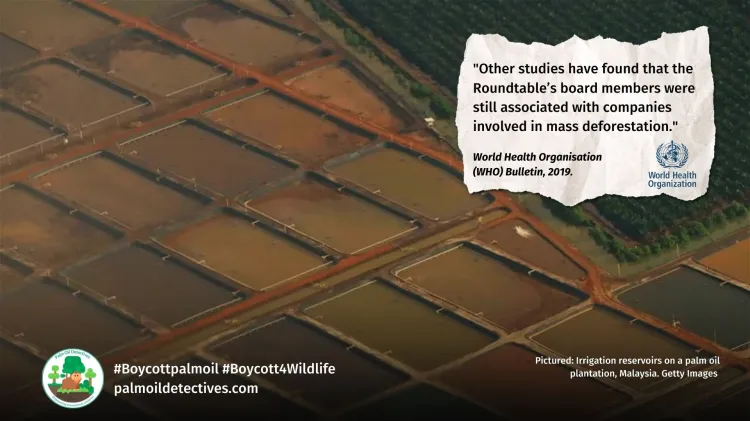
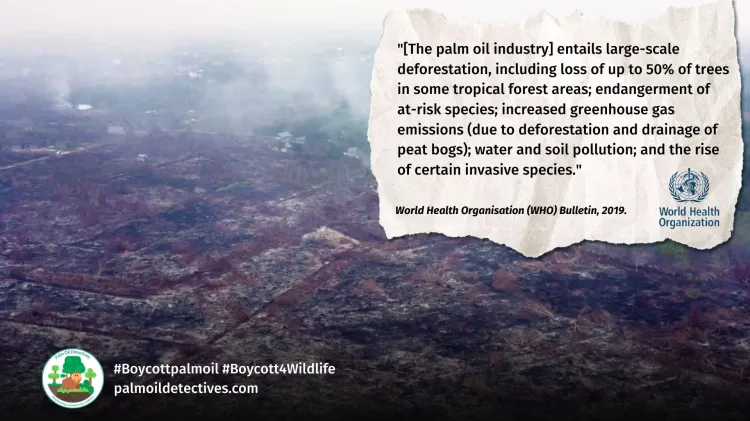
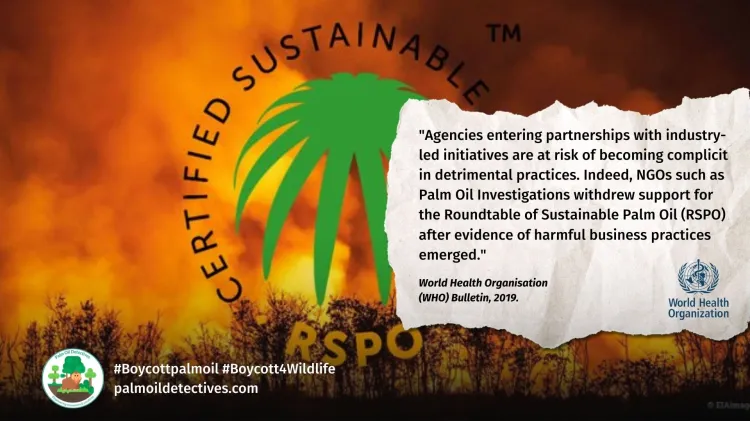
Human health hazardsA 2019 World Health Organisation (WHO) report into the palm oil industry and RSPO finds extensive greenwashing of palm oil deforestation and the murder of endangered animals (i.e. biodiversity loss)
Take Action in Five Ways
1. Join the #Boycott4Wildlife on social media and subscribe to stay in the loop: Share posts from this website to your own network on Twitter, Mastadon, Instagram, Facebook and Youtube using the hashtags #Boycottpalmoil #Boycott4Wildlife.
Enter your email addressSign Up
Join 3,179 other subscribers
2. Contribute stories: Academics, conservationists, scientists, indigenous rights advocates and animal rights advocates working to expose the corruption of the palm oil industry or to save animals can contribute stories to the website.
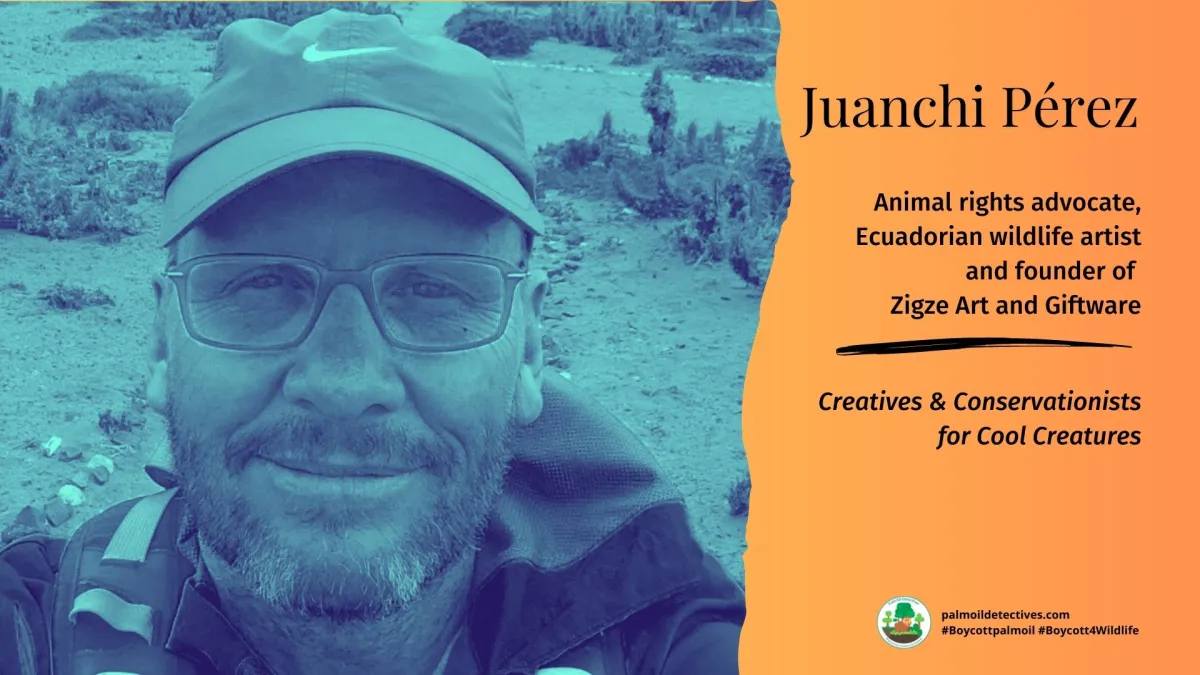
Wildlife Artist Juanchi Pérez
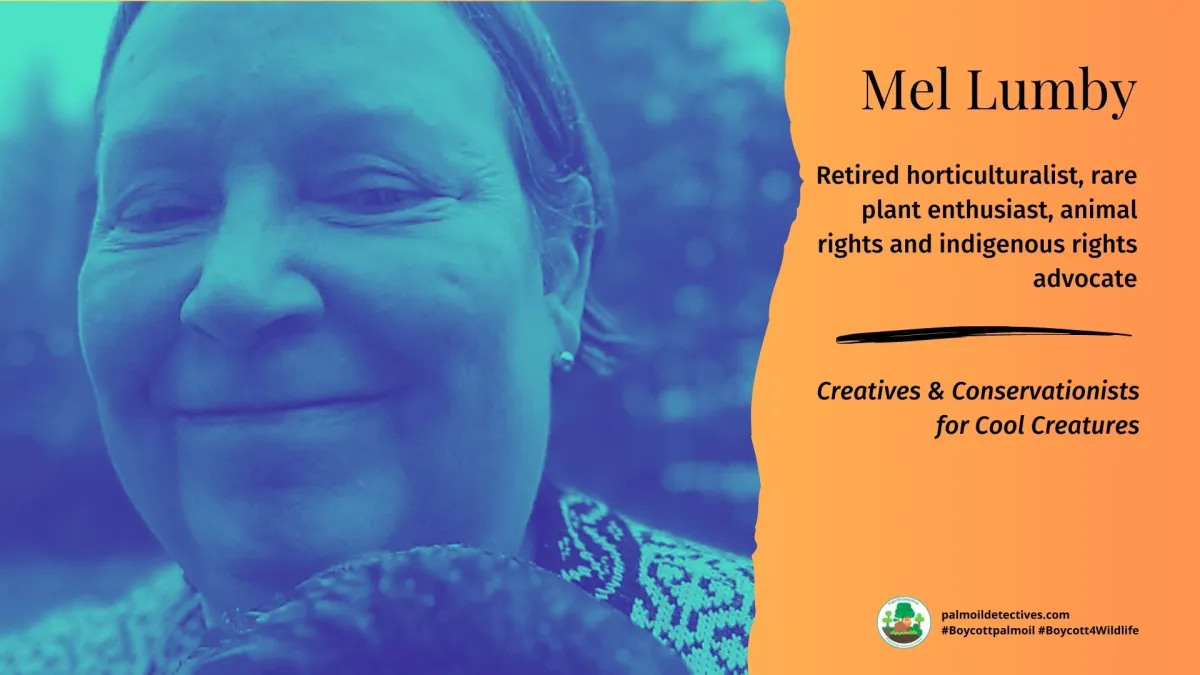
Mel Lumby: Dedicated Devotee to Borneo’s Living Beings
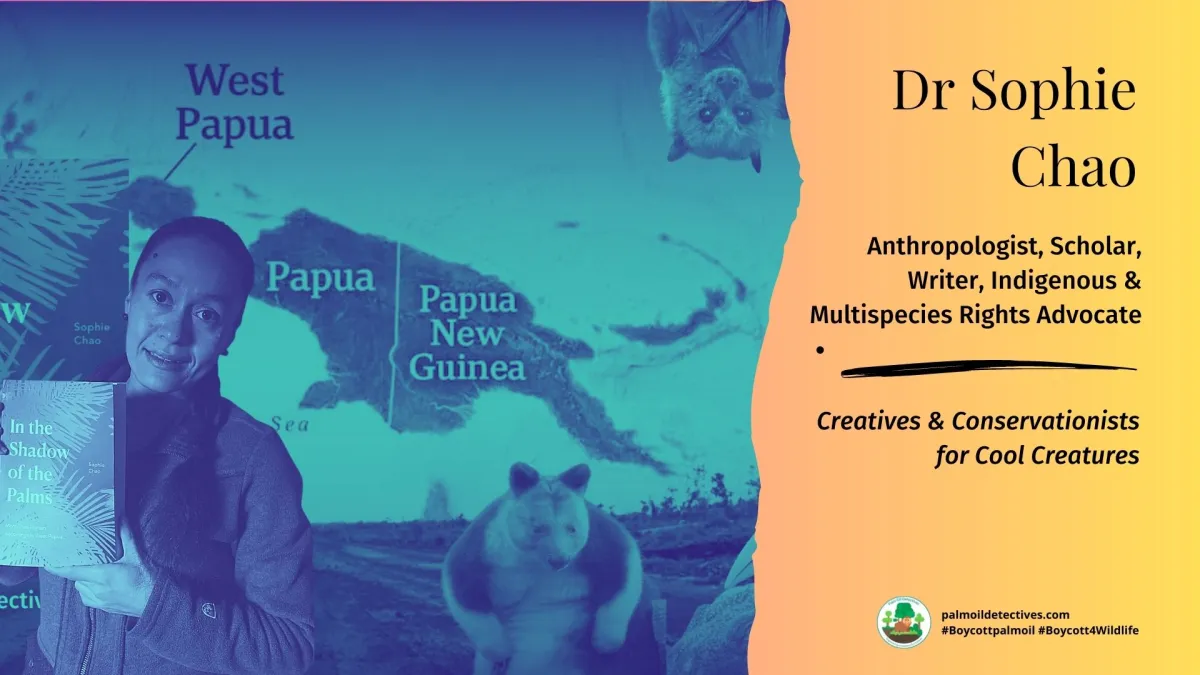
Anthropologist and Author Dr Sophie Chao
Health Physician Dr Evan Allen
The World’s Most Loved Cup: A Social, Ethical & Environmental History of Coffee by Aviary Doert
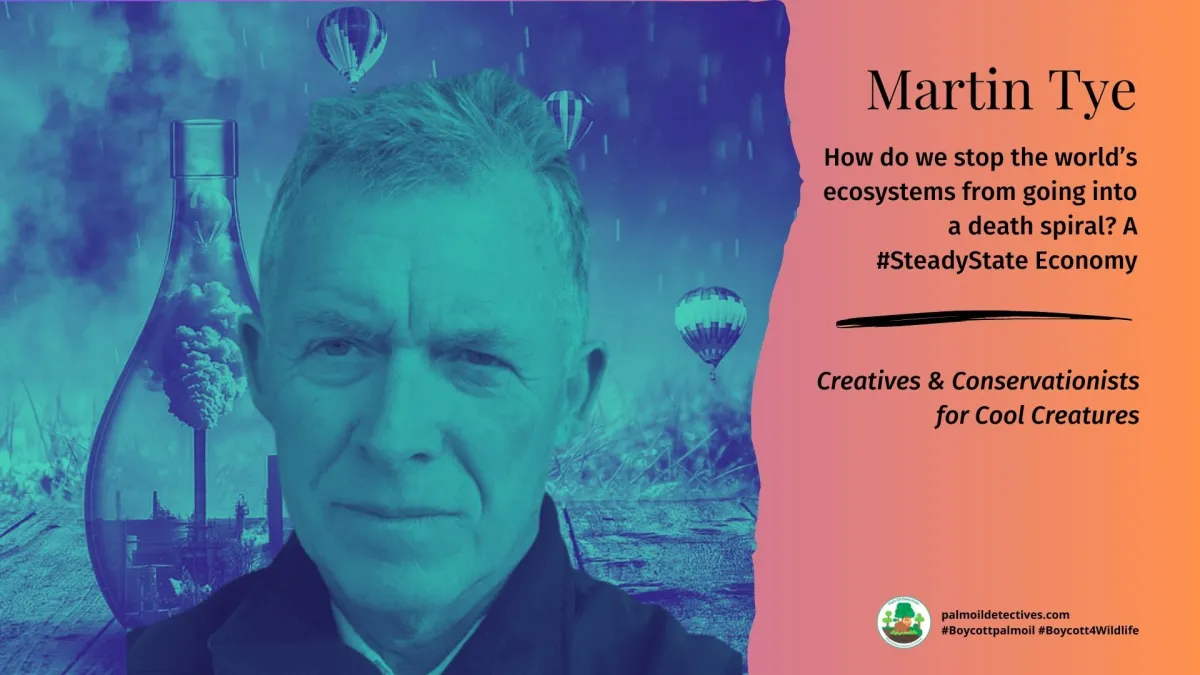
How do we stop the world’s ecosystems from going into a death spiral? A #SteadyState Economy
3. Supermarket sleuthing: Next time you’re in the supermarket, take photos of products containing palm oil. Share these to social media along with the hashtags to call out the greenwashing and ecocide of the brands who use palm oil. You can also take photos of palm oil free products and congratulate brands when they go palm oil free.
twitter.com/CuriousApe4/status…
twitter.com/PhillDixon1/status…
twitter.com/mugabe139/status/1…
4. Take to the streets: Get in touch with Palm Oil Detectives to find out more.
5. Donate: Make a one-off or monthly donation to Palm Oil Detectives as a way of saying thank you and to help pay for ongoing running costs of the website and social media campaigns. Donate here
Pledge your support
#animalBehaviour #AnimalBiodiversityNews #animalCommunication #animalCruelty #animalExtinction #animalIntelligence #animalRights #biodiversity #Boycott4wildlife #BoycottPalmOil #deforestation #PalmOil #palmOilDeforestationI discovered a tree kangaroo that had only been seen once – by the man who shot it in 1928
I want people to be excited about the animals I find and get them involved in conservationPhoebe Weston (The Guardian)
Converting rainforest to plantation impacts food webs and biodiversity
Every day, new areas of rainforests are converted into plantations, drastically changing tropical biodiversity and the way the ecosystem functions.ScienceDaily
Do you love animals? Make every day #WorldWildlifeDay
This #WorldWildlifeDay, please remember the wild animals you love who are running out of time and land to live on. Research recently found that converting partly logged areas into palm oil plantations sounds the death knell for that ecosystem. Across the globe, from Indonesia to Brazil and Nigeria, vibrant rainforests and animals like reptiles and insects are under threat from palm oil, timber, and meat. This ecocide leaves majestic animals struggling to survive against chainsaws, bulldozers, pesticides and destruction for palm oil and meat agriculture. A multi-billion dollar industry has grown up around legitimising palm oil and meat ecocide, primarily through the RSPO but also other greenwashing schemes as well. Read on to discover more and how you can shine a light on the lives of elusive animals.
This #WorldWildlifeDay take action for #animals great and small 🦋🐦🐘🐒🐍 because #reptiles #insects #mammals and #birds deserve better than #palmoil ecocide and #extinction! When you shop always #Boycottpalmoil #Boycott4Wildlife @palmoildetect wp.me/pcFhgU-iMO
Share to BlueSky
Share to Twitter
#Palmoil and #meat #agriculture 🥩💀 are some of the biggest threats to wild #animals and farmed animals. This #WorldWildlifeDay and every single day, make sure fight for them and go #vegan 🥕🍆🍅 #BoycottPalmOil 🌴🩸☠️🧐⛔️ and #Boycott4Wildlife wp.me/pcFhgU-iMO
Share to BlueSky
Share to Twitter
Protecting Sumatra’s last remaining tigers
The Sumatran tiger is teetering on the brink of extinction. Recent findings underscore the urgency of protecting the last remaining populations of these majestic apex predators. Deforestation for palm oil and illegal poaching are wiping out their homes. In the Ulu Masen Ecosystem, a recent study detected only 11 tigers, highlighting severe population stress from snares and habitat loss. Without immediate action, they face the same tragic fate as the extinct Javan and Balinese tigers. Strict global rainforest laws, enforcement of anti-poaching units, and a consumer boycott of palm oil hold the key to protecting Sumatra’s last living tigers.
Animals of Tesso Nilo in Sumatra are vanishing
Tesso Nilo National Park in Sumatra has lost an alarming 78% of primary forest between 2009 and 2023. The primary driver of this devastation is the expansion of illegal palm oil plantations. This rampant deforestation threatens the homes of critically endangered species like tigers, orangutans, and elephants. When palm oil companies build roads, they increase accessibility for poachers, further endangering the animals who live there. Advocating for indigenous-led conservation efforts and adopting a plant-based lifestyle are vital steps to protect these ecosystems.
youtube.com/watch?v=z7FUBg_Aqj…
56% of ‘data deficient’ species on the Red List are endangered
The destruction of wild ecosystems continues to push thousands of obscure species towards extinction finds a study by Norwegian University of Science and Technology. Researchers used advanced machine learning algorithms to assess the survival probability of thousands of under-researched animals, predicts that a staggering fifty-six percent of all “data deficient” species are currently threatened with extinction. 85% of unassessed amphibians face immediate existential threats, primarily driven by anthropogenic habitat degradation such as the unchecked expansion of palm oil plantations, meat agriculture, mining and timber logging. Right now is the time to fight for all life and reject products linked to ecocide. Always remember them and share out their posts! Start here on the forgotten animals page.These are the forgotten animals of the secretly destroyed forests
Sumatran elephants trapped by endless palm oil
In Indonesia’s North Aceh district, Sumatran elephants find themselves increasingly encircled by shrinking patches of forest, hemmed in all all sides by massive palm oil expansion. Just 924 to 1,360 individual Sumatran elephants remain alive. They are trapped in dead lands, surrounded by the very industry that is eradicating their food sources. Ongoing attempts by researchers to measure their populations have been hampered by the Indonesian government, which attempts to hide the truth from the media. Boycott palm oil when you shop to protect these irreplaceable beings.
Toxic palm oil pesticides are killing baby macaques
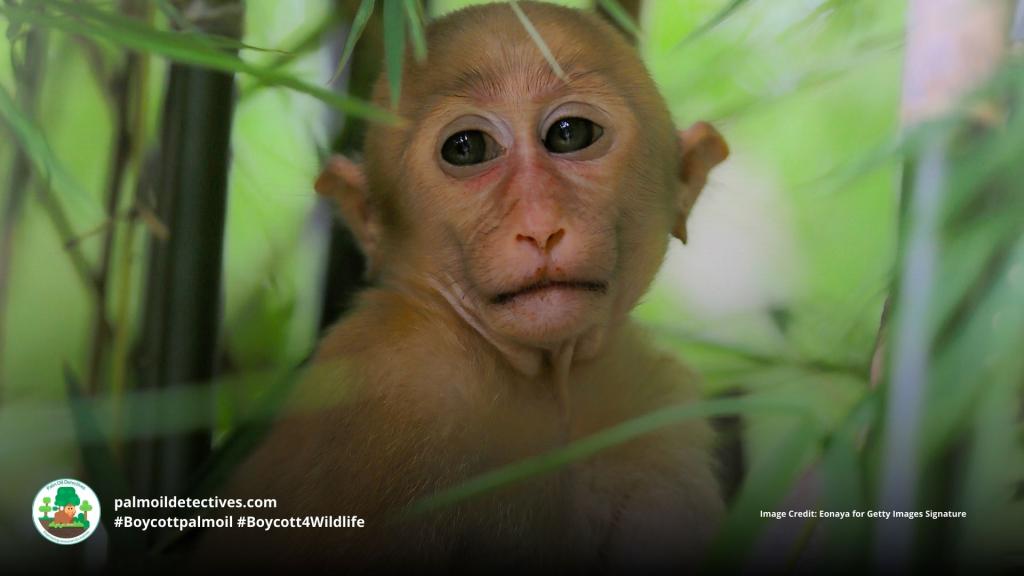
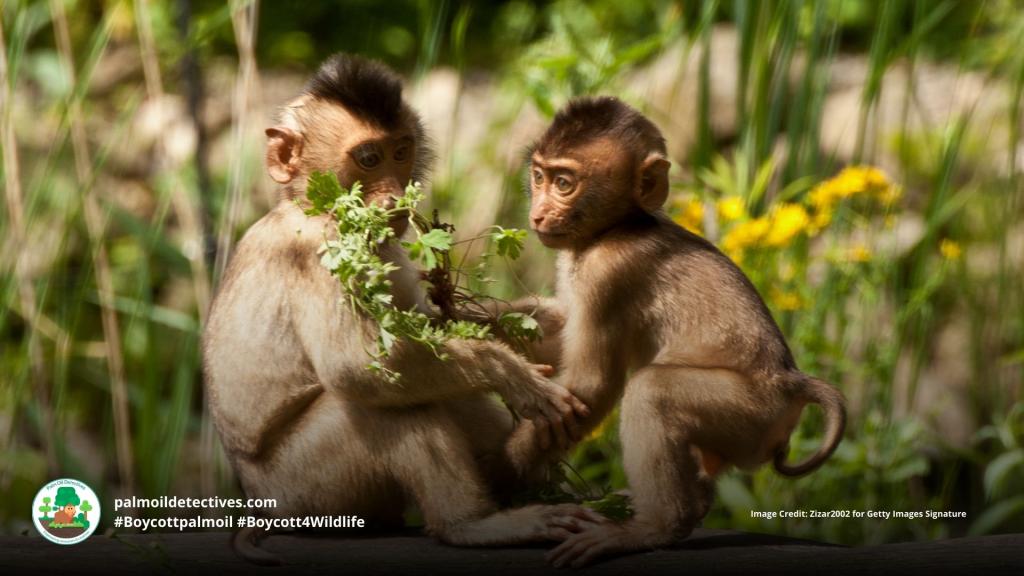
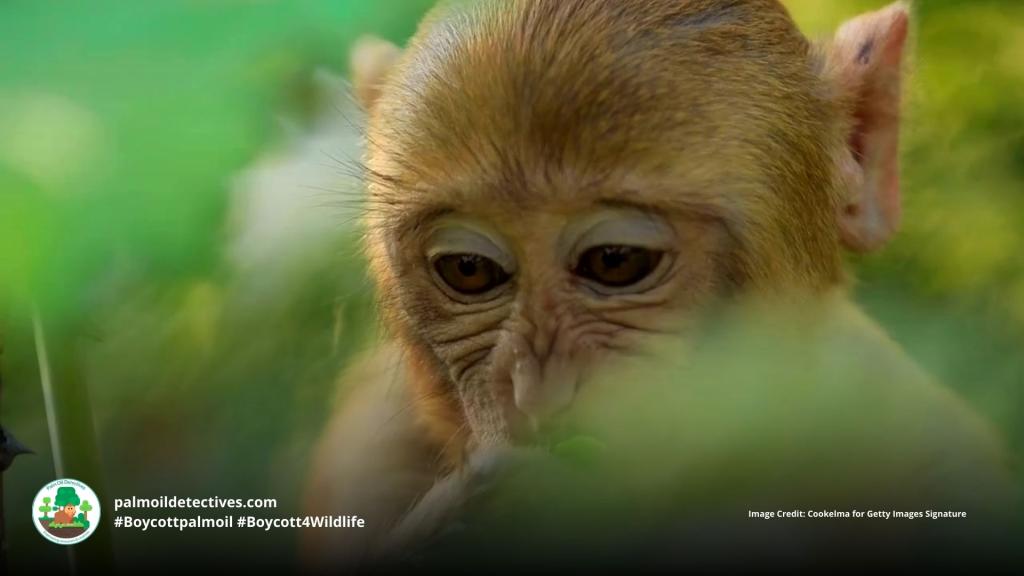
In Peninsular Malaysia, infant southern pig-tailed macaques are dying at alarmingly high rates due to palm oil plantations. A recent study found that agricultural chemicals and pesticides cross the placental barrier of unborn macaques, impacting their development. Prolonged exposure to these toxic plantations during infancy makes baby macaques three times more likely to die. These intelligent primates face increased risks from predators, human encounters, and poisons. Take action and boycott palm oil to protect these precious infants.
The fight for the lives of Wondiwoi tree kangaroos
The Wondiwoi tree kangaroo is the world’s most endangered kangaroo. Rediscovered in 2018 in West Papua’s lush forests, these rare animals have beautiful soulful eyes and burnt umber fur. Tragically, fewer than 50 of them remain alive. They face severe threats from hunting and palm oil deforestation. Protecting them requires urgent conservation efforts that prioritise indigenous sovereignty. You can help save these remarkable creatures by refusing to buy products with palm oil that destroy their homes.
Nigeria’s forest elephants face extinction
African forest elephants in Nigeria have seen their numbers decline massively in recent years. The main cause is human activity, specifically logging, cocoa agriculture, and palm oil plantations. These industries threaten their survival by destroying their natural habitat. As a result, fragmented elephant populations are highly vulnerable to poachers and retaliatory killings by farmers. We must halt the expansion of palm oil to secure a safe future for these majestic animals.
The deadly green lie of “sustainable” palm oil
For decades, the palm oil industry has misled consumers with the false promise of “sustainable” palm oil. Industry watchdogs have repeatedly exposed the RSPO’s certification as a multi-stakeholder sham. Behind this green façade lies a brutal reality of deforestation, human rights abuses, and the destruction of endangered species’ habitats. There is no such thing as sustainable palm oil. We must not fall for their corporate greenwashing.
youtube.com/watch?v=eG8V-Cmj4E…
Take action to protect rainforest animals
By holding to account the powerful corporations that control the world, we have the power to fight back against this ecocide. Here is how you can stand up for rainforest animals, farmed animals, indigenous people, and rainforests:
Make powerful lifestyle changes
The most impactful thing you can do is go plant-based in your diet. Boycott meat, boycott palm oil, and boycott dairy. These industries are the leading causes of global deforestation and animal cruelty.
Supermarket sleuthing
Next time you are in the supermarket, take photos of products containing palm oil. Share these on social media to call out the greenwashing and ecocide of the brands who use it. Congratulate brands when they go completely palm oil-free.
Join the #Boycott4Wildlife movement
Follow and join the Boycott4Wildlife movement on this website and social media. Share stories on BlueSky, Mastodon, Twitter and YouTube using the hashtags #Boycottpalmoil and #Boycott4Wildlife to be part of it!
Support indigenous sovereignty and agroecology
A viable path forward is to champion indigenous-led agroecology. Indigenous peoples possess the deep ecological knowledge required to protect forests and the intricate web of life that includes insects, birds, mammals and reptiles. Stand strongly with indigenous land defenders to protect what remains of the wild.
Learn about other animals endangered by palm oil and other agriculture
Global
South America
S.E. Asia
India
Africa
West Papua & PNG
Gursky’s Spectral Tarsier Tarsius spectrumgurskyae
Sunda Flying Lemur Galeopterus variegatus
Western Parotia Parotia sefilata
Capped Langur Trachypithecus pileatus
Mountain Tapir Tapirus pinchaque
Saola Pseudoryx nghetinhensis
Learn about “sustainable” palm oil greenwashing
Read more about RSPO greenwashing
Lying
Fake labels
Indigenous Land-grabbing
Human rights abuses
Deforestation
Human health hazards
A 2019 World Health Organisation (WHO) report into the palm oil industry and RSPO finds extensive greenwashing of palm oil deforestation and the murder of endangered animals (i.e. biodiversity loss)
Take Action in Five Ways
1. Join the #Boycott4Wildlife on social media and subscribe to stay in the loop: Share posts from this website to your own network on Twitter, Mastadon, Instagram, Facebook and Youtube using the hashtags #Boycottpalmoil #Boycott4Wildlife.
Enter your email address
Sign Up
Join 3,179 other subscribers
2. Contribute stories: Academics, conservationists, scientists, indigenous rights advocates and animal rights advocates working to expose the corruption of the palm oil industry or to save animals can contribute stories to the website.
Wildlife Artist Juanchi Pérez
Mel Lumby: Dedicated Devotee to Borneo’s Living Beings
Anthropologist and Author Dr Sophie Chao
Health Physician Dr Evan Allen
The World’s Most Loved Cup: A Social, Ethical & Environmental History of Coffee by Aviary Doert
How do we stop the world’s ecosystems from going into a death spiral? A #SteadyState Economy
3. Supermarket sleuthing: Next time you’re in the supermarket, take photos of products containing palm oil. Share these to social media along with the hashtags to call out the greenwashing and ecocide of the brands who use palm oil. You can also take photos of palm oil free products and congratulate brands when they go palm oil free.
twitter.com/CuriousApe4/status…
twitter.com/PhillDixon1/status…
twitter.com/mugabe139/status/1…
4. Take to the streets: Get in touch with Palm Oil Detectives to find out more.
5. Donate: Make a one-off or monthly donation to Palm Oil Detectives as a way of saying thank you and to help pay for ongoing running costs of the website and social media campaigns. Donate here
Pledge your support
#animalBehaviour #AnimalBiodiversityNews #animalCommunication #animalCruelty #animalExtinction #animalIntelligence #animalRights #biodiversity #Boycott4wildlife #BoycottPalmOil #deforestation #PalmOil #palmOilDeforestation
I discovered a tree kangaroo that had only been seen once – by the man who shot it in 1928
I want people to be excited about the animals I find and get them involved in conservationPhoebe Weston (The Guardian)
#Palmoil and #meat #agriculture 🥩💀 are some of the biggest threats to wild #animals and farmed animals. This #WorldWildlifeDay and every single day, make sure fight for them and go #vegan 🥕🍆🍅 #BoycottPalmOil 🌴🩸☠️🧐⛔️ and #Boycott4Wildlife
palmoildetectives.com/2026/03/…
Do you love animals? Make every day #WorldWildlifeDay
This #WorldWildlifeDay, please remember the wild animals you love who are running out of time and land to live on. Research recently found that converting partly logged areas into palm oil plantations sounds the death knell for that ecosystem. Across the globe, from Indonesia to Brazil and Nigeria, vibrant rainforests and animals like reptiles and insects are under threat from palm oil, timber, and meat. This ecocide leaves majestic animals struggling to survive against chainsaws, bulldozers, pesticides and destruction for palm oil and meat agriculture. A multi-billion dollar industry has grown up around legitimising palm oil and meat ecocide, primarily through the RSPO but also other greenwashing schemes as well. Read on to discover more and how you can shine a light on the lives of elusive animals.This #WorldWildlifeDay take action for #animals great and small 🦋🐦🐘🐒🐍 because #reptiles #insects #mammals and #birds deserve better than #palmoil ecocide and #extinction! When you shop always #Boycottpalmoil #Boycott4Wildlife @palmoildetect wp.me/pcFhgU-iMO
Share to BlueSky
Share to Twitter#Palmoil and #meat #agriculture 🥩💀 are some of the biggest threats to wild #animals and farmed animals. This #WorldWildlifeDay and every single day, make sure fight for them and go #vegan 🥕🍆🍅 #BoycottPalmOil 🌴🩸☠️🧐⛔️ and #Boycott4Wildlife wp.me/pcFhgU-iMO
Share to BlueSky
Share to TwitterProtecting Sumatra’s last remaining tigers
The Sumatran tiger is teetering on the brink of extinction. Recent findings underscore the urgency of protecting the last remaining populations of these majestic apex predators. Deforestation for palm oil and illegal poaching are wiping out their homes. In the Ulu Masen Ecosystem, a recent study detected only 11 tigers, highlighting severe population stress from snares and habitat loss. Without immediate action, they face the same tragic fate as the extinct Javan and Balinese tigers. Strict global rainforest laws, enforcement of anti-poaching units, and a consumer boycott of palm oil hold the key to protecting Sumatra’s last living tigers.Animals of Tesso Nilo in Sumatra are vanishing
Tesso Nilo National Park in Sumatra has lost an alarming 78% of primary forest between 2009 and 2023. The primary driver of this devastation is the expansion of illegal palm oil plantations. This rampant deforestation threatens the homes of critically endangered species like tigers, orangutans, and elephants. When palm oil companies build roads, they increase accessibility for poachers, further endangering the animals who live there. Advocating for indigenous-led conservation efforts and adopting a plant-based lifestyle are vital steps to protect these ecosystems.youtube.com/watch?v=z7FUBg_Aqj…
56% of ‘data deficient’ species on the Red List are endangered
The destruction of wild ecosystems continues to push thousands of obscure species towards extinction finds a study by Norwegian University of Science and Technology. Researchers used advanced machine learning algorithms to assess the survival probability of thousands of under-researched animals, predicts that a staggering fifty-six percent of all “data deficient” species are currently threatened with extinction. 85% of unassessed amphibians face immediate existential threats, primarily driven by anthropogenic habitat degradation such as the unchecked expansion of palm oil plantations, meat agriculture, mining and timber logging. Right now is the time to fight for all life and reject products linked to ecocide. Always remember them and share out their posts! Start here on the forgotten animals page.These are the forgotten animals of the secretly destroyed forests
Sumatran elephants trapped by endless palm oil
In Indonesia’s North Aceh district, Sumatran elephants find themselves increasingly encircled by shrinking patches of forest, hemmed in all all sides by massive palm oil expansion. Just 924 to 1,360 individual Sumatran elephants remain alive. They are trapped in dead lands, surrounded by the very industry that is eradicating their food sources. Ongoing attempts by researchers to measure their populations have been hampered by the Indonesian government, which attempts to hide the truth from the media. Boycott palm oil when you shop to protect these irreplaceable beings.Toxic palm oil pesticides are killing baby macaques
In Peninsular Malaysia, infant southern pig-tailed macaques are dying at alarmingly high rates due to palm oil plantations. A recent study found that agricultural chemicals and pesticides cross the placental barrier of unborn macaques, impacting their development. Prolonged exposure to these toxic plantations during infancy makes baby macaques three times more likely to die. These intelligent primates face increased risks from predators, human encounters, and poisons. Take action and boycott palm oil to protect these precious infants.
The fight for the lives of Wondiwoi tree kangaroos
The Wondiwoi tree kangaroo is the world’s most endangered kangaroo. Rediscovered in 2018 in West Papua’s lush forests, these rare animals have beautiful soulful eyes and burnt umber fur. Tragically, fewer than 50 of them remain alive. They face severe threats from hunting and palm oil deforestation. Protecting them requires urgent conservation efforts that prioritise indigenous sovereignty. You can help save these remarkable creatures by refusing to buy products with palm oil that destroy their homes.
Nigeria’s forest elephants face extinction
African forest elephants in Nigeria have seen their numbers decline massively in recent years. The main cause is human activity, specifically logging, cocoa agriculture, and palm oil plantations. These industries threaten their survival by destroying their natural habitat. As a result, fragmented elephant populations are highly vulnerable to poachers and retaliatory killings by farmers. We must halt the expansion of palm oil to secure a safe future for these majestic animals.The deadly green lie of “sustainable” palm oil
For decades, the palm oil industry has misled consumers with the false promise of “sustainable” palm oil. Industry watchdogs have repeatedly exposed the RSPO’s certification as a multi-stakeholder sham. Behind this green façade lies a brutal reality of deforestation, human rights abuses, and the destruction of endangered species’ habitats. There is no such thing as sustainable palm oil. We must not fall for their corporate greenwashing.youtube.com/watch?v=eG8V-Cmj4E…
Take action to protect rainforest animals
By holding to account the powerful corporations that control the world, we have the power to fight back against this ecocide. Here is how you can stand up for rainforest animals, farmed animals, indigenous people, and rainforests:Make powerful lifestyle changes
The most impactful thing you can do is go plant-based in your diet. Boycott meat, boycott palm oil, and boycott dairy. These industries are the leading causes of global deforestation and animal cruelty.Supermarket sleuthing
Next time you are in the supermarket, take photos of products containing palm oil. Share these on social media to call out the greenwashing and ecocide of the brands who use it. Congratulate brands when they go completely palm oil-free.Join the #Boycott4Wildlife movement
Follow and join the Boycott4Wildlife movement on this website and social media. Share stories on BlueSky, Mastodon, Twitter and YouTube using the hashtags #Boycottpalmoil and #Boycott4Wildlife to be part of it!Support indigenous sovereignty and agroecology
A viable path forward is to champion indigenous-led agroecology. Indigenous peoples possess the deep ecological knowledge required to protect forests and the intricate web of life that includes insects, birds, mammals and reptiles. Stand strongly with indigenous land defenders to protect what remains of the wild.Learn about other animals endangered by palm oil and other agriculture
Global
South America
S.E. Asia
India
Africa
West Papua & PNGGursky’s Spectral Tarsier Tarsius spectrumgurskyae
Sunda Flying Lemur Galeopterus variegatus
Western Parotia Parotia sefilata
Capped Langur Trachypithecus pileatus
Mountain Tapir Tapirus pinchaque
Saola Pseudoryx nghetinhensis
Learn about “sustainable” palm oil greenwashing
Read more about RSPO greenwashing
Lying
Fake labels
Indigenous Land-grabbing
Human rights abuses
Deforestation
Human health hazardsA 2019 World Health Organisation (WHO) report into the palm oil industry and RSPO finds extensive greenwashing of palm oil deforestation and the murder of endangered animals (i.e. biodiversity loss)
Take Action in Five Ways
1. Join the #Boycott4Wildlife on social media and subscribe to stay in the loop: Share posts from this website to your own network on Twitter, Mastadon, Instagram, Facebook and Youtube using the hashtags #Boycottpalmoil #Boycott4Wildlife.
Enter your email addressSign Up
Join 3,179 other subscribers
2. Contribute stories: Academics, conservationists, scientists, indigenous rights advocates and animal rights advocates working to expose the corruption of the palm oil industry or to save animals can contribute stories to the website.
Wildlife Artist Juanchi Pérez
Mel Lumby: Dedicated Devotee to Borneo’s Living Beings
Anthropologist and Author Dr Sophie Chao
Health Physician Dr Evan Allen
The World’s Most Loved Cup: A Social, Ethical & Environmental History of Coffee by Aviary Doert
How do we stop the world’s ecosystems from going into a death spiral? A #SteadyState Economy
3. Supermarket sleuthing: Next time you’re in the supermarket, take photos of products containing palm oil. Share these to social media along with the hashtags to call out the greenwashing and ecocide of the brands who use palm oil. You can also take photos of palm oil free products and congratulate brands when they go palm oil free.
twitter.com/CuriousApe4/status…
twitter.com/PhillDixon1/status…
twitter.com/mugabe139/status/1…
4. Take to the streets: Get in touch with Palm Oil Detectives to find out more.
5. Donate: Make a one-off or monthly donation to Palm Oil Detectives as a way of saying thank you and to help pay for ongoing running costs of the website and social media campaigns. Donate here
Pledge your support
#animalBehaviour #AnimalBiodiversityNews #animalCommunication #animalCruelty #animalExtinction #animalIntelligence #animalRights #biodiversity #Boycott4wildlife #BoycottPalmOil #deforestation #PalmOil #palmOilDeforestationI discovered a tree kangaroo that had only been seen once – by the man who shot it in 1928
I want people to be excited about the animals I find and get them involved in conservationPhoebe Weston (The Guardian)
#WorldWildlifeDay 🤝 #HubbleFriday
This image shows a "jellyfish" galaxy called JO201.
As jellyfish galaxies move through space, gas is slowly stripped away – forming trails that look like tendrils illuminated by clumps of star formation!
Read more: go.nasa.gov/3YkC9Mu
#Hubble
Hubble Peers at a Galactic Seascape
A “jellyfish galaxy” with trailing tentacles of stars hangs in inky blackness in this image from the NASA/ESA Hubble Space Telescope.Andrea Gianopoulos (NASA)
Lo, thar be cookies on this site to keep track of your login. By clicking 'okay', you are CONSENTING to this.