Trash into Treasure: Turning E-Waste and CO2 into Gold
Trash into Treasure: Turning E-Waste and CO2 into Gold | Researchers at Cornell University have developed a sustainable technique to extract gold from electronic waste and repurpose it as a catalyst to convert carbon dioxide (CO₂) into valuable organic compounds. This method addresses e-waste challenges and contributes to CO₂ reduction efforts. Help with the transition when you #BoycottGold #BoycottGold4Yanomami
Cornell University. (2025, January 2). New method turns e-waste to gold. ScienceDaily. Retrieved from sciencedaily.com/releases/2025…
In a groundbreaking study, Cornell University researchers have introduced an eco-friendly method to extract gold from electronic waste (e-waste) and utilize it as a catalyst for converting carbon dioxide (CO₂) into useful organic materials. This dual-purpose approach offers a sustainable solution to two pressing environmental issues: e-waste accumulation and CO₂ emissions.
E-waste, comprising discarded electronic devices, is a rapidly growing environmental concern, with approximately 50 million tons generated annually worldwide. Notably, a ton of e-waste contains significantly more gold than a ton of mined ore, highlighting the potential for resource recovery. Traditional gold extraction methods involve hazardous chemicals like cyanide, posing environmental and health risks. The Cornell team’s method employs chemical adsorption using vinyl-linked covalent organic frameworks (VCOFs) to selectively capture 99.9% of gold ions and nanoparticles from e-waste without harmful substances.
Once recovered, the gold-loaded VCOFs serve as catalysts to transform CO₂—a major greenhouse gas contributing to climate change—into valuable organic compounds. This process not only mitigates CO₂ levels but also produces materials beneficial for various industrial applications. Lead researcher Amin Zadehnazari emphasised the environmental and practical benefits of this approach, stating, “By transforming CO₂ into value-added materials, we not only reduce waste disposal demands, we also provide both environmental and practical benefits. It’s kind of a win-win for the environment.”
This innovative method represents a significant advancement in technology, offering a promising avenue for addressing electronic waste and carbon emissions simultaneously. The research underscores the potential of integrating waste management with environmental remediation strategies to develop comprehensive solutions for global ecological challenges.
Cornell University. (2025, January 2). New method turns e-waste to gold. ScienceDaily. Retrieved from sciencedaily.com/releases/2025…
ENDS
Read more about deforestation and ecocide in the palm oil industry
This #WorldWildlifeDay take action for animals great and small! Reptiles insects, mammals and birds deserve better than palm oil ecocide and extinction. Make sure you Boycott palm oil Read more
Virgin Atlantic airlines now uses ‘sustainable aviation fuel’ however experts call it greenwashing and industry spin causing climate change. Boycott palm oil! Read more
Gursky’s spectral tarsiers AKA Wusing of North Sulawesi are vulnerable due to palm oil and timber deforestation. Take action for them and boycott palm oil! Read more
Forests offer climate protection and safeguard indigenous peoples, endangered animals and rare plants. Deforestation is a major threat. Boycott palm oil! Read more
Critically endangered Phayre’s langurs and endangered capped langurs of Bangladesh, are interbreeding raising concerns about their survival, take action! Read more
Load more posts Something went wrong. Please refresh the page and/or try again.
Take Action in Five Ways
1. Join the #Boycott4Wildlife on social media and subscribe to stay in the loop: Share posts from this website to your own network on Twitter, Mastadon, Instagram, Facebook and Youtube using the hashtags #Boycottpalmoil #Boycott4Wildlife.
2. Contribute stories: Academics, conservationists, scientists, indigenous rights advocates and animal rights advocates working to expose the corruption of the palm oil industry or to save animals can contribute stories to the website.
3. Supermarket sleuthing: Next time you’re in the supermarket, take photos of products containing palm oil. Share these to social media along with the hashtags to call out the greenwashing and ecocide of the brands who use palm oil. You can also take photos of palm oil free products and congratulate brands when they go palm oil free.
4. Take to the streets: Get in touch with Palm Oil Detectives to find out more.
5. Donate: Make a one-off or monthly donation to Palm Oil Detectives as a way of saying thank you and to help pay for ongoing running costs of the website and social media campaigns. Donate here
A research team has developed a method for extracting gold from electronics waste, then using the recovered precious metal as a catalyst for converting carbon dioxide (CO2), a greenhouse gas, to organic materials.
Trash into Treasure: Turning E-Waste and CO2 into Gold
Trash into Treasure: Turning E-Waste and CO2 into Gold | Researchers at Cornell University have developed a sustainable technique to extract gold from electronic waste and repurpose it as a catalyst to convert carbon dioxide (CO₂) into valuable organic compounds. This method addresses e-waste challenges and contributes to CO₂ reduction efforts. Help with the transition when you #BoycottGold #BoycottGold4Yanomami
#News: Cornell researchers have developed a viable method to extract #gold from #ewaste. They can convert #
... show more
Trash into Treasure: Turning E-Waste and CO2 into Gold
Trash into Treasure: Turning E-Waste and CO2 into Gold | Researchers at Cornell University have developed a sustainable technique to extract gold from electronic waste and repurpose it as a catalyst to convert carbon dioxide (CO₂) into valuable organic compounds. This method addresses e-waste challenges and contributes to CO₂ reduction efforts. Help with the transition when you #BoycottGold #BoycottGold4Yanomami
Cornell University. (2025, January 2). New method turns e-waste to gold. ScienceDaily. Retrieved from sciencedaily.com/releases/2025…
In a groundbreaking study, Cornell University researchers have introduced an eco-friendly method to extract gold from electronic waste (e-waste) and utilize it as a catalyst for converting carbon dioxide (CO₂) into useful organic materials. This dual-purpose approach offers a sustainable solution to two pressing environmental issues: e-waste accumulation and CO₂ emissions.
E-waste, comprising discarded electronic devices, is a rapidly growing environmental concern, with approximately 50 million tons generated annually worldwide. Notably, a ton of e-waste contains significantly more gold than a ton of mined ore, highlighting the potential for resource recovery. Traditional gold extraction methods involve hazardous chemicals like cyanide, posing environmental and health risks. The Cornell team’s method employs chemical adsorption using vinyl-linked covalent organic frameworks (VCOFs) to selectively capture 99.9% of gold ions and nanoparticles from e-waste without harmful substances.
Once recovered, the gold-loaded VCOFs serve as catalysts to transform CO₂—a major greenhouse gas contributing to climate change—into valuable organic compounds. This process not only mitigates CO₂ levels but also produces materials beneficial for various industrial applications. Lead researcher Amin Zadehnazari emphasised the environmental and practical benefits of this approach, stating, “By transforming CO₂ into value-added materials, we not only reduce waste disposal demands, we also provide both environmental and practical benefits. It’s kind of a win-win for the environment.”
This innovative method represents a significant advancement in technology, offering a promising avenue for addressing electronic waste and carbon emissions simultaneously. The research underscores the potential of integrating waste management with environmental remediation strategies to develop comprehensive solutions for global ecological challenges.
Cornell University. (2025, January 2). New method turns e-waste to gold. ScienceDaily. Retrieved from sciencedaily.com/releases/2025…
ENDS
Read more about deforestation and ecocide in the palm oil industry
This #WorldWildlifeDay take action for animals great and small! Reptiles insects, mammals and birds deserve better than palm oil ecocide and extinction. Make sure you Boycott palm oil Read more
Virgin Atlantic airlines now uses ‘sustainable aviation fuel’ however experts call it greenwashing and industry spin causing climate change. Boycott palm oil! Read more
Gursky’s spectral tarsiers AKA Wusing of North Sulawesi are vulnerable due to palm oil and timber deforestation. Take action for them and boycott palm oil! Read more
Forests offer climate protection and safeguard indigenous peoples, endangered animals and rare plants. Deforestation is a major threat. Boycott palm oil! Read more
Critically endangered Phayre’s langurs and endangered capped langurs of Bangladesh, are interbreeding raising concerns about their survival, take action! Read more
Load more posts Something went wrong. Please refresh the page and/or try again.
Take Action in Five Ways
1. Join the #Boycott4Wildlife on social media and subscribe to stay in the loop: Share posts from this website to your own network on Twitter, Mastadon, Instagram, Facebook and Youtube using the hashtags #Boycottpalmoil #Boycott4Wildlife.
2. Contribute stories: Academics, conservationists, scientists, indigenous rights advocates and animal rights advocates working to expose the corruption of the palm oil industry or to save animals can contribute stories to the website.
3. Supermarket sleuthing: Next time you’re in the supermarket, take photos of products containing palm oil. Share these to social media along with the hashtags to call out the greenwashing and ecocide of the brands who use palm oil. You can also take photos of palm oil free products and congratulate brands when they go palm oil free.
4. Take to the streets: Get in touch with Palm Oil Detectives to find out more.
5. Donate: Make a one-off or monthly donation to Palm Oil Detectives as a way of saying thank you and to help pay for ongoing running costs of the website and social media campaigns. Donate here
A research team has developed a method for extracting gold from electronics waste, then using the recovered precious metal as a catalyst for converting carbon dioxide (CO2), a greenhouse gas, to organic materials.
The Sumatran tiger is teetering on the brink of extinction. Recent findings underscore the urgency of protecting the last remaining populations of these majestic apex predators. Deforestation for palm oil and illegal poaching are wiping out their homes. In the Ulu Masen Ecosystem, a recent study detected only 11 tigers, highlighting severe population stress from snares and habitat loss. Without immediate action, they face the same tragic fate as the extinct Javan and Balinese tigers. Strict global rainforest laws, enforcement of anti-poaching units, and a consumer boycott of palm oil hold the key to protecting Sumatra’s last living tigers.
Tesso Nilo National Park in Sumatra has lost an alarming 78% of primary forest between 2009 and 2023. The primary driver of this devastation is the expansion of illegal palm oil plantations. This rampant deforestation threatens the homes of critically endangered species like tigers, orangutans, and elephants. When palm oil companies build roads, they increase accessibility for poachers, further endangering the animals who live there. Advocating for indigenous-led conservation efforts and adopting a plant-based lifestyle are vital steps to protect these ecosystems.
The destruction of wild ecosystems continues to push thousands of obscure species towards extinction finds a study by Norwegian University of Science and Technology. Researchers used advanced machine learning algorithms to assess the survival probability of thousands of under-researched animals, predicts that a staggering fifty-six percent of all “data deficient” species are currently threatened with extinction. 85% of unassessed amphibians face immediate existential threats, primarily driven by anthropogenic habitat degradation such as the unchecked expansion of palm oil plantations, meat agriculture, mining and timber logging. Right now is the time to fight for all life and reject products linked to ecocide. Always remember them and share out their posts! Start here on the forgotten animals page. These are the forgotten animals of the secretly destroyed forests
In Indonesia’s North Aceh district, Sumatran elephants find themselves increasingly encircled by shrinking patches of forest, hemmed in all all sides by massive palm oil expansion. Just 924 to 1,360 individual Sumatran elephants remain alive. They are trapped in dead lands, surrounded by the very industry that is eradicating their food sources. Ongoing attempts by researchers to measure their populations have been hampered by the Indonesian government, which attempts to hide the truth from the media. Boycott palm oil when you shop to protect these irreplaceable beings.
By holding to account the powerful corporations that control the world, we have the power to fight back against this ecocide. Here is how you can stand up for rainforest animals, farmed animals, indigenous people, and rainforests:
Next time you are in the supermarket, take photos of products containing palm oil. Share these on social media to call out the greenwashing and ecocide of the brands who use it. Congratulate brands when they go completely palm oil-free.
A viable path forward is to champion indigenous-led agroecology. Indigenous peoples possess the deep ecological knowledge required to protect forests and the intricate web of life that includes insects, birds, mammals and reptiles. Stand strongly with indigenous land defenders to protect what remains of the wild.
Learn about other animals endangered by palm oil and other agriculture
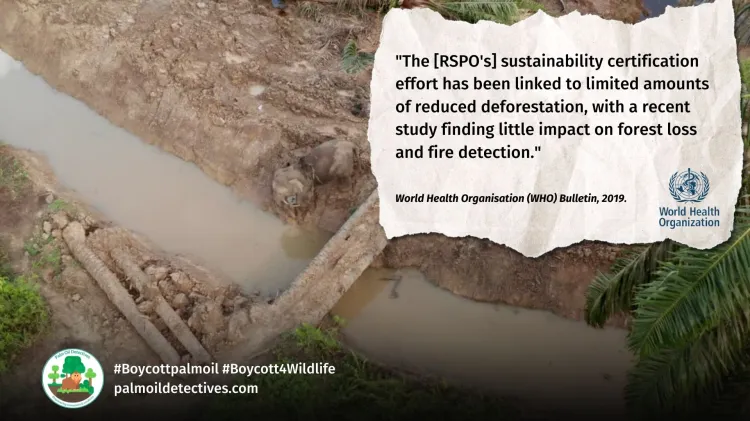
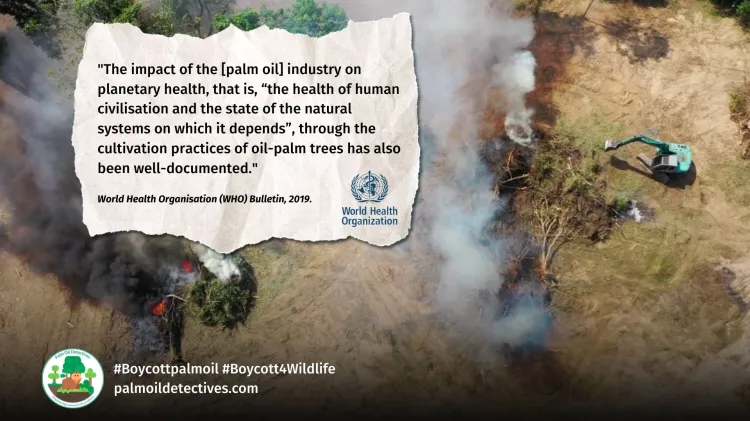
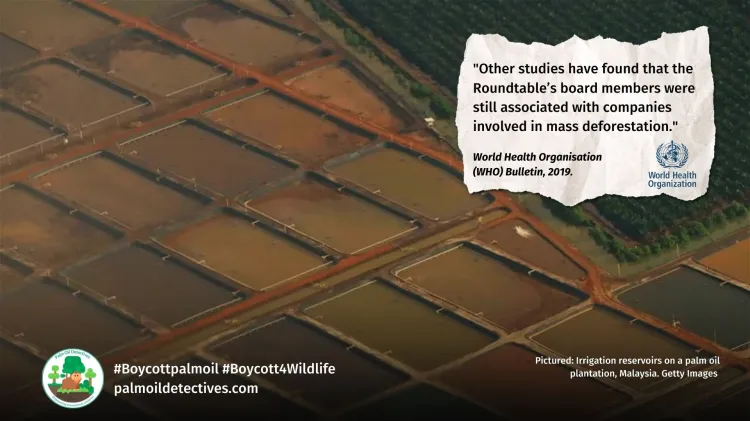
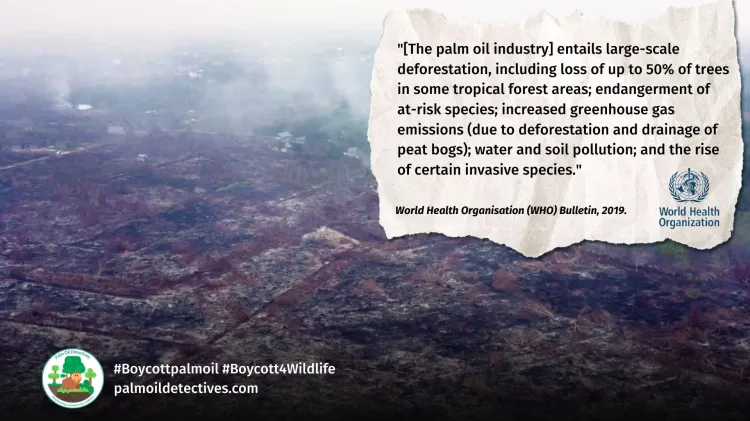
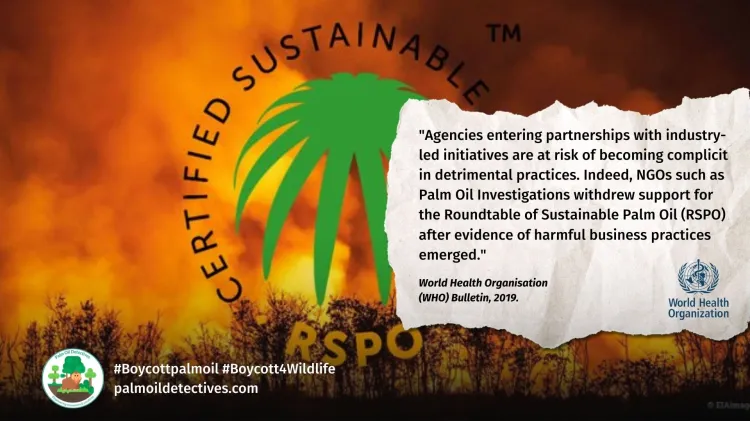
A 2019 World Health Organisation (WHO) report into the palm oil industry and RSPO finds extensive greenwashing of palm oil deforestation and the murder of endangered animals (i.e. biodiversity loss)
1. Join the #Boycott4Wildlife on social media and subscribe to stay in the loop: Share posts from this website to your own network on Twitter, Mastadon, Instagram, Facebook and Youtube using the hashtags #Boycottpalmoil #Boycott4Wildlife.
2. Contribute stories: Academics, conservationists, scientists, indigenous rights advocates and animal rights advocates working to expose the corruption of the palm oil industry or to save animals can contribute stories to the website.
3. Supermarket sleuthing: Next time you’re in the supermarket, take photos of products containing palm oil. Share these to social media along with the hashtags to call out the greenwashing and ecocide of the brands who use palm oil. You can also take photos of palm oil free products and congratulate brands when they go palm oil free.
4. Take to the streets: Get in touch with Palm Oil Detectives to find out more.
5. Donate: Make a one-off or monthly donation to Palm Oil Detectives as a way of saying thank you and to help pay for ongoing running costs of the website and social media campaigns. Donate here
Trash into Treasure: Turning E-Waste and CO2 into Gold
Trash into Treasure: Turning E-Waste and CO2 into Gold | Researchers at Cornell University have developed a sustainable technique to extract gold from electronic waste and repurpose it as a catalyst to convert carbon dioxide (CO₂) into valuable organic compounds. This method addresses e-waste challenges and contributes to CO₂ reduction efforts. Help with the transition when you #BoycottGold #BoycottGold4Yanomami
Cornell University. (2025, January 2). New method turns e-waste to gold. ScienceDaily. Retrieved from sciencedaily.com/releases/2025…
In a groundbreaking study, Cornell University researchers have introduced an eco-friendly method to extract gold from electronic waste (e-waste) and utilize it as a catalyst for converting carbon dioxide (CO₂) into useful organic materials. This dual-purpose approach offers a sustainable solution to two pressing environmental issues: e-waste accumulation and CO₂ emissions.
E-waste, comprising discarded electronic devices, is a rapidly growing environmental concern, with approximately 50 million tons generated annually worldwide. Notably, a ton of e-waste contains significantly more gold than a ton of mined ore, highlighting the potential for resource recovery. Traditional gold extraction methods involve hazardous chemicals like cyanide, posing environmental and health risks. The Cornell team’s method employs chemical adsorption using vinyl-linked covalent organic frameworks (VCOFs) to selectively capture 99.9% of gold ions and nanoparticles from e-waste without harmful substances.
Once recovered, the gold-loaded VCOFs serve as catalysts to transform CO₂—a major greenhouse gas contributing to climate change—into valuable organic compounds. This process not only mitigates CO₂ levels but also produces materials beneficial for various industrial applications. Lead researcher Amin Zadehnazari emphasised the environmental and practical benefits of this approach, stating, “By transforming CO₂ into value-added materials, we not only reduce waste disposal demands, we also provide both environmental and practical benefits. It’s kind of a win-win for the environment.”
This innovative method represents a significant advancement in technology, offering a promising avenue for addressing electronic waste and carbon emissions simultaneously. The research underscores the potential of integrating waste management with environmental remediation strategies to develop comprehensive solutions for global ecological challenges.
Cornell University. (2025, January 2). New method turns e-waste to gold. ScienceDaily. Retrieved from sciencedaily.com/releases/2025…
ENDS
Read more about deforestation and ecocide in the palm oil industry
This #WorldWildlifeDay take action for animals great and small! Reptiles insects, mammals and birds deserve better than palm oil ecocide and extinction. Make sure you Boycott palm oil Read more
Virgin Atlantic airlines now uses ‘sustainable aviation fuel’ however experts call it greenwashing and industry spin causing climate change. Boycott palm oil! Read more
Gursky’s spectral tarsiers AKA Wusing of North Sulawesi are vulnerable due to palm oil and timber deforestation. Take action for them and boycott palm oil! Read more
Forests offer climate protection and safeguard indigenous peoples, endangered animals and rare plants. Deforestation is a major threat. Boycott palm oil! Read more
Critically endangered Phayre’s langurs and endangered capped langurs of Bangladesh, are interbreeding raising concerns about their survival, take action! Read more
Load more posts Something went wrong. Please refresh the page and/or try again.
Take Action in Five Ways
1. Join the #Boycott4Wildlife on social media and subscribe to stay in the loop: Share posts from this website to your own network on Twitter, Mastadon, Instagram, Facebook and Youtube using the hashtags #Boycottpalmoil #Boycott4Wildlife.
2. Contribute stories: Academics, conservationists, scientists, indigenous rights advocates and animal rights advocates working to expose the corruption of the palm oil industry or to save animals can contribute stories to the website.
3. Supermarket sleuthing: Next time you’re in the supermarket, take photos of products containing palm oil. Share these to social media along with the hashtags to call out the greenwashing and ecocide of the brands who use palm oil. You can also take photos of palm oil free products and congratulate brands when they go palm oil free.
4. Take to the streets: Get in touch with Palm Oil Detectives to find out more.
5. Donate: Make a one-off or monthly donation to Palm Oil Detectives as a way of saying thank you and to help pay for ongoing running costs of the website and social media campaigns. Donate here
A research team has developed a method for extracting gold from electronics waste, then using the recovered precious metal as a catalyst for converting carbon dioxide (CO2), a greenhouse gas, to organic materials.
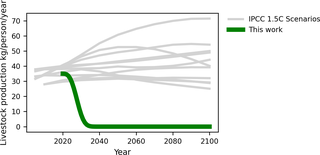
(2022) Rapid global phaseout of animal agriculture has the potential to stabilize greenhouse gas levels for 30 years and offset 68 percent of CO2 emissions this century journals.plos.org/climate/arti…
Animal agriculture contributes significantly to global warming through ongoing emissions of the potent greenhouse gases methane and nitrous oxide, and displacement of biomass carbon on the land used to support livestock.
If you think all the little things we ordinary mortals do are the driver of #ClimateChange, think again - "Just 57 companies linked to 80% of greenhouse gas #emissions since 2016
Analysis reveals many big producers increased output of fossil fuels and related emissions in seven years after Paris climate deal
A mere 57 #oil, #gas, #coal and #cement producers are directly linked to 80% of the world’s #GreenhouseGas #GHG emissions since the 2016 #Paris climate agreement, a study has shown.
This powerful cohort of state-controlled corporations and shareholder-owned multinationals are the leading d
... show more
If you think all the little things we ordinary mortals do are the driver of #ClimateChange, think again - "Just 57 companies linked to 80% of greenhouse gas #emissions since 2016
Analysis reveals many big producers increased output of fossil fuels and related emissions in seven years after Paris climate deal
A mere 57 #oil, #gas, #coal and #cement producers are directly linked to 80% of the world’s #GreenhouseGas #GHG emissions since the 2016 #Paris climate agreement, a study has shown.
This powerful cohort of state-controlled corporations and shareholder-owned multinationals are the leading drivers of the climate crisis, according to the Carbon Majors Database, which is compiled by world-renowned researchers." ... "During this period, the biggest investor-owned contributor to emissions was #ExxonMobil of the #UnitedStates, which was linked to 3.6 gigatonnes of CO2 over seven years, or 1.4% of the global total. Close behind were #Shell, #BP, #Chevron and #TotalEnergies, each of which was associated with at least 1% of global emissions."
You probably won't be surprised by what Greta Thunberg (@gretathunberg) has to say about #COP28 ... _____________________
Swedish climate activist Greta Thunberg called the outcome of the 28th United Change Climate Conference a "betrayal and a stab in the back."
Thunberg said: "The final outcome of COP28 is not a 'historic win'. It is yet another example of extremely vague and watered-down texts full of loopholes that in no way is even close to being sufficient for staying within the 1.5°C limit and ensuring climate justice."
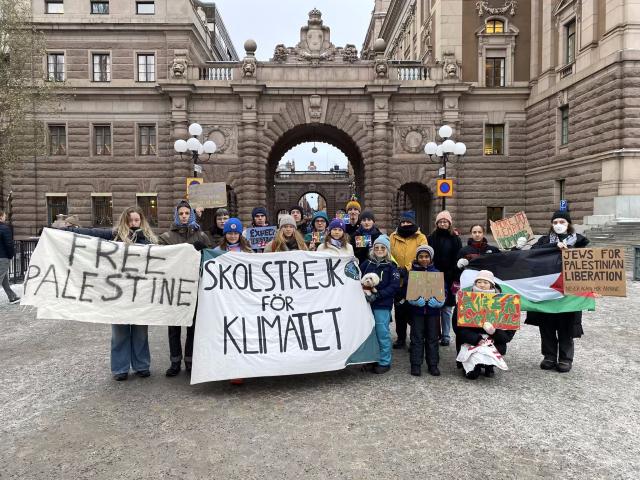
Speaking to Reuters at a protest outside the Swedish parliament, Thunberg said the agreement was the "bare minimum" and rejected the idea that it was a "first step."
"We've already had first steps and they haven't led us anywhere," Thunberg added. "The emissions are still increasing. We are experiencing record highs."
She
... show more
You probably won't be surprised by what Greta Thunberg (@gretathunberg) has to say about #COP28 ... _____________________
Swedish climate activist Greta Thunberg called the outcome of the 28th United Change Climate Conference a "betrayal and a stab in the back."
Thunberg said: "The final outcome of COP28 is not a 'historic win'. It is yet another example of extremely vague and watered-down texts full of loopholes that in no way is even close to being sufficient for staying within the 1.5°C limit and ensuring climate justice."
Speaking to Reuters at a protest outside the Swedish parliament, Thunberg said the agreement was the "bare minimum" and rejected the idea that it was a "first step."
"We've already had first steps and they haven't led us anywhere," Thunberg added. "The emissions are still increasing. We are experiencing record highs."
She also questioned the validity of U.N. climate negotiations.
"This COP has once again proven that the COP processes are not working in our favor," she told Reuters. "They are not designed to solve the climate crisis. They are working as an alibi for world leaders" to hide behind their signature on a document while continuing to do nothing.
"We need drastic, immediate emission cuts," said Thunberg, "and binding commitments from the largest contributors of the climate crisis to finance loss and damages adaptation and a just transition in the most affected areas." _____________________
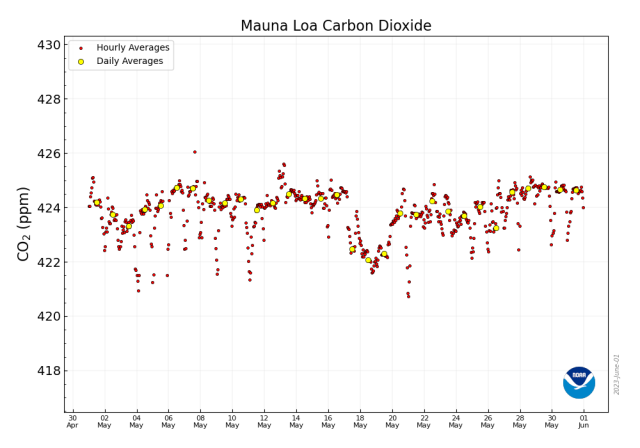
Breaking news :/ Based on daily data, the atmospheric CO2 concentration at Mauna Loa averaged ~424.0 ppm over May 2023. That's ~3.0 ppm higher than last year, and that's a lot. It is also the highest monthly average on record, and most probably of the last 15 million years.
Emissions keep going up. Extinctions are on the rise. Nothing has changed.
So, is it time now for some of us to take a step over the line?
Would you commit a "crime" if you knew that doing so could potentially save thousands of lives?
Those are tough questions, and they are given thought-provoking and perhaps challenging answers in this piece... _________________________
The environmental movement has offered waves of demonstrations, petition drives, lobbying and other forms of protest. Yet, despite all that, Earth and its inhabitants are losing the war waged against us by capitalism. It follows that a reevaluation of strategy and tactics of the environmental movement is in order, including a closer examination of how nonviolence should be understood and practiced.
In this context, we need to ask ourselves whether the destruction of planet-killing machinery is necessarily an act of violence. The answer should be no, because it prevents violence against nature.
... show more
Asking has not worked.
Voting has not worked.
Marching has not worked.
Emissions keep going up. Extinctions are on the rise. Nothing has changed.
So, is it time now for some of us to take a step over the line?
Would you commit a "crime" if you knew that doing so could potentially save thousands of lives?
Those are tough questions, and they are given thought-provoking and perhaps challenging answers in this piece... _________________________
The environmental movement has offered waves of demonstrations, petition drives, lobbying and other forms of protest. Yet, despite all that, Earth and its inhabitants are losing the war waged against us by capitalism. It follows that a reevaluation of strategy and tactics of the environmental movement is in order, including a closer examination of how nonviolence should be understood and practiced.
In this context, we need to ask ourselves whether the destruction of planet-killing machinery is necessarily an act of violence. The answer should be no, because it prevents violence against nature. But, as a whole, the environmental movement’s dedication to the strict avoidance of property destruction is extreme in comparison to virtually all other social justice movements. _________________________
We did a family road trip across Canada in our Hyundai Kona EV last summer of 10,000mi/16,000km and I figured we generated around 630kg of CO2, mostly in still coal fired Alberta and Saskatchewan. That’s about 0.04kg/km. I would imagine the average CO2 intensity of electricity in the USA would be larger. But hopefully in time it will get better. Would love to do this! We visited or drove through 9 Canadian National Parks. 😀 #EV #roadtrip #CO2
Dear reader, if you're here you're already interested in electric vehicles (EVs). Perhaps you already own one, or perhaps you're just curious, but like so many of us you're trying to figure out if they and the infrastructure they need are actually re…
















These are the forgotten animals of the secretly destroyed forests