Search
Items tagged with: food

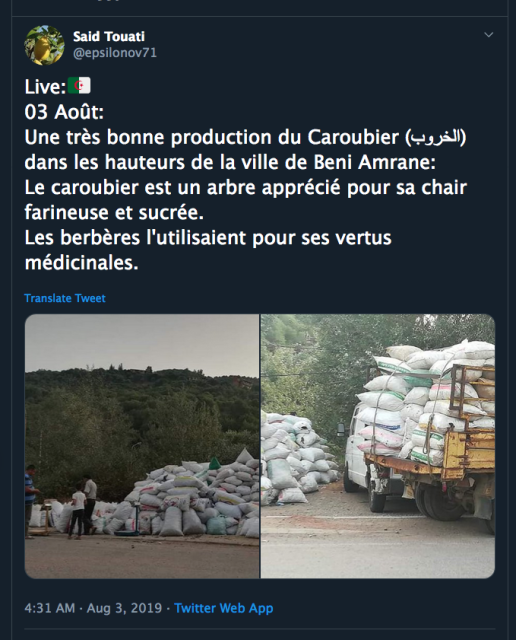
One of the things I was able to do on the birdsite that there just isn't much opportunity to here is find out "current events" in carob by doing a search every week or so.
If you ever see a carob toot, please forward it to me, especially if it's not a tired carob hippie joke, but actual research or market or real life info re Ceratonia siliqua/#Carob
Please boost to get my request out there. Thanks so much! @plantscience
#Food #PlantScience #Botany




When we think of #food, we often aren’t paying attention to soil, but it’s actually what sustains our global food system.
Unfortunately, #ClimateChange, unsustainable farming practices & more are degrading soil around the world.
I don’t get to see each episode of Serving Up Science until they are published, but I like this new video. And I’m so glad they let me talk about soil health. youtu.be/FnOHwq6iSpk?si=5umwoG…
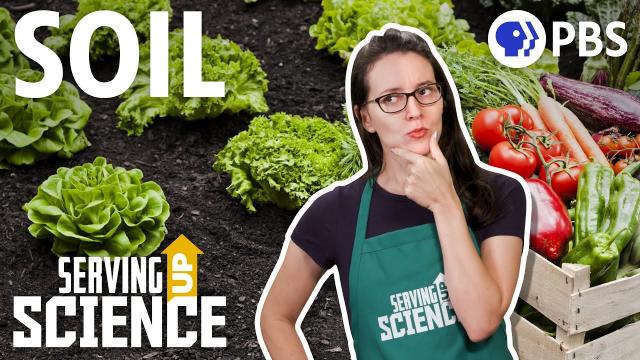
Can Soil Make or Break Our Food Future? | Serving Up Science
Unearth the world beneath our feet and soil's vital role in our food system, as Sheril digs into the dirt on dirt. Discover the rich tapestry of soil types, ...YouTube
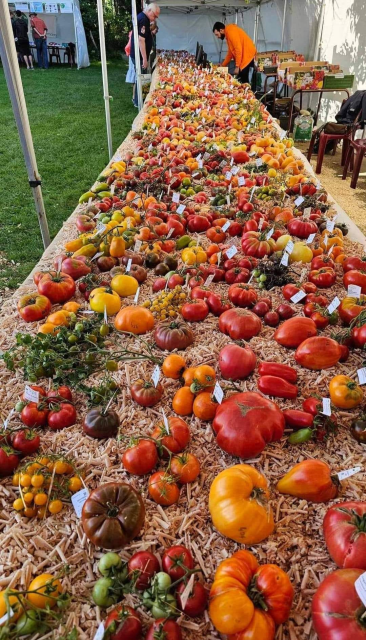
This season on Serving Up Science, we covered edible insects which are surprisingly good, healthy & sustainable.
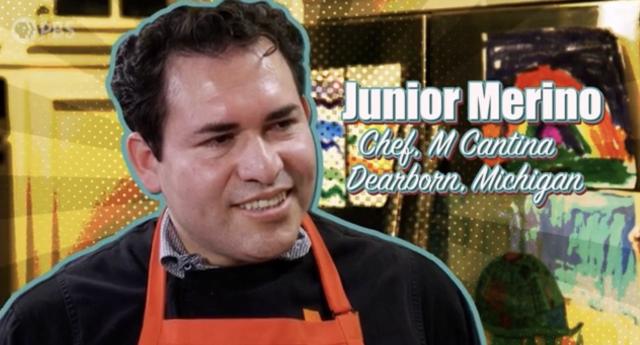
Tremendous thanks to Chef Junior Merino of M cantina for sharing outstanding Mexican cuisine. youtu.be/t-1q3fcOxJU?si=wHZwgT… #science #food
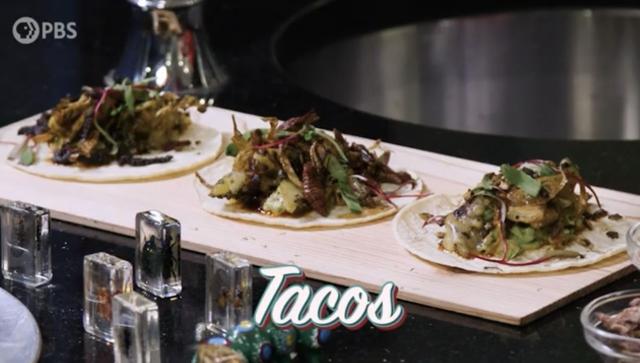
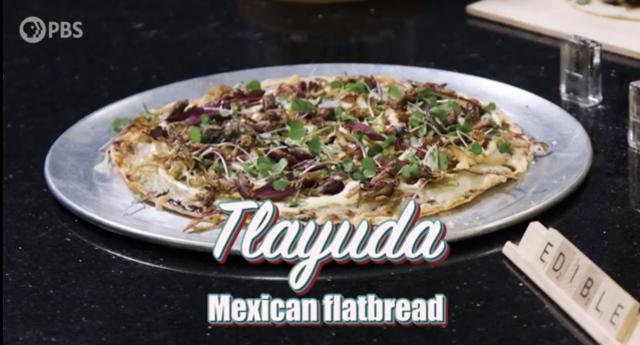
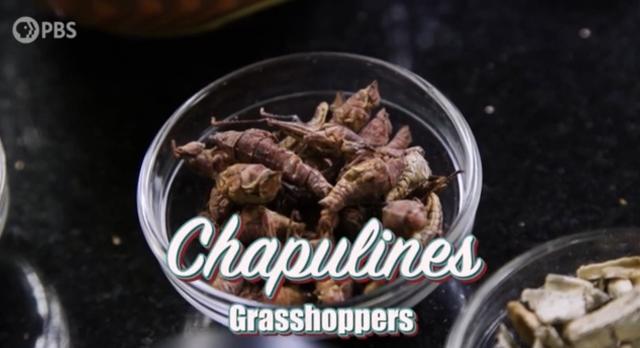
Are Insects the next big foodie trend?
Support Serving Up Science: http://bit.ly/ScienceServe Discover the Fascinating History of Insect Cuisine and Dive into the Protein-Rich World of Edible Bugs...YouTube
Many believe a significant way to address #climatechange is to 'eat local,’ but that’s not always true. The impact all depends on the kind of #food + how & where it’s produced.
Some foods require fewer resources (water, energy) in some parts of the world. Season can be important. Overall, transportation has a much lower carbon footprint than land use change. And so on.
So instead of ‘eat local,’ let’s go with ‘eat thoughtfully.’ ourworldindata.org/food-choice…
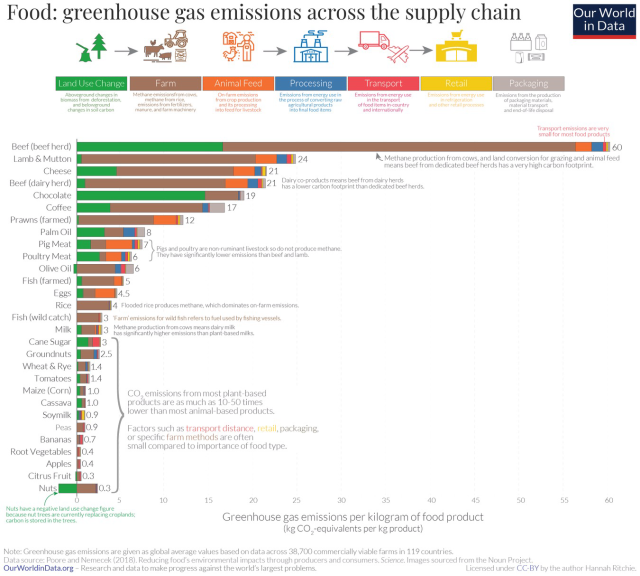
You want to reduce the carbon footprint of your food? Focus on what you eat, not whether your food is local
'Eat local' is a common recommendation to reduce the carbon footprint of your diet. How does the impact of what you eat compare to where it's come from?Our World in Data
Does it really matter what eggs you buy?
youtu.be/jG5RnW_yPCU?si=-RcFON…
Season 4 of Serving Up Science is out today & this episode covers what terminology like "cage-free," "pasture-raised," "organic" & more really means. #food #science

Does it really matter what eggs you buy?
Support Serving Up Science: http://bit.ly/ScienceServe Decode the diverse world of egg labels, from conventional to cage-free, free-range, organic, and pastu...YouTube
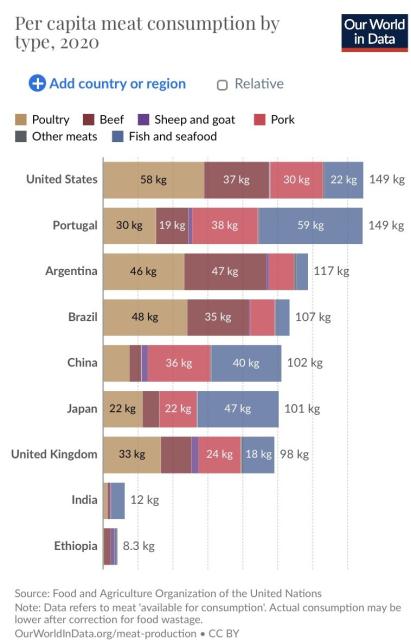
According to OurWorldInData, 80 billion animals are slaughtered for food each year.
The scale of what eat (& waste) is massive, which contributes to #ClimateChange & degrades the environment.
In the US, we consume ~280lbs (127 kg) /person/year (not including fish & seafood).
Beef has the most significant environmental impact & Argentinians consume 104lbs (47 kg) of beef/person/year. #food
#Archaeology #SciComm #WomenInScience #Animals


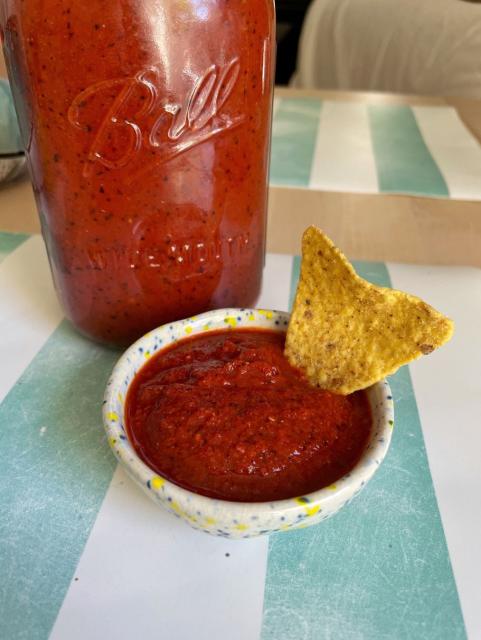
Latest batch. This time with almost three weeks fermentation of habaneros, bird’s eye chilis, carrots, onions and blueberries 🫐
It’s as delicious as it looks!
#fermentation #food #hotsauce #hotpeppers #cooking

Ohh! New cooking show on PBS with Beryl!
Pan Pals people from different food cultures share their recipes, and swap it with someone else
Beryl introducing it from her channel:
youtu.be/D-ScSS6TLks
Playlist for available episodes:
youtube.com/playlist?list=PLQM…

I MADE A SHOW FOR PBS!
Ahhh I am so excited to share this show with you all. HOPEFULLY we get to make more episodes since I have learned SO MUCH from making these! Watch the full p...YouTube
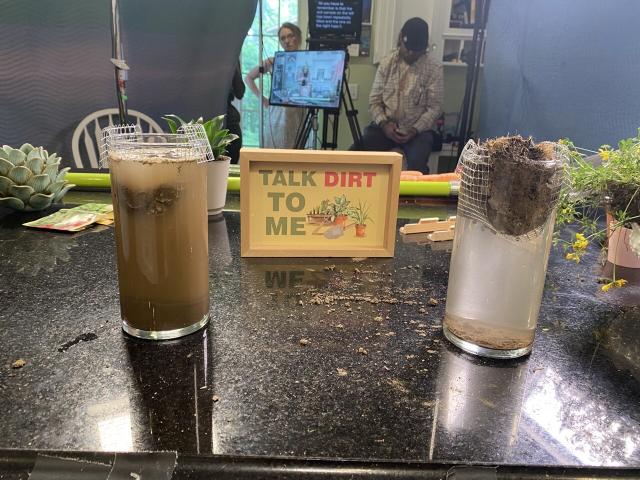
An upcoming episode of Serving Up Science is all about how soil sustains life & is critical in conversations about #ClimateChange & #food security.
Here you can see two glasses where I poured water over tilled (left) & untilled (right) soil.
The details will be in the full episode, but the take home is that soil structure matters. Healthy soil prevents erosion & flooding, stores carbon, supports biodiversity & keeps our crops growing. 🌱
A significant, if not predominant, proportion of carbon footprint within the “#food system” comes from direct or indirect usage of fossil fuels, which include energy supply, fertilisers, supply chain and logistics, packaging / plastics, cooking and serving etc.
Therefore, from a purely scientific perspective, I am not sure your challenge to Musk’s statement stands as you might be speaking of similar things just in different terms.
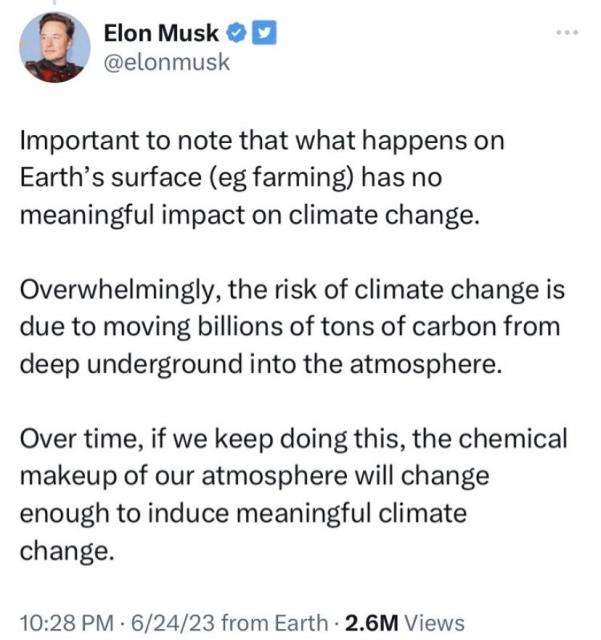
I don’t like to mention that rich guy over at #Twitter, but he’s rambling on about #ClimateChange & agriculture, which is in my wheelhouse. And he is also unabashedly & absurdly wrong.
Misinformation on climate change is irresponsible & dangerous, so let’s be clear:
25% to 30% of global emissions come from our #food system.
As UT Austin’s Michael Webber describes, agriculture is a major cause, victim and - importantly - meaningful solution to #climate change.
More at ourworldindata.org/greenhouse-…
How much of global greenhouse gas emissions come from food?
Estimates of food emissions can range from one-quarter to one-third. Where do these differences come from?Our World in Data
Yesterday, cultivated meat was cleared for sale in the US by the Department of Agriculture.
Not sure what to make of meat from a lab? Here’s our explainer from last season’s Serving Up Science:
youtu.be/GaX38aFAGSo #food #news

What Does the Future of Lab Grown Meat Look Like? | Serving Up Science
Support Serving Up Science: http://bit.ly/ScienceServe Would you eat steak grown in a test tube? A chicken nugget from a petri dish? It's not science fiction...YouTube

Grated Pineapple Pie From 1898
The progression of what lead to this recipe is interesting
#Food #Baking #Pie #Pineapple #GlenAndFriends #OldCookbookProgram
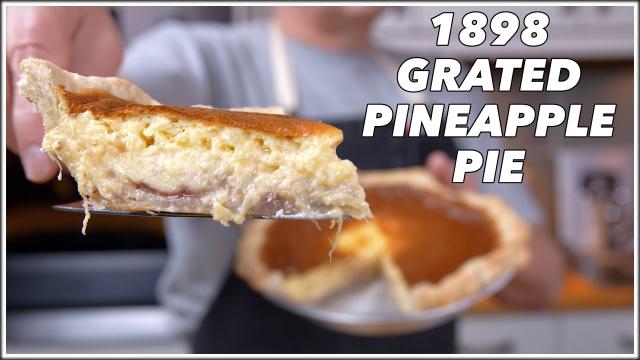
Grated Pineapple Pie From 1898 - Old Cookbook Show
Grated Pineapple Pie From 1898 - Old Cookbook ShowGrated Pineapple Pie.Line 2 deep pie plates with nice short pastry, prick the sides and bottom with a fork ...YouTube
In honor of #StarWarsDay, a look at space food from an episode of Serving Up Science: youtu.be/XyJGyOJf8e0 #StarWars #space #food (We had fun making this one).
May the Fourth Be With You!
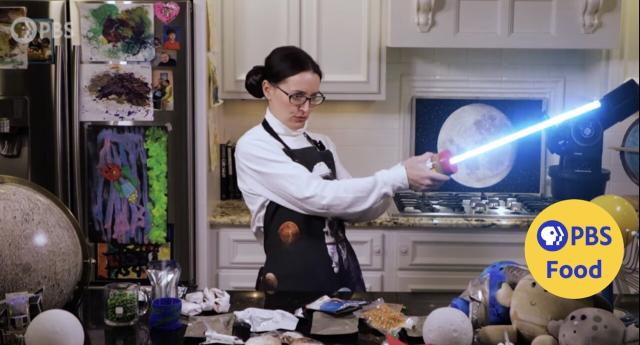
Space Food: The Final Frontier! | Serving Up Science
When you think of space food, what comes to mind? Probably dried ice cream, jell-o, and food in a tube. But today's advances in cosmonaut cuisine include eve...YouTube





Meat industry blocked the IPCC’s attempt to recommend a plant-based diet
“A leak of a draft of the Intergovernmental Panel on #ClimateChange (#IPCC) report..has been particularly enlightening when it comes to just how much how delegations negotiate, watered down & delete scientists’ findings.”
qz.com/ipcc-report-on-climate-… #science #food
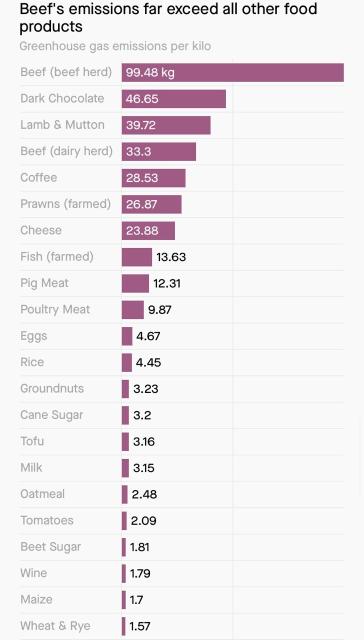
The meat industry blocked the IPCC’s attempt to recommend a plant-based diet
A leaked draft revealed how the meat industry is obstructing efforts to curb climate changeAurora Almendral (Quartz)
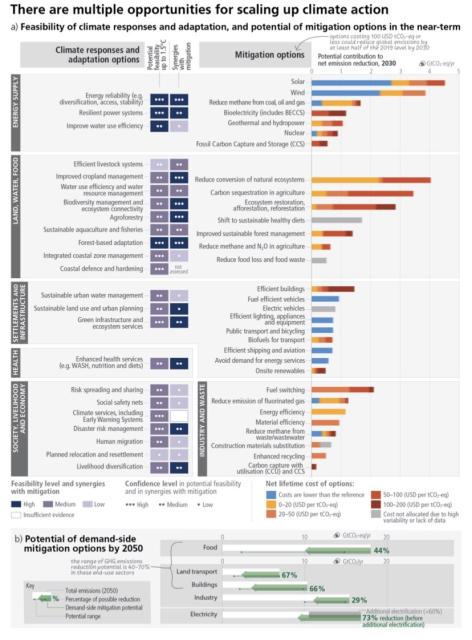
You may have heard that the Intergovernmental Panel on Climate Change - the #IPCC - released a new #climate report.
Here’s the most important take home:
There are *still* so many feasible & effective opportunities to reduce greenhouse gas emissions & adapt to #climatechange available right now.
Climate solutions will improve #food, energy & water security, benefit global health, promote equity, conserve biodiversity & boost the economy.
Read more: ipcc.ch/
Baked Beans But Not Those Baked Beans - Glen And Friends Cooking
#Food #Cooking #BreakfastVideo #GlenAndFriendsCooking #CanadianCooking
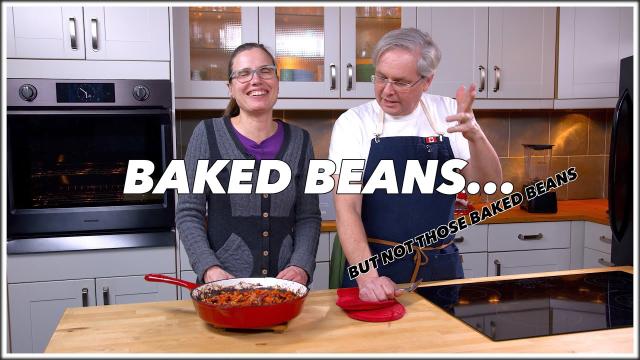
Baked Beans But Not Those Baked Beans - Glen And Friends Cooking
Baked Beans But Not Those Baked Beans - Glen And Friends CookingThis is a great vegetable side dish, a great bean side dish - that with some chicken baked on...YouTube
For those interested in how #food waste drives global problems, Michael Webber & I spoke on this at the annual #Science meeting in 2019. /2
Food Waste Drives Global Problems
Food waste, accounting for at least 3% of energy consumption in the United States, rests at the heart of challenges facing the world’s food, water and energy...YouTube
Food waste is responsible for at least *6%* of global greenhouse gas emissions.
We can change that. Right now.
ourworldindata.org/food-waste-… #ClimateChange #food
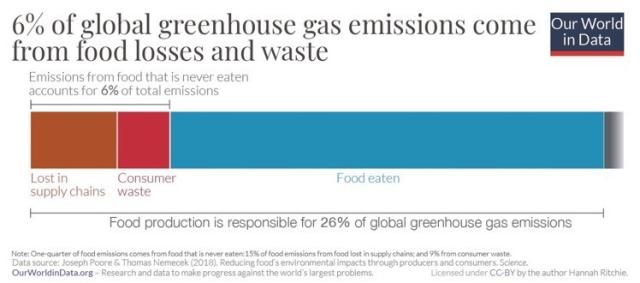
Food waste is responsible for 6% of global greenhouse gas emissions
Food losses and waste – in supply chains and by consumers – account for around one-quarter of greenhouse gas emissions from food. That’s 6% of total global emissions.Our World in Data
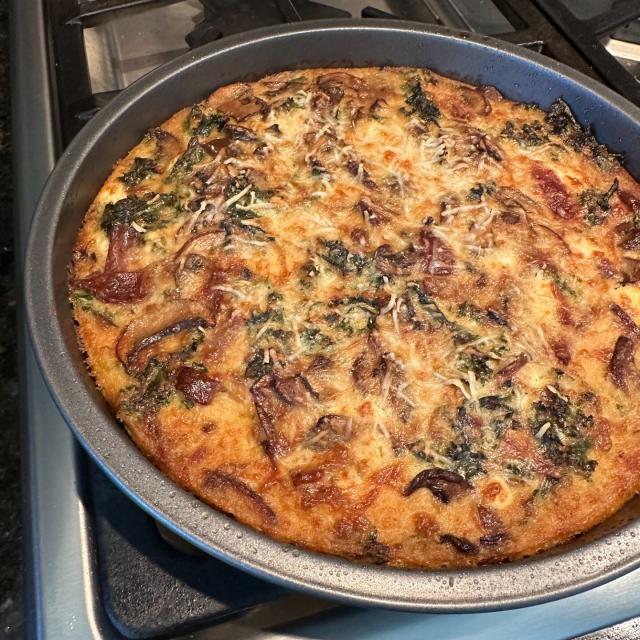
I made a pretty attractive frittata if I do say so myself!
👩🍳 red onion, mushrooms, and kale sautéed in olive oil.
👩🍳 Just Egg
👩🍳 goat cheese mixed in
👩🍳 a little parmesan sprinkled on top
Baked at 350 for 20 minutes.
#food #recipe #vegetarian
Scientists are increasingly concerned that the coming decades will bring #climate conditions that make the future of #food production uncertain.
Enter cultivated meat, which doesn’t come from a chicken, pig or cow on the farm. Instead it’s grown in a lab directly from animal cells as a more sustainable alternative, requiring less water, fertilizer, land & energy with fewer emissions.
A new Serving Up Science is all about cultivated meat: youtu.be/GaX38aFAGSo
Are you willing to try it?
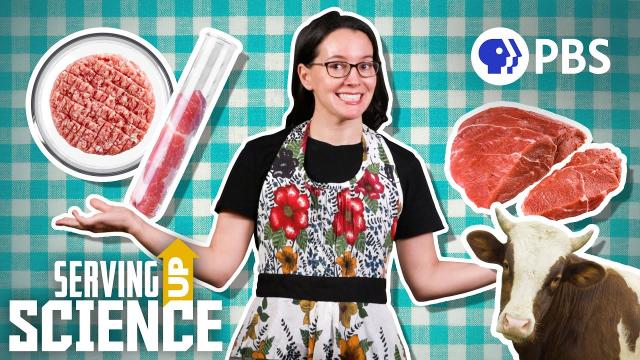
The future of lab grown meat is here! | Serving Up Science
Would you eat steak grown in a test tube? A chicken nugget from a petri dish? It's not science fiction. It’s the next generation of meat, grown in a lab from...YouTube
In the 1960s, the sugar industry funded its own research on the effects of sugar on health.
The results didn't look good - for them. Studies revealed a high-sugar diet may increase risks associated with heart attacks, strokes & certain cancers.
But... rather than share emerging findings, the study was curiously halted & the industry successfully shifted blame onto fats.
It took decades to widely link sugary diets to disease. It didn't have to. npr.org/sections/thesalt/2017/… #food #science
What The Industry Knew About Sugar's Health Effects, But Didn't Tell Us
The sugar industry pulled the plug on an animal study it funded in the 1960s. Initial results pointed to a link between sugar consumption and elevated triglycerides, which raises heart disease risk.NPR
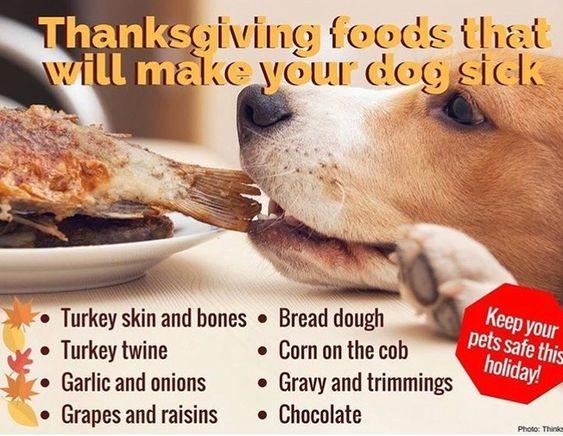
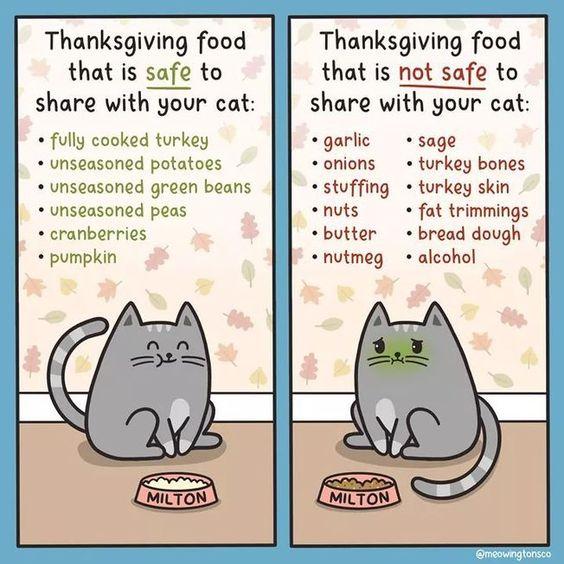
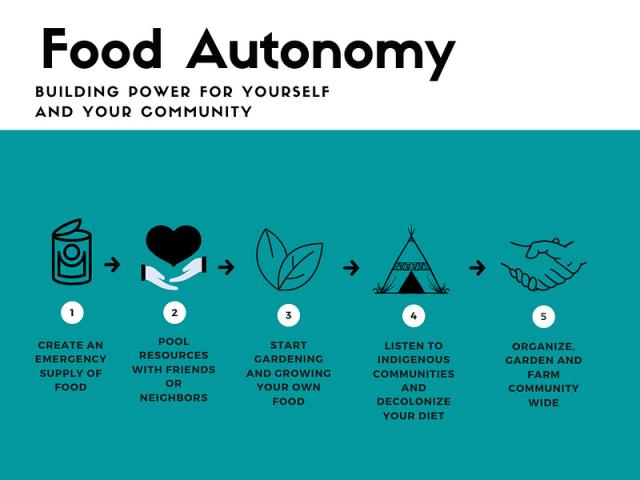
Decommodifying our lives, a combination of essays. Part 1: Food
The seeds of revolution are both real and metaphorical.Anarcho Solarpunk